THE ADVENTURE COLLECTIVE® · Independent discovery and booking for outdoor travel

A long-day blend of archaeology, jungle swimming and colonial charm: explore Chichén Itzá with a guided tour, cool off in a sacred cenote, and stroll Valladolid’s historic square. Practical tips and what to expect on this full-day Yucatán outing.
A long-day blend of archaeology, jungle swimming and colonial charm: explore Chichén Itzá with a guided tour, cool off in a sacred cenote, and stroll Valladolid’s historic square. Practical tips and what to expect on this full-day Yucatán outing.
You step out of the air-conditioned van into a sun-baked clearing and the pyramid rises before you—stone tiers catching the light like an ancient calendar. The guide’s voice threads through the group, translating glyphs, gestures and the logic of a civilization that oriented cities to stars.
Verified experiences and guided adventures in the surrounding area.
Operated by Mexico Top Vacations · Chichén Itzá, Yucatán
You step out of the air-conditioned van into a sun-baked clearing and the pyramid rises before you—stone tiers catching the light like an ancient calendar. The guide’s voice threads through the group, translating glyphs, gestures and the logic of a civilization that oriented cities to stars.
Chichén Itzá sits on a low limestone plain where sinkholes and underground rivers shape the terrain; the Yucatán’s porous geology created the cenotes that were both wells and sacred portals for the Maya. Kukulcán’s shadow still performs its seasonal descent on the pyramid’s stairway, and nearby plazas and ball courts record civic life that combined astronomy, ritual and engineering.
Later the trip moves into the jungle to a cenote—either Chichikan or Noolha—where clear water sounds like a slow invitation and roots and vines hang like living curtains. Swimming here connects to a long cultural practice: cenotes were sources of water and ceremonial sites, not just recreation. The day closes with a brief walk through Valladolid, whose colonial grid, painted façades and the Church of San Servacio reveal a different layer of Yucatán history.
Practical guidance: this is a full-day excursion (expect long transport and 2–3 hours of walking at the ruins). Wear sturdy walking shoes, sun protection and bring a change of clothes for the cenote. Bring cash for small purchases and tip the local guide if service is good. Respect restricted areas at the archaeological site and follow posted rules at cenotes—no sunscreen in the water unless a biodegradable option is approved. Time your visit to arrive at the ruins early to avoid the mid-day heat and crowded photo points.
easy.
12–14 hours.
Suitable for most fitness levels; requires hours of walking on uneven ground and short stair climbs.
Yes; this tour includes admission to the Chichén Itzá archaeological zone and the selected cenote (Chichikan or Noolha).
Expect about 2–3 hours each way depending on traffic and stops; the full experience is a 12–14 hour day.
Lunch (buffet of regional dishes) is included; small vendors sell snacks in Valladolid but food is generally restricted inside the main archaeological enclosures.
Cenotes visited on guided tours are generally safe and lifeguarded by guides; swimmers should be comfortable in deep water and follow posted rules.
Chichén Itzá rose to prominence as a ceremonial and trade hub between 600–900 CE, integrating Puuc and central Mexican influences into its architecture and iconography.
Visitor pressure and tourism runoff can stress delicate cenote ecosystems and ancient stonework; choose tours that follow local conservation rules and avoid non-biodegradable products in water.
Mexico Top Vacations operates guided outdoor trips and adventures with an emphasis on safety, stewardship, and memorable experiences.


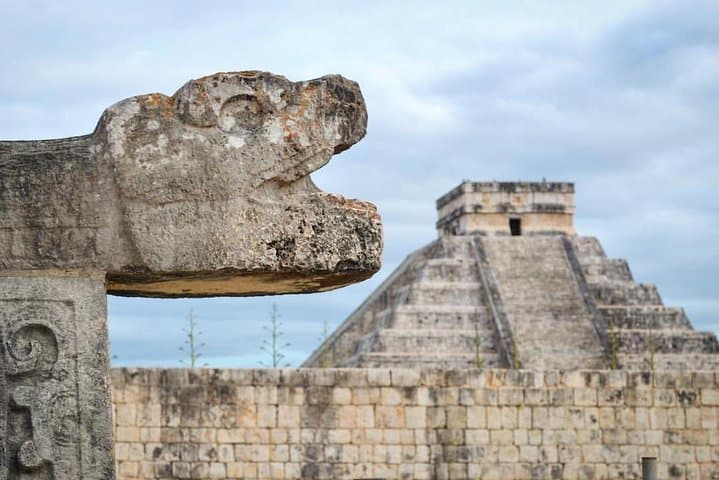
You step out of the air-conditioned van into a sun-baked clearing and the pyramid rises before you—stone tiers catching the light like an ancient calendar. The guide’s voice threads through the group, translating glyphs, gestures and the logic of a civilization that oriented cities to stars.
You step out of the air-conditioned van into a sun-baked clearing and the pyramid rises before you—stone tiers catching the light like an ancient calendar. The guide’s voice threads through the group, translating glyphs, gestures and the logic of a civilization that oriented cities to stars.
Chichén Itzá sits on a low limestone plain where sinkholes and underground rivers shape the terrain; the Yucatán’s porous geology created the cenotes that were both wells and sacred portals for the Maya. Kukulcán’s shadow still performs its seasonal descent on the pyramid’s stairway, and nearby plazas and ball courts record civic life that combined astronomy, ritual and engineering.
Later the trip moves into the jungle to a cenote—either Chichikan or Noolha—where clear water sounds like a slow invitation and roots and vines hang like living curtains. Swimming here connects to a long cultural practice: cenotes were sources of water and ceremonial sites, not just recreation. The day closes with a brief walk through Valladolid, whose colonial grid, painted façades and the Church of San Servacio reveal a different layer of Yucatán history.
Practical guidance: this is a full-day excursion (expect long transport and 2–3 hours of walking at the ruins). Wear sturdy walking shoes, sun protection and bring a change of clothes for the cenote. Bring cash for small purchases and tip the local guide if service is good. Respect restricted areas at the archaeological site and follow posted rules at cenotes—no sunscreen in the water unless a biodegradable option is approved. Time your visit to arrive at the ruins early to avoid the mid-day heat and crowded photo points.