THE ADVENTURE COLLECTIVE® · Independent discovery and booking for outdoor travel

Combine seamless airport transfers in Ushuaia with a guided visit to Tierra del Fuego National Park. Explore lenga forests, Roca Lake and Lapataia Bay while learning local history, geology and wildlife—ideal for first-time visitors wanting a compact, well-supported outing.
Combine seamless airport transfers in Ushuaia with a guided visit to Tierra del Fuego National Park. Explore lenga forests, Roca Lake and Lapataia Bay while learning local history, geology and wildlife—ideal for first-time visitors wanting a compact, well-supported outing.
A cold wind from the Beagle Channel meets you as the van eases out of Ushuaia and onto Route 3. Forested slopes of lenga and coihue roll past, and the landscape opens into peat bogs, wind-raked shores and pale lagoons; Lapataia Bay waits where the Pan-American Highway quietly ends. The guide points out the ruined stations of the Austral Fueguino Railway and the low-slung shapes of foraging waterfowl, and you feel how far south you’ve traveled — the sky seems closer here.
Verified experiences and guided adventures in the surrounding area.
Operated by RipioTurismo · Ushuaia, Tierra del Fuego Province
A cold wind from the Beagle Channel meets you as the van eases out of Ushuaia and onto Route 3. Forested slopes of lenga and coihue roll past, and the landscape opens into peat bogs, wind-raked shores and pale lagoons; Lapataia Bay waits where the Pan-American Highway quietly ends. The guide points out the ruined stations of the Austral Fueguino Railway and the low-slung shapes of foraging waterfowl, and you feel how far south you’ve traveled — the sky seems closer here.
Tierra del Fuego National Park was created in 1960 to protect these subantarctic forests and coastal wetlands. Geologically the park is a mix of glacially carved valleys, moraine-dammed lakes, and coastal cobble benches left by past sea-level changes. The area’s indigenous Yámana people and later settlers shaped a culture adapted to wind, sea and sparse resources; remnants of railway history still punctuate the route.
Practical guidance: the tour pairs reliable airport and hotel transfers with a guided park visit; expect short, moderate walks on boardwalks and dirt tracks around Roca Lake and Lapataia Bay. Weather shifts rapidly — sun can give way to drizzle within an hour — so dress in layers and plan for muddy sections. Bring binoculars for birding, waterproof footwear for shoreline strolls, and allow extra time if you want the optional End of the World Train. Check-in instructions request arrival 30 minutes before departure; tours are small and often multilingual. If you want photos without crowds, aim for morning departures when light is crisp and wildlife activity is higher.
easy.
Up to 48 hours (includes transfers and park visit).
Suitable for most fitness levels; involves several short, gentle walks and low-elevation terrain.
No, the optional Austral Fueguino Railway ride is not included—tickets must be purchased separately at the station.
Yes, the combo includes round-trip transfers between Ushuaia Airport and your hotel as stated in the itinerary.
This specific service is not wheelchair accessible due to uneven trails and boardwalks in the park.
Expect waterfowl, sea birds and small mammals such as foxes and, occasionally, guanacos; sightings vary by season and time of day.
The park was established in 1960 to protect southern beech forests and coastal wetlands; remnants of the Austral Fueguino Railway reflect the region’s 20th-century settlement and tourism history.
Invasive beavers are a major ecological problem in the archipelago, and visitors are asked to stick to trails and follow leave-no-trace practices to protect fragile peatlands.
RipioTurismo operates guided outdoor trips and adventures with an emphasis on safety, stewardship, and memorable experiences.
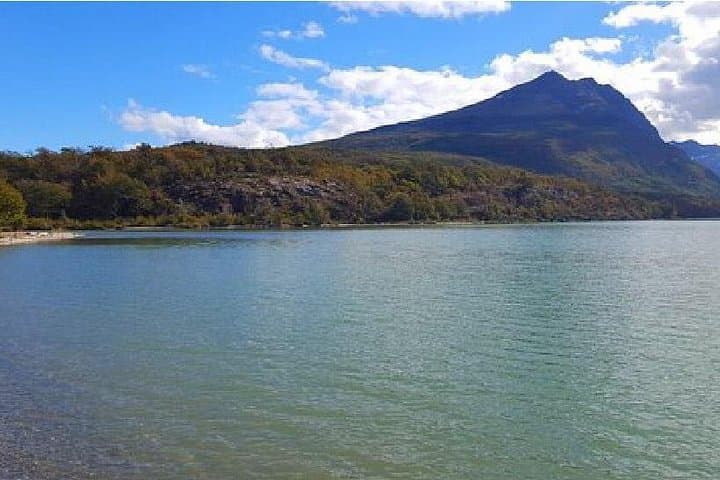

A cold wind from the Beagle Channel meets you as the van eases out of Ushuaia and onto Route 3. Forested slopes of lenga and coihue roll past, and the landscape opens into peat bogs, wind-raked shores and pale lagoons; Lapataia Bay waits where the Pan-American Highway quietly ends. The guide points out the ruined stations of the Austral Fueguino Railway and the low-slung shapes of foraging waterfowl, and you feel how far south you’ve traveled — the sky seems closer here.
A cold wind from the Beagle Channel meets you as the van eases out of Ushuaia and onto Route 3. Forested slopes of lenga and coihue roll past, and the landscape opens into peat bogs, wind-raked shores and pale lagoons; Lapataia Bay waits where the Pan-American Highway quietly ends. The guide points out the ruined stations of the Austral Fueguino Railway and the low-slung shapes of foraging waterfowl, and you feel how far south you’ve traveled — the sky seems closer here.
Tierra del Fuego National Park was created in 1960 to protect these subantarctic forests and coastal wetlands. Geologically the park is a mix of glacially carved valleys, moraine-dammed lakes, and coastal cobble benches left by past sea-level changes. The area’s indigenous Yámana people and later settlers shaped a culture adapted to wind, sea and sparse resources; remnants of railway history still punctuate the route.
Practical guidance: the tour pairs reliable airport and hotel transfers with a guided park visit; expect short, moderate walks on boardwalks and dirt tracks around Roca Lake and Lapataia Bay. Weather shifts rapidly — sun can give way to drizzle within an hour — so dress in layers and plan for muddy sections. Bring binoculars for birding, waterproof footwear for shoreline strolls, and allow extra time if you want the optional End of the World Train. Check-in instructions request arrival 30 minutes before departure; tours are small and often multilingual. If you want photos without crowds, aim for morning departures when light is crisp and wildlife activity is higher.