THE ADVENTURE COLLECTIVE® · Independent discovery and booking for outdoor travel

Explore Lubumbashi on a private 2.5-hour walking tour that pairs a fragrant botanical garden, the stained glass calm of Saint Peter and Paul Cathedral, and the National Museum’s regional stories. Perfect for travelers who want a concise, culturally rich introduction to the city.
Explore Lubumbashi on a private 2.5-hour walking tour that pairs a fragrant botanical garden, the stained glass calm of Saint Peter and Paul Cathedral, and the National Museum’s regional stories. Perfect for travelers who want a concise, culturally rich introduction to the city.
You step off a shaded avenue and into a city that argues for slow travel: Lubumbashi’s heat presses softly against your shirt, and the Jardin Botanique welcomes you with fragrant herbs and deliberate paths that guide rather than rush.
Verified experiences and guided adventures in the surrounding area.
Operated by Opatrip.com Congo · Lubumbashi, Haut-Katanga
You step off a shaded avenue and into a city that argues for slow travel: Lubumbashi’s heat presses softly against your shirt, and the Jardin Botanique welcomes you with fragrant herbs and deliberate paths that guide rather than rush.
The walk takes roughly 2.5 hours and threads three distinct chapters of Lubumbashi life. Begin in the botanical garden—an urban green room where exotic and regional flora stand like characters in a long-running play, leaves brushing the air as if to dare you to notice. From there the route moves to Saint Peter and Paul Cathedral, a soaring structure of stained glass and geometric masonry where the light slows; it’s an architectural pause in a city shaped by rapid growth.
Finish at the National Museum of Lubumbashi, which collects objects and stories that trace the Katanga region’s cultural and industrial shifts. The geology underfoot matters here: Lubumbashi sits on the mineral-rich Katanga Copperbelt, a landscape that has shaped its economy and urban form.
Practical notes: the route is mostly flat city pavement with some garden paths—expect about 2–3 miles of walking and an elevation near 1,220 m (4,000 ft). Wear sturdy shoes, bring water, and schedule morning or late-afternoon departures to avoid the hottest hours. Public transport sits nearby, but this is a private guided tour—tickets include garden and museum entry and a local guide.
Cultural courtesy: ask before photographing people and follow the guide’s lead in museum spaces. This short urban walk pairs sensory detail with civic history—compact, readable, and easy to fit into a day of exploring Katanga’s capital.
easy.
2–3 hours.
Suitable for most fitness levels—light walking with several short stops; minimal incline.
Yes—this tour includes admission to the Jardin Botanique and the National Museum as stated in the itinerary.
The walk is easy—mostly flat with short distances between stops—suitable for most people who can walk 2–3 miles with breaks.
The tour provides a professional local guide; common languages in Lubumbashi include French and local languages—confirm specific language needs when booking.
Full refunds are available if you cancel at least 24 hours before the scheduled start time; operators may cancel tours in bad weather as needed.
Lubumbashi grew rapidly with the Katanga Copperbelt’s mining boom in the 20th century; the city’s architecture and museums reflect both colonial and industrial chapters.
The botanical garden plays a local role in preserving regional plant varieties; visitors are encouraged to stay on paths and avoid disturbing planted collections.
Opatrip.com Congo operates guided outdoor trips and adventures with an emphasis on safety, stewardship, and memorable experiences.



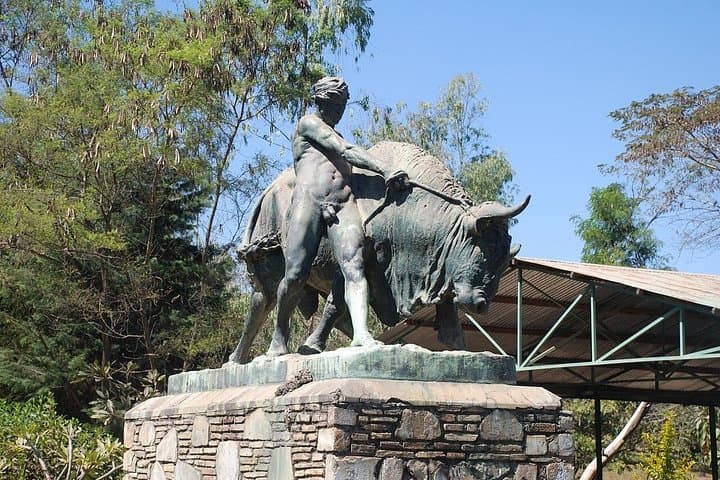
You step off a shaded avenue and into a city that argues for slow travel: Lubumbashi’s heat presses softly against your shirt, and the Jardin Botanique welcomes you with fragrant herbs and deliberate paths that guide rather than rush.
You step off a shaded avenue and into a city that argues for slow travel: Lubumbashi’s heat presses softly against your shirt, and the Jardin Botanique welcomes you with fragrant herbs and deliberate paths that guide rather than rush.
The walk takes roughly 2.5 hours and threads three distinct chapters of Lubumbashi life. Begin in the botanical garden—an urban green room where exotic and regional flora stand like characters in a long-running play, leaves brushing the air as if to dare you to notice. From there the route moves to Saint Peter and Paul Cathedral, a soaring structure of stained glass and geometric masonry where the light slows; it’s an architectural pause in a city shaped by rapid growth.
Finish at the National Museum of Lubumbashi, which collects objects and stories that trace the Katanga region’s cultural and industrial shifts. The geology underfoot matters here: Lubumbashi sits on the mineral-rich Katanga Copperbelt, a landscape that has shaped its economy and urban form.
Practical notes: the route is mostly flat city pavement with some garden paths—expect about 2–3 miles of walking and an elevation near 1,220 m (4,000 ft). Wear sturdy shoes, bring water, and schedule morning or late-afternoon departures to avoid the hottest hours. Public transport sits nearby, but this is a private guided tour—tickets include garden and museum entry and a local guide.
Cultural courtesy: ask before photographing people and follow the guide’s lead in museum spaces. This short urban walk pairs sensory detail with civic history—compact, readable, and easy to fit into a day of exploring Katanga’s capital.