THE ADVENTURE COLLECTIVE® · Independent discovery and booking for outdoor travel

Ascend to the Empire State Building’s 86th-floor open-air observatory for sweeping Manhattan panoramas and practical tips on timing, access, and upgrades. Learn what to expect before you go — from security rules to the best light for photos.
Ascend to the Empire State Building’s 86th-floor open-air observatory for sweeping Manhattan panoramas and practical tips on timing, access, and upgrades. Learn what to expect before you go — from security rules to the best light for photos.
On the 86th-floor open-air deck, wind and traffic merge into a single New York pulse: horns curl up from below, and avenues fan out like threads across the island. From this perch the city reads as layers — Midtown’s glass, the Hudson’s burnished sweep, and on a clear day, state lines floating on the horizon.
Verified experiences and guided adventures in the surrounding area.
Operated by Empire State Building · New York, New York
On the 86th-floor open-air deck, wind and traffic merge into a single New York pulse: horns curl up from below, and avenues fan out like threads across the island. From this perch the city reads as layers — Midtown’s glass, the Hudson’s burnished sweep, and on a clear day, state lines floating on the horizon.
The Empire State Building opened in 1931, built on Manhattan schist that made vertical construction feasible and ushered in the era of the American skyscraper. Its Art Deco lobby and second-floor exhibits trace the building’s role in 20th-century commerce and culture, while the observatory remains a cinematic symbol of the city.
Expect straightforward logistics: security screening at entry, limitations on bag size, and a turnstile-ready mobile voucher. The 86th floor is open-air, while the optional 102nd-floor upgrade offers floor-to-ceiling views from an enclosed vantage. Peak light — late afternoon through sunset — transforms the skyline’s planes and highlights bridges, rivers, and the distant blue of Long Island Sound.
Practical planning beats spontaneity here: arrive midmorning or mid-afternoon to reduce waits, carry a light jacket for breezy conditions, and keep electronics charged for rapid photo ops. Accessibility is excellent — elevators and wheelchair access are available — but everyone must pass security. Whether you’re timing a sunrise run of city names or squeezing in an hour between museums, this is an urban viewpoint that pairs spectacle with efficient, visitor-friendly design.
easy.
45–90 minutes.
Suitable for all fitness levels; involves standing and minimal walking on paved indoor/outdoor surfaces
This standard ticket lets you proceed to the turnstile with a mobile voucher; express/skip-the-line upgrades are available for faster access.
Cameras and phones are permitted but tripods and large camera rigs are not; compact photography setups are recommended.
Yes — elevators and accessible routes serve the observatory levels; service animals are allowed.
Observation areas remain open but refunds are not issued for poor visibility or weather-related disappointment; check forecasts and plan accordingly.
Completed in 1931 on bedrock of Manhattan schist, the Empire State Building symbolized rapid vertical growth and held the title of the world’s tallest building for decades.
The building has undertaken energy-efficiency retrofits and supports bird-friendly lighting initiatives to reduce collisions and lower its environmental footprint.
Empire State Building operates guided outdoor trips and adventures with an emphasis on safety, stewardship, and memorable experiences.

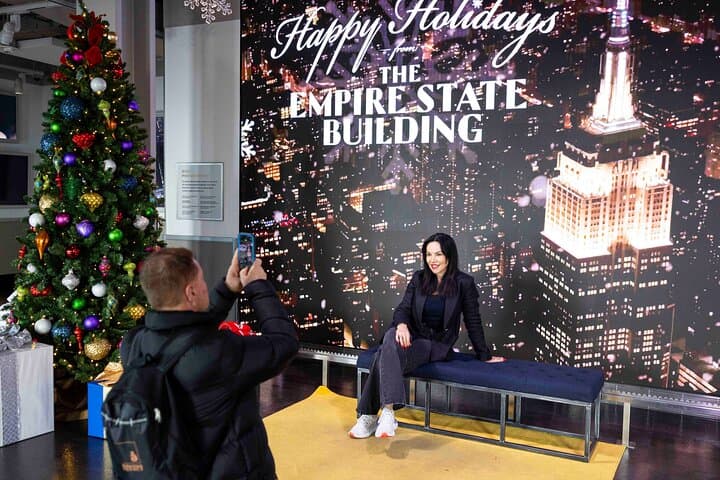

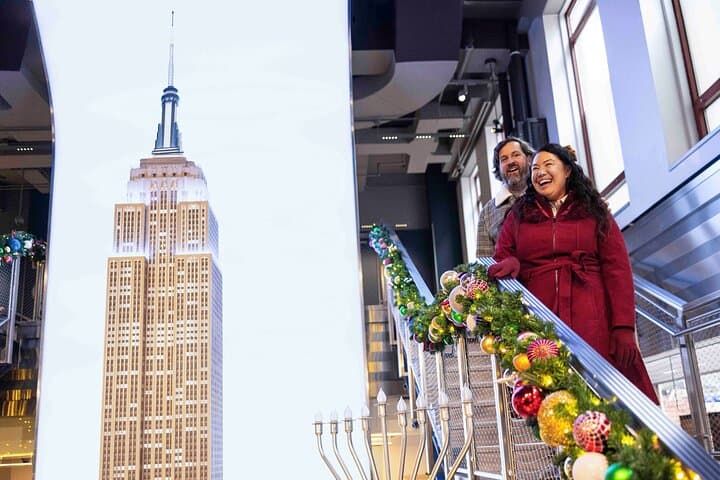
On the 86th-floor open-air deck, wind and traffic merge into a single New York pulse: horns curl up from below, and avenues fan out like threads across the island. From this perch the city reads as layers — Midtown’s glass, the Hudson’s burnished sweep, and on a clear day, state lines floating on the horizon.
On the 86th-floor open-air deck, wind and traffic merge into a single New York pulse: horns curl up from below, and avenues fan out like threads across the island. From this perch the city reads as layers — Midtown’s glass, the Hudson’s burnished sweep, and on a clear day, state lines floating on the horizon.
The Empire State Building opened in 1931, built on Manhattan schist that made vertical construction feasible and ushered in the era of the American skyscraper. Its Art Deco lobby and second-floor exhibits trace the building’s role in 20th-century commerce and culture, while the observatory remains a cinematic symbol of the city.
Expect straightforward logistics: security screening at entry, limitations on bag size, and a turnstile-ready mobile voucher. The 86th floor is open-air, while the optional 102nd-floor upgrade offers floor-to-ceiling views from an enclosed vantage. Peak light — late afternoon through sunset — transforms the skyline’s planes and highlights bridges, rivers, and the distant blue of Long Island Sound.
Practical planning beats spontaneity here: arrive midmorning or mid-afternoon to reduce waits, carry a light jacket for breezy conditions, and keep electronics charged for rapid photo ops. Accessibility is excellent — elevators and wheelchair access are available — but everyone must pass security. Whether you’re timing a sunrise run of city names or squeezing in an hour between museums, this is an urban viewpoint that pairs spectacle with efficient, visitor-friendly design.