THE ADVENTURE COLLECTIVE® · Independent discovery and booking for outdoor travel

A 5‑hour outing from Ushuaia brings you through lenga forest and over rocky streams to Laguna Esmeralda — a small glacier-fed lake whose suspended sediments give the water a striking emerald tone in summer. Expect muddy sections, shallow river crossings and rewarding views; the tour includes transport, a guide and a box lunch.
A 5‑hour outing from Ushuaia brings you through lenga forest and over rocky streams to Laguna Esmeralda — a small glacier-fed lake whose suspended sediments give the water a striking emerald tone in summer. Expect muddy sections, shallow river crossings and rewarding views; the tour includes transport, a guide and a box lunch.
You step off the van and the city’s harbor hum fades into the woods — the air sharp with peat and pine. A narrow track threads through lenga forest, roots like fingers gripping the soil, and the trail slopes toward a river that dares you across a series of stepping stones. Ahead, the valley opens: craggy ridgelines, snow-shadowed peaks, and the promise of water so green it seems to glow. This is Laguna Esmeralda, the so-called Emerald Lagoon, fed by melt from the Ojo del Albino Glacier and painted by the fine glacial sediments that float in its basin.
Verified experiences and guided adventures in the surrounding area.
Operated by Latitud Ushuaia Travel · Ushuaia, Tierra del Fuego
You step off the van and the city’s harbor hum fades into the woods — the air sharp with peat and pine. A narrow track threads through lenga forest, roots like fingers gripping the soil, and the trail slopes toward a river that dares you across a series of stepping stones. Ahead, the valley opens: craggy ridgelines, snow-shadowed peaks, and the promise of water so green it seems to glow. This is Laguna Esmeralda, the so-called Emerald Lagoon, fed by melt from the Ojo del Albino Glacier and painted by the fine glacial sediments that float in its basin.
The route is classic Fuegian country. Geologically recent glaciers carved the valleys here; they dropped sediment and gouged basins that now collect runoff and peat-stained streams. The green you come for is not algae but glacial flour — pulverized rock carried from the glacier and suspended in the meltwater, refracting light into that surreal hue. Culturally the region carries layers too: the Yámana and Selk’nam peoples once hunted these valleys long before Ushuaia became the “End of the World” outpost for whalers and settlers.
Along the trail you’ll pass beaver ponds and wind-scoured sphagnum; the ecosystem is fragile and oddly modern, altered by introduced beavers that reshape streams. Guides point out evidence of that work and explain why staying on the trail matters. The lagoon itself is a compact amphitheater: cliffs, moraine ridges and, if the season’s right, a glimpse of white glacier at the head of the bowl. In summer the water pours color; in winter it will be ice and snow.
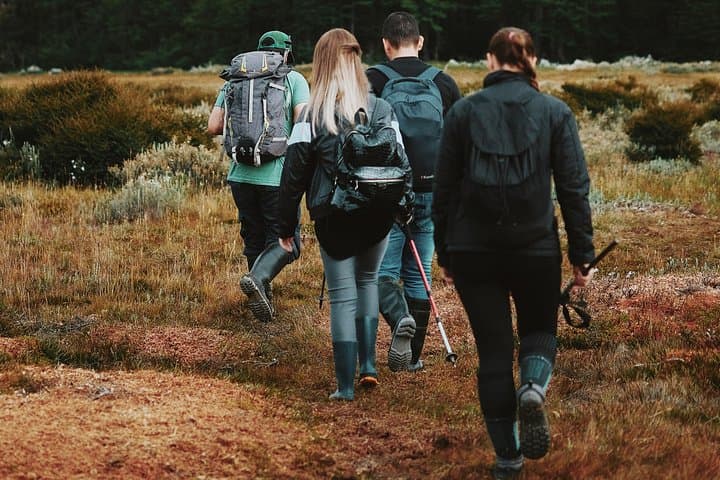
Practical side: the full outing from Ushuaia runs about five hours door-to-door, with roughly 3–4 hours on the trail and an estimated 8 km round-trip; elevation gain is modest (around 200–300 m) but expect muddy sections, rocky stretches, and at least one shallow river crossing. Wear waterproof boots, bring layered clothing for sudden wind and drizzle, and carry at least 1–1.5 liters of water — the tour provides a box lunch at the lagoon but not extra drinks. Guides provide hotel pickup across Ushuaia (not from cruise ships or the airport) and will time the walk so you have about an hour at the lagoon for photos and lunch.
Timing matters: summer gives the vibrant color and open water; shoulder seasons can be wet or icy. Keep a small daypack, a rain shell, and warm gloves even on sunny days — the wind off the glaciers cuts through light layers. Respect the valley: pack out what you bring and leave the banks for birds and foxes. Hike steadily, take the river crossings slowly, and you’ll find the lagoon rewarding in its quiet, vivid way — a compact but unforgettable slice of Tierra del Fuego’s wild heart.
moderate.
4–5 hours.
Best for travelers with moderate fitness who can handle 8 km round-trip on mixed terrain and short, rocky river crossings.
Walking time to the lagoon is about 1.5–2 hours each way depending on pace and trail conditions; total door-to-door time is roughly five hours.
Older children used to hiking can manage the route with frequent breaks; younger kids may struggle with muddy, uneven sections and river crossings.
No technical skills required, but a moderate level of fitness and sure footing on uneven terrain are important.
Only in summer and on clear, low-sediment conditions does the bright green show; in winter the lake is often frozen and snow-covered.
Pickup is provided from hotels across Ushuaia but cruise ship and airport pickup are not available for this tour.
Swimming is not recommended; the water is glacier-fed and extremely cold even in summer.
The basin is glacial in origin; melt and rock flour from the Ojo del Albino Glacier give the lagoon its color, and the valleys were historically used by indigenous Yámana and Selk'nam groups.
Beavers have drastically altered waterways here—stay on the marked trail to protect peat bogs and avoid creating new erosion; pack out all waste.
Latitud Ushuaia Travel operates guided outdoor trips and adventures with an emphasis on safety, stewardship, and memorable experiences.
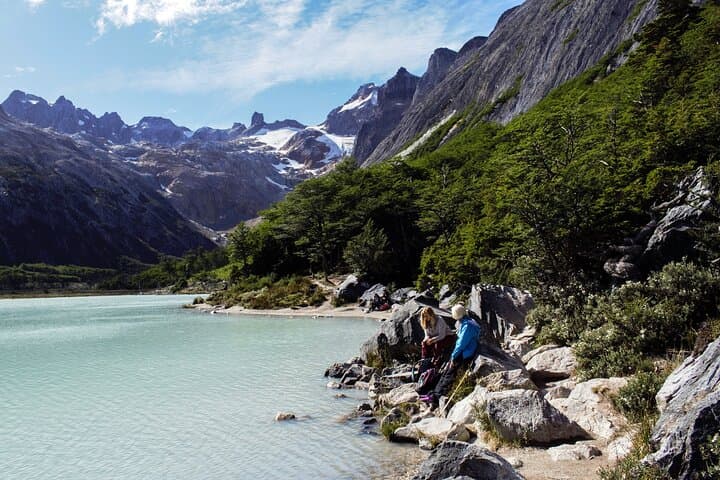
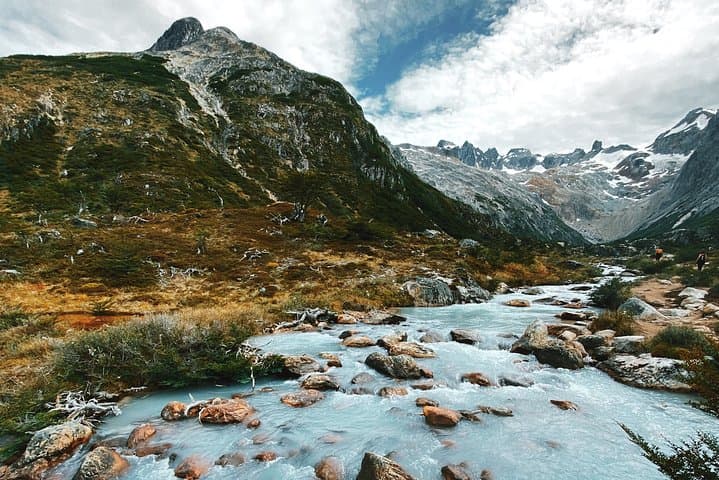
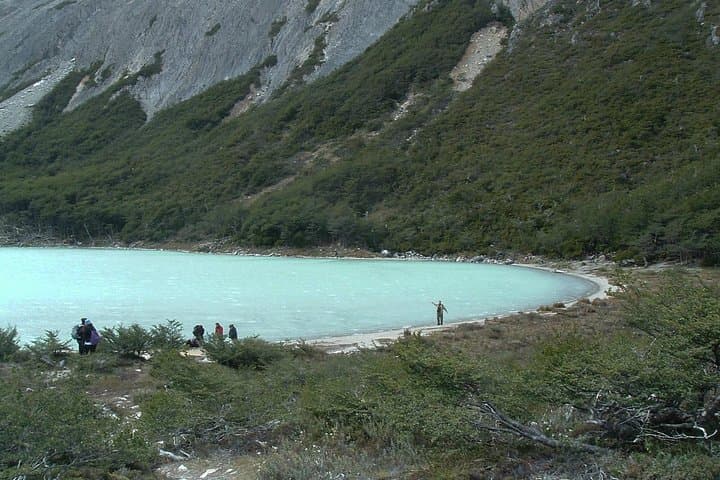
You step off the van and the city’s harbor hum fades into the woods — the air sharp with peat and pine. A narrow track threads through lenga forest, roots like fingers gripping the soil, and the trail slopes toward a river that dares you across a series of stepping stones. Ahead, the valley opens: craggy ridgelines, snow-shadowed peaks, and the promise of water so green it seems to glow. This is Laguna Esmeralda, the so-called Emerald Lagoon, fed by melt from the Ojo del Albino Glacier and painted by the fine glacial sediments that float in its basin.
You step off the van and the city’s harbor hum fades into the woods — the air sharp with peat and pine. A narrow track threads through lenga forest, roots like fingers gripping the soil, and the trail slopes toward a river that dares you across a series of stepping stones. Ahead, the valley opens: craggy ridgelines, snow-shadowed peaks, and the promise of water so green it seems to glow. This is Laguna Esmeralda, the so-called Emerald Lagoon, fed by melt from the Ojo del Albino Glacier and painted by the fine glacial sediments that float in its basin.
The route is classic Fuegian country. Geologically recent glaciers carved the valleys here; they dropped sediment and gouged basins that now collect runoff and peat-stained streams. The green you come for is not algae but glacial flour — pulverized rock carried from the glacier and suspended in the meltwater, refracting light into that surreal hue. Culturally the region carries layers too: the Yámana and Selk’nam peoples once hunted these valleys long before Ushuaia became the “End of the World” outpost for whalers and settlers.
Along the trail you’ll pass beaver ponds and wind-scoured sphagnum; the ecosystem is fragile and oddly modern, altered by introduced beavers that reshape streams. Guides point out evidence of that work and explain why staying on the trail matters. The lagoon itself is a compact amphitheater: cliffs, moraine ridges and, if the season’s right, a glimpse of white glacier at the head of the bowl. In summer the water pours color; in winter it will be ice and snow.
Practical side: the full outing from Ushuaia runs about five hours door-to-door, with roughly 3–4 hours on the trail and an estimated 8 km round-trip; elevation gain is modest (around 200–300 m) but expect muddy sections, rocky stretches, and at least one shallow river crossing. Wear waterproof boots, bring layered clothing for sudden wind and drizzle, and carry at least 1–1.5 liters of water — the tour provides a box lunch at the lagoon but not extra drinks. Guides provide hotel pickup across Ushuaia (not from cruise ships or the airport) and will time the walk so you have about an hour at the lagoon for photos and lunch.
Timing matters: summer gives the vibrant color and open water; shoulder seasons can be wet or icy. Keep a small daypack, a rain shell, and warm gloves even on sunny days — the wind off the glaciers cuts through light layers. Respect the valley: pack out what you bring and leave the banks for birds and foxes. Hike steadily, take the river crossings slowly, and you’ll find the lagoon rewarding in its quiet, vivid way — a compact but unforgettable slice of Tierra del Fuego’s wild heart.