THE ADVENTURE COLLECTIVE® · Independent discovery and booking for outdoor travel

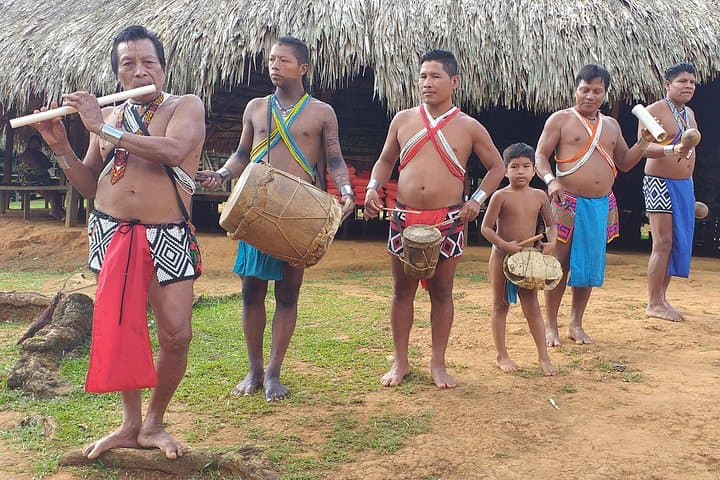
Paddle 30 minutes up the Chagres River to Embera Puru for ancestral music, jagua body painting, a traditional meal, and a swim beneath a rainforest waterfall. This half-day cultural tour combines river travel, hands-on cultural exchange, and craft shopping directly supporting the community.
Paddle 30 minutes up the Chagres River to Embera Puru for ancestral music, jagua body painting, a traditional meal, and a swim beneath a rainforest waterfall. This half-day cultural tour combines river travel, hands-on cultural exchange, and craft shopping directly supporting the community.
The canoe slips away from the Corotú landing and the Chagres River reshapes the day: palms lean like curious hosts and the water parts with a soft, urgent current that dares you to relax and pay attention.
Verified experiences and guided adventures in the surrounding area.
Operated by Visit Panama Tour · Gamboa, Panama Province
The canoe slips away from the Corotú landing and the Chagres River reshapes the day: palms lean like curious hosts and the water parts with a soft, urgent current that dares you to relax and pay attention.
Within 30 minutes you arrive at the foot of a waterfall—clear, cool, and framed by green walls—and then a short walk brings you into Embera Puru, where women and children arrive in bright patterned skirts and ancestral song. The village balances on a long history: the Embera are one of Panama’s surviving indigenous groups, maintaining language, carving, and woven arts along a river that once defined regional trade and travel.
Geologically the Chagres cuts through low, weathered hills and alluvial floodplains; expect silty shorelines, braided channels, and pockets of rainforest where birds and monkeys are most active. Culture here is practical and ceremonial: jagua body paint, carved cocobolo figures, and palm-fiber baskets are daily craft and tourist offering, while the community runs the ecotourism project to retain income and traditions.
Practical guidance: wear quick-dry clothes and sturdy water shoes for slippery rocks and shallow river walks. Bring insect repellent, sunscreen, and a small amount of local currency for crafts. The trip runs about 6–8 hours including round-trip transport from Panama City, a 30-minute canoe transfer, a traditional meal, cultural demonstrations, and time to swim at the falls. Respect photography rules, accept invitations from hosts, and treat purchases as direct support to families keeping customs alive.
moderate.
6–8 hours.
Light to moderate fitness for short river walks, a swim, and boarding a dugout canoe; suitable for most people comfortable with uneven terrain.
The canoe transfer along the Chagres River is about 30 minutes each way, depending on water level and current.
Yes—children are welcome; however, swimming may require river walking over uneven, sometimes slippery stones, so supervision and water shoes are recommended.
Yes—the tour includes a traditional Embera meal, cultural demonstrations, jagua body painting, and time to browse local crafts.
This tour involves boarding a dugout canoe and walking on uneven riverbanks and steps; it is not recommended for travelers with serious spinal injuries or limited mobility.
The Embera people have lived across Panama and Colombia for centuries; the Chagres River corridor has long been a travel and subsistence route altered by canal-era development yet still central to community life.
The community-run ecotourism model helps fund local livelihoods while encouraging visitors to follow low-impact practices—avoid single-use plastics and support only authorized craft sellers.
Visit Panama Tour operates guided outdoor trips and adventures with an emphasis on safety, stewardship, and memorable experiences.


The canoe slips away from the Corotú landing and the Chagres River reshapes the day: palms lean like curious hosts and the water parts with a soft, urgent current that dares you to relax and pay attention.
The canoe slips away from the Corotú landing and the Chagres River reshapes the day: palms lean like curious hosts and the water parts with a soft, urgent current that dares you to relax and pay attention.
Within 30 minutes you arrive at the foot of a waterfall—clear, cool, and framed by green walls—and then a short walk brings you into Embera Puru, where women and children arrive in bright patterned skirts and ancestral song. The village balances on a long history: the Embera are one of Panama’s surviving indigenous groups, maintaining language, carving, and woven arts along a river that once defined regional trade and travel.
Geologically the Chagres cuts through low, weathered hills and alluvial floodplains; expect silty shorelines, braided channels, and pockets of rainforest where birds and monkeys are most active. Culture here is practical and ceremonial: jagua body paint, carved cocobolo figures, and palm-fiber baskets are daily craft and tourist offering, while the community runs the ecotourism project to retain income and traditions.
Practical guidance: wear quick-dry clothes and sturdy water shoes for slippery rocks and shallow river walks. Bring insect repellent, sunscreen, and a small amount of local currency for crafts. The trip runs about 6–8 hours including round-trip transport from Panama City, a 30-minute canoe transfer, a traditional meal, cultural demonstrations, and time to swim at the falls. Respect photography rules, accept invitations from hosts, and treat purchases as direct support to families keeping customs alive.