THE ADVENTURE COLLECTIVE® · Independent discovery and booking for outdoor travel

Spend a hands-on day with the Embera Quera beside Gatun Lake—learn language and crafts, hike to a jungle waterfall for a swim, and visit the Sloth Sanctuary near Gamboa. This private tour emphasizes cultural exchange and direct community support.
Spend a hands-on day with the Embera Quera beside Gatun Lake—learn language and crafts, hike to a jungle waterfall for a swim, and visit the Sloth Sanctuary near Gamboa. This private tour emphasizes cultural exchange and direct community support.
You step off the motorboat into humid air and the jungle immediately takes charge—leaves brushing your shoulders, a rooster-call chorus from the village, and the lake pushing its slow current against the shore. The Embera Quera welcome is direct: an invitation to learn rather than watch, to try palm-fiber weaving, clap rhythms, or follow a footpath through secondary forest to a cool waterfall where swimming is local custom.
Verified experiences and guided adventures in the surrounding area.
You step off the motorboat into humid air and the jungle immediately takes charge—leaves brushing your shoulders, a rooster-call chorus from the village, and the lake pushing its slow current against the shore. The Embera Quera welcome is direct: an invitation to learn rather than watch, to try palm-fiber weaving, clap rhythms, or follow a footpath through secondary forest to a cool waterfall where swimming is local custom.
The Embera are one of Panama’s first peoples, their oral histories and crafts carrying generations of river knowledge. Geologically, Gatun Lake and the surrounding lowland rainforest are the product of the Canal’s early-20th-century engineering and the region’s tropical soils, which feed fast-growing trees and concealed streams. Culturally, expect a hands-on day: language snippets, traditional fishing or agriculture demonstrations, music and dance workshops, and a community-led craft market where proceeds largely support families.
Practical guidance: bring a dry bag, reef-safe sunscreen, and shoes that grip wet rock—the waterfall approach can be slick. Time visits for mid-morning to avoid travel during peak heat and to catch the Sloth Sanctuary’s afternoon feed at nearby Gamboa Resort. Respect local customs: ask before photographing and buy crafts directly from artisans.
The experience balances cultural immersion with light jungle trekking and wildlife viewing, suitable for travelers wanting meaningful exchange rather than a staged performance. It’s an outward-facing day of learning, quiet swims, and direct support to an indigenous community living on Gatun’s edge.
moderate.
Approximately 2 days (48 hours).
Suitable for moderately fit travelers comfortable with uneven trails, short hikes, and basic boat transfers; swimming optional.
Most tours include private transport and a motorboat transfer from Gamboa or a dock on Gatun Lake; travel time is typically 1–1.5 hours depending on departure point.
Many families swim at the cascade; supervise children closely and check depth and current with guides before entering—life jackets are often available on request.
Some itineraries offer an overnight homestay that includes shared lodging and meals; confirm accommodations and sleeping arrangements when booking.
Reputable programs direct most fees to families, support local schools or workshops, and employ community members as guides and hosts—ask the operator for specifics.
The Embera have lived in Panama’s river corridors for centuries; communities near Gatun Lake adapted their riverine lifeways during the Canal’s creation and subsequent changes in land use.
Choose operators that pay community fees directly and follow leave-no-trace practices; avoid single-use plastics and support locally made crafts to keep revenue in the village.
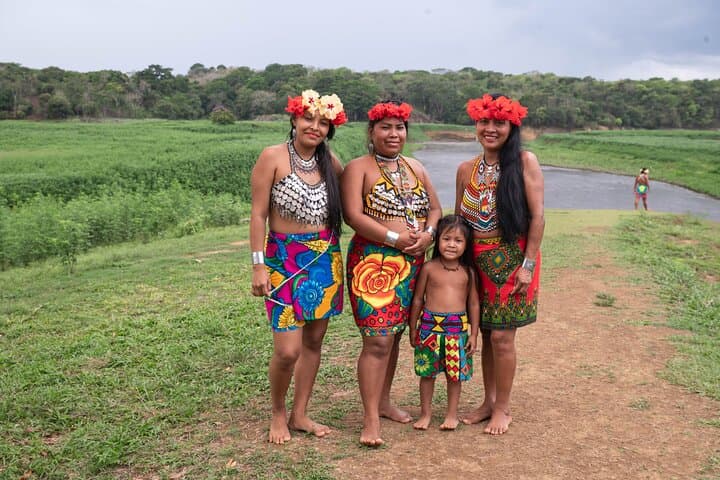
You step off the motorboat into humid air and the jungle immediately takes charge—leaves brushing your shoulders, a rooster-call chorus from the village, and the lake pushing its slow current against the shore. The Embera Quera welcome is direct: an invitation to learn rather than watch, to try palm-fiber weaving, clap rhythms, or follow a footpath through secondary forest to a cool waterfall where swimming is local custom.
You step off the motorboat into humid air and the jungle immediately takes charge—leaves brushing your shoulders, a rooster-call chorus from the village, and the lake pushing its slow current against the shore. The Embera Quera welcome is direct: an invitation to learn rather than watch, to try palm-fiber weaving, clap rhythms, or follow a footpath through secondary forest to a cool waterfall where swimming is local custom.
The Embera are one of Panama’s first peoples, their oral histories and crafts carrying generations of river knowledge. Geologically, Gatun Lake and the surrounding lowland rainforest are the product of the Canal’s early-20th-century engineering and the region’s tropical soils, which feed fast-growing trees and concealed streams. Culturally, expect a hands-on day: language snippets, traditional fishing or agriculture demonstrations, music and dance workshops, and a community-led craft market where proceeds largely support families.
Practical guidance: bring a dry bag, reef-safe sunscreen, and shoes that grip wet rock—the waterfall approach can be slick. Time visits for mid-morning to avoid travel during peak heat and to catch the Sloth Sanctuary’s afternoon feed at nearby Gamboa Resort. Respect local customs: ask before photographing and buy crafts directly from artisans.
The experience balances cultural immersion with light jungle trekking and wildlife viewing, suitable for travelers wanting meaningful exchange rather than a staged performance. It’s an outward-facing day of learning, quiet swims, and direct support to an indigenous community living on Gatun’s edge.