THE ADVENTURE COLLECTIVE® · Independent discovery and booking for outdoor travel

Spend a full day moving between fortified castles and rainforest canopy on a guided tour of Elmina and Cape Coast. Explore Portuguese, Dutch and British sites, then cross Kakum’s 350‑meter canopy walkway for a different view of Ghana’s coast.
Spend a full day moving between fortified castles and rainforest canopy on a guided tour of Elmina and Cape Coast. Explore Portuguese, Dutch and British sites, then cross Kakum’s 350‑meter canopy walkway for a different view of Ghana’s coast.
You step out of the air‑conditioned vehicle into sunlight that slants off the Atlantic and find a town that still argues with its past—fishing canoes rocking in the lagoon, gulls circling the castle ramparts, and the narrow streets of Elmina pulsing with commerce.
Verified experiences and guided adventures in the surrounding area.
Operated by Afrocentric Travels and Tours · Elmina, Central Region
You step out of the air‑conditioned vehicle into sunlight that slants off the Atlantic and find a town that still argues with its past—fishing canoes rocking in the lagoon, gulls circling the castle ramparts, and the narrow streets of Elmina pulsing with commerce.
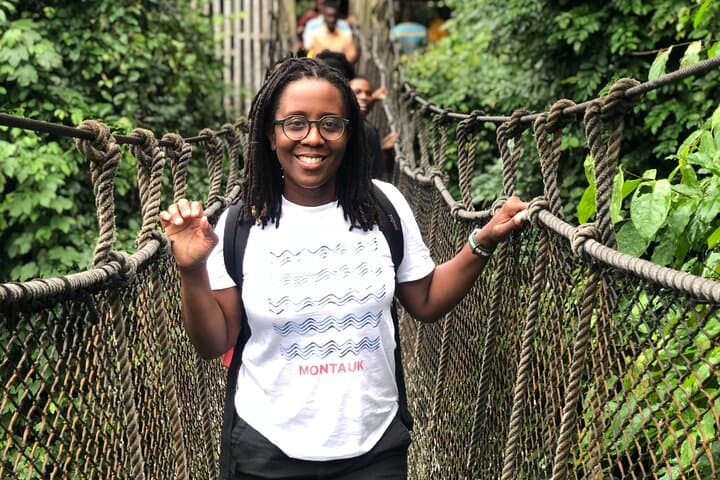
The day moves between stone and forest: Elmina Castle’s Portuguese‑era walls (1400s) and Cape Coast Castle’s deep dungeons tell the hard story of the trans‑Atlantic slave trade, while nearby Kakum National Park shifts the palette to green—an old forest reserve with a 350‑meter rope and wood canopy walkway suspended up to 40 meters above the ground.
History here is layered: Portuguese fortifications, Dutch merchant houses, and British administrative changes shaped coastal politics and commerce for centuries. Geologically the coast is a mix of low cliffs, sandy beaches and lagoon systems; the park protects high‑canopy rainforest that supports diverse plant assemblages.
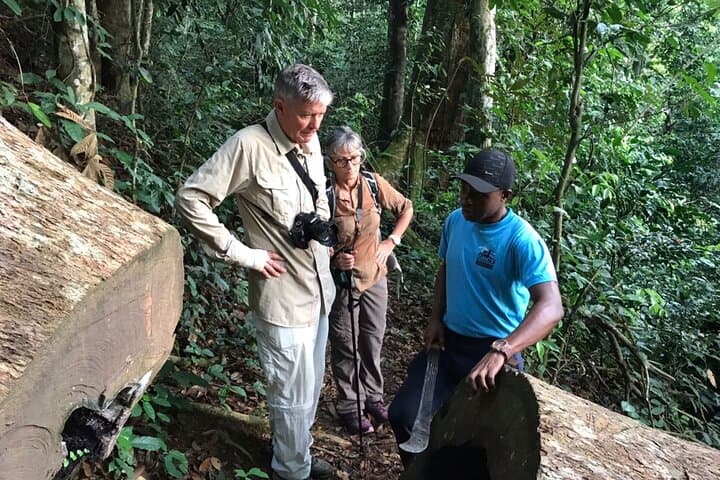
Practical guidance: this is a long, structured day—expect 12–15 hours with hotel pick‑up from Accra, included entry fees, and a local guide familiar with both heritage and natural history. Wear sturdy walking shoes for cobbled streets, bring sun protection and insect repellent for forest sections, and allow time to process the emotional weight of the castles. The canopy walk is exposed; if you’re uncomfortable with heights there are still excellent ground trails in Kakum.
The tour balances interpretive history with tangible outdoor exposure—an immersive way to understand Ghana’s coastal past and the living ecosystems that surround it.
moderate.
12–15 hours.
Light to moderate fitness: comfortable walking for several hours and climbing stairs or raised walkways.
The tour runs about 12–15 hours with hotel pick‑up (Accra) and drop‑off, private transport, entry fees, bottled water, and a knowledgeable local guide included.
The Kakum canopy walkway is maintained and supported, but it is elevated and exposed; children are allowed with supervision and those uncomfortable with heights can explore ground trails instead.
Entry fees are included in this tour, but it’s customary to tip the guide and local staff, and small cash is useful for markets or souvenirs.
Yes—exhibits and dungeons address the trans‑Atlantic slave trade directly and can be distressing; guides typically provide historical context to help process the material.
Elmina Castle was established by the Portuguese in the 1400s and later controlled by the Dutch and British; Cape Coast Castle was a central node in the trans‑Atlantic slave trade and later became a British fortification.
Kakum National Park is a protected area with active conservation programs; visitors are asked to stay on trails, avoid littering, and support local guides who help sustain park management.
Afrocentric Travels and Tours operates guided outdoor trips and adventures with an emphasis on safety, stewardship, and memorable experiences.


You step out of the air‑conditioned vehicle into sunlight that slants off the Atlantic and find a town that still argues with its past—fishing canoes rocking in the lagoon, gulls circling the castle ramparts, and the narrow streets of Elmina pulsing with commerce.
You step out of the air‑conditioned vehicle into sunlight that slants off the Atlantic and find a town that still argues with its past—fishing canoes rocking in the lagoon, gulls circling the castle ramparts, and the narrow streets of Elmina pulsing with commerce.
The day moves between stone and forest: Elmina Castle’s Portuguese‑era walls (1400s) and Cape Coast Castle’s deep dungeons tell the hard story of the trans‑Atlantic slave trade, while nearby Kakum National Park shifts the palette to green—an old forest reserve with a 350‑meter rope and wood canopy walkway suspended up to 40 meters above the ground.
History here is layered: Portuguese fortifications, Dutch merchant houses, and British administrative changes shaped coastal politics and commerce for centuries. Geologically the coast is a mix of low cliffs, sandy beaches and lagoon systems; the park protects high‑canopy rainforest that supports diverse plant assemblages.
Practical guidance: this is a long, structured day—expect 12–15 hours with hotel pick‑up from Accra, included entry fees, and a local guide familiar with both heritage and natural history. Wear sturdy walking shoes for cobbled streets, bring sun protection and insect repellent for forest sections, and allow time to process the emotional weight of the castles. The canopy walk is exposed; if you’re uncomfortable with heights there are still excellent ground trails in Kakum.
The tour balances interpretive history with tangible outdoor exposure—an immersive way to understand Ghana’s coastal past and the living ecosystems that surround it.