
Ellora Caves Guided Day Tour — Kailasa Temple, Daulatabad Fort & Bibi Ka Maqbara
Explore Ellora’s monumental rock-cut temples with a licensed guide, then visit Daulatabad Fort and the Mughal-styled Bibi Ka Maqbara in a single day. This private tour includes transport and entry tickets—ideal for history-minded travelers who prefer a structured, informative outing.
An Adventure In Aurangabad.
Explore Ellora’s monumental rock-cut temples with a licensed guide, then visit Daulatabad Fort and the Mughal-styled Bibi Ka Maqbara in a single day. This private tour includes transport and entry tickets—ideal for history-minded travelers who prefer a structured, informative outing.
Read the full experience
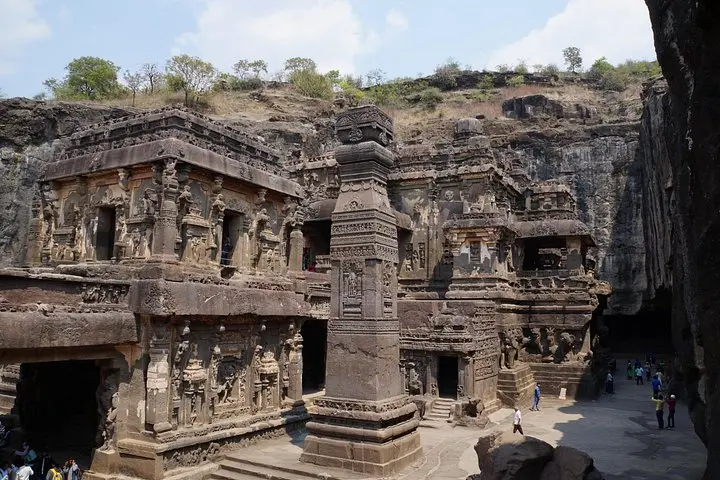
You meet your driver in Aurangabad before dawn and the highway unfurls toward a sun-baked plateau. The first view of Ellora arrives not as a single monument but as a ragged cliff face punctured with doorways: caverns worn into living rock, stairways chiselled by hands that moved stone like water.
You meet your driver in Aurangabad before dawn and the highway unfurls toward a sun-baked plateau. The first view of Ellora arrives not as a single monument but as a ragged cliff face punctured with doorways: caverns worn into living rock, stairways chiselled by hands that moved stone like water.
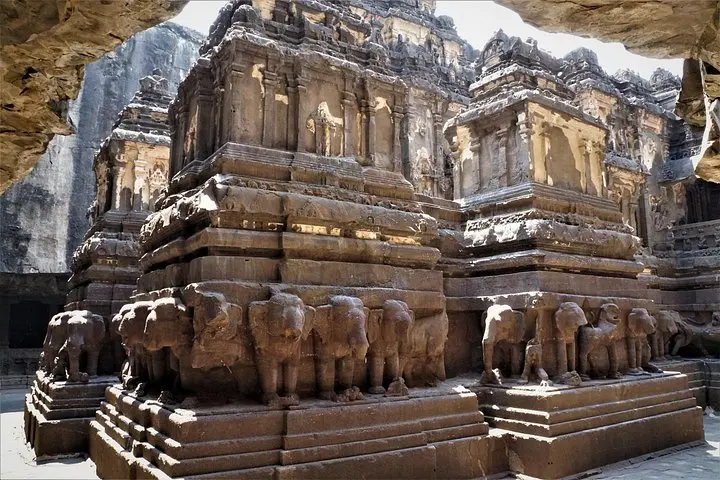
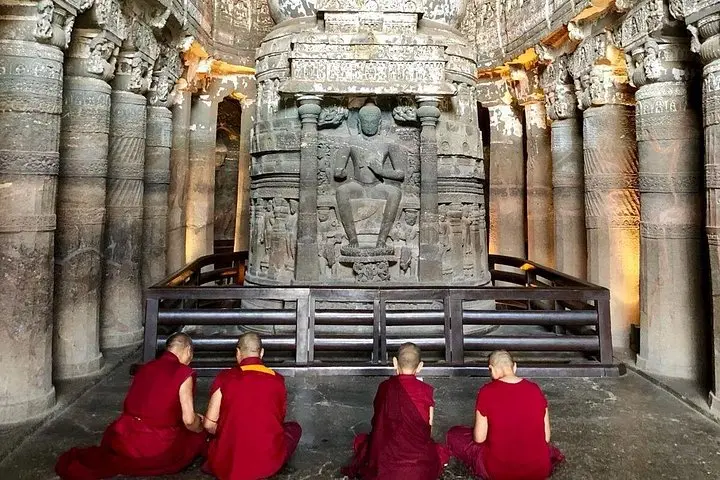
Carved between the 6th and 10th centuries CE, Ellora hosts Buddhist, Hindu and Jain caves; the Kailasa temple (Rashtrakuta period) is the largest monolithic shrine in the world, hewn downward from a single basalt outcrop. Nearby Daulatabad Fort, founded in the 12th century, sits on a conical hill and reads like a manual in pre-modern defense—narrow ramps, baffling gates and a plunge into shadowy passages. Bibi Ka Maqbara, built in the 17th century, wears Mughal symmetry and marble restraint that earned it the nickname “Taj of the Deccan.”
Expect several hours on foot across uneven stone floors and stepped terraces; Ellora alone often takes 3–4 hours to explore. A licensed local guide decodes iconography—scenes from the Ramayana and Mahabharata, Jain austerities—and steers you to viewpoints that show how geology and ritual intersect: volcanic basalt made detailed carving possible, while monsoon wash shaped courtyards and drains.
Practical tip: wear grippy shoes for stone steps, carry sun protection and a refillable bottle (bottled water is provided). Photography is allowed but respect signage and do not touch sculptures. The tour runs about eight hours with private AC transport and included monument entry; guides for Daulatabad and Bibi Ka Maqbara may require separate local fees. Start early to avoid midday heat and give the licensed guide time to place the sites in historical context.
Frequently asked questions
Yes — entry tickets for Ellora, Daulatabad and Bibi Ka Maqbara are included in the tour price as stated.
An English-speaking guide is provided at Ellora; local guides for Daulatabad and Bibi Ka Maqbara may be available but their fees can be extra.
The tour is suitable for most ages, but expect a lot of walking and stone stairs; it’s not recommended for travelers with serious heart or knee problems or for pregnant travelers.
Yes — pickup time can be adjusted up to 9:00 AM; confirm your preferred hotel pickup during booking.
About This Experience
Akvin Tourism operates guided outdoor trips and adventures with an emphasis on safety, stewardship, and memorable experiences.
Adventure tips
Recommended gear
- Sturdy walking shoes: Provide traction on carved stone steps and uneven paths.
- Sun hat and sunscreen: Protects you during exposed stretches between monuments in the Deccan heat.
- Refillable water bottle: Keeps you hydrated for multiple hours of walking; bottled water is also provided.
- Small daypack: Carries water, camera, guidebook and any purchases while keeping hands free.
Photos of the experience
Related adventures & guides
Read the full experience
You meet your driver in Aurangabad before dawn and the highway unfurls toward a sun-baked plateau. The first view of Ellora arrives not as a single monument but as a ragged cliff face punctured with doorways: caverns worn into living rock, stairways chiselled by hands that moved stone like water.
You meet your driver in Aurangabad before dawn and the highway unfurls toward a sun-baked plateau. The first view of Ellora arrives not as a single monument but as a ragged cliff face punctured with doorways: caverns worn into living rock, stairways chiselled by hands that moved stone like water.
Carved between the 6th and 10th centuries CE, Ellora hosts Buddhist, Hindu and Jain caves; the Kailasa temple (Rashtrakuta period) is the largest monolithic shrine in the world, hewn downward from a single basalt outcrop. Nearby Daulatabad Fort, founded in the 12th century, sits on a conical hill and reads like a manual in pre-modern defense—narrow ramps, baffling gates and a plunge into shadowy passages. Bibi Ka Maqbara, built in the 17th century, wears Mughal symmetry and marble restraint that earned it the nickname “Taj of the Deccan.”
Expect several hours on foot across uneven stone floors and stepped terraces; Ellora alone often takes 3–4 hours to explore. A licensed local guide decodes iconography—scenes from the Ramayana and Mahabharata, Jain austerities—and steers you to viewpoints that show how geology and ritual intersect: volcanic basalt made detailed carving possible, while monsoon wash shaped courtyards and drains.
Practical tip: wear grippy shoes for stone steps, carry sun protection and a refillable bottle (bottled water is provided). Photography is allowed but respect signage and do not touch sculptures. The tour runs about eight hours with private AC transport and included monument entry; guides for Daulatabad and Bibi Ka Maqbara may require separate local fees. Start early to avoid midday heat and give the licensed guide time to place the sites in historical context.
Make a day of it nearby.
Verified experiences and guided adventures in the surrounding area.