THE ADVENTURE COLLECTIVE® · Independent discovery and booking for outdoor travel

Walk Elgin’s High Street and sit where 17th-century witch trials were held. This guided, accessible tour blends dramatized courtroom scenes with sober local history and a stop at Elgin Cathedral.
Walk Elgin’s High Street and sit where 17th-century witch trials were held. This guided, accessible tour blends dramatized courtroom scenes with sober local history and a stop at Elgin Cathedral.
The rain-slick stones of Elgin’s High Street reflect lantern light as your guide calls the group to the Wee Cross — a prompt to step into the town’s harder stories. This walking tour threads through narrow lanes, pauses outside Elgin Cathedral and stops at the Witches Stone across from the Burger King, recreating how 17th-century trials unfolded without leaving the present-day pavement.
Verified experiences and guided adventures in the surrounding area.
Operated by Elgin Ghost Tours · Elgin, Moray
The rain-slick stones of Elgin’s High Street reflect lantern light as your guide calls the group to the Wee Cross — a prompt to step into the town’s harder stories. This walking tour threads through narrow lanes, pauses outside Elgin Cathedral and stops at the Witches Stone across from the Burger King, recreating how 17th-century trials unfolded without leaving the present-day pavement.
Elgin sits on the fertile floodplain of the River Lossie where sandstone and flagstone buildings tell a 900-year civic history. The tour focuses on local witch trials of the 1600s, presenting dramatized proceedings and little-known archival details about Greyfriars and civic buildings used for hearings. Expect sober interpretation more than sensationalism; guides highlight social conditions, legal processes and community tensions that produced accusations.
Culturally, the walk connects religious reform, rural poverty and changing Scottish law. Geologically the cathedral’s stonework—weathered sandstone—explains why facades patina quickly in coastal-influenced weather. Small photo stops at Elgin Cathedral give time for context and images.
Practical notes: the route is on paved streets with curb cuts and is wheelchair accessible; total time runs about 60–120 minutes. Wear waterproof layers and sturdy walking shoes—Scotland’s weather can shift mid-tour. Public transport serves the town centre; the tour begins at the Wee Cross and finishes at the Witches Stone. Be prepared for sensitive material: the presentation addresses pain and injustice rather than glorifying cruelty. Bring a charged phone for photos, and allow extra time to explore the cathedral and local cafés after the walk.
easy.
1–2 hours.
Suitable for most fitness levels; involves standing and short walks on paved streets for up to two hours.
The tour runs approximately 60–120 minutes depending on group size and time spent at stops.
Yes — the tour route and most surfaces are wheelchair accessible, and the provider notes accessibility for strollers and service animals.
It starts at the Wee Cross on High Street (look for the guide dressed as Sister Ruthless) and finishes at the Witches Stone across from the Burger King near the town centre.
Older children and teens can attend, but note the content includes descriptions of trials and torture presented in an educational context.
Elgin grew as a medieval market town; Elgin Cathedral was a major ecclesiastical centre whose ruined and restored sections reflect centuries of Scottish religious change.
The cathedral and old stonework are subject to conservation efforts that limit intrusive alterations; visitors are asked to stay on paths and respect signage to protect fragile masonry.
Elgin Ghost Tours operates guided outdoor trips and adventures with an emphasis on safety, stewardship, and memorable experiences.
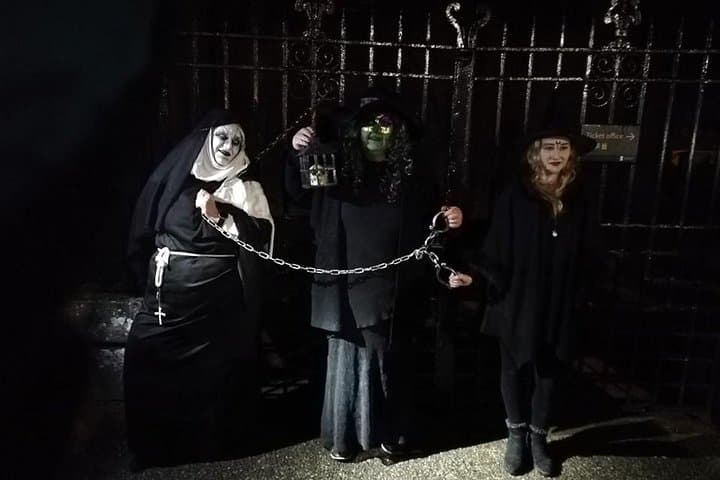

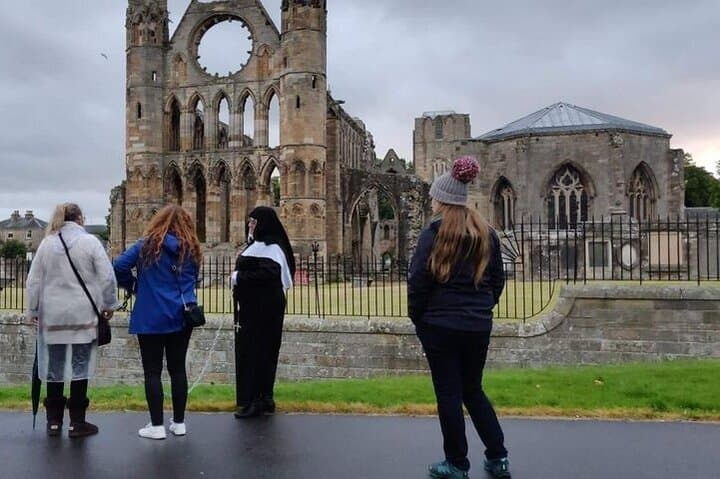
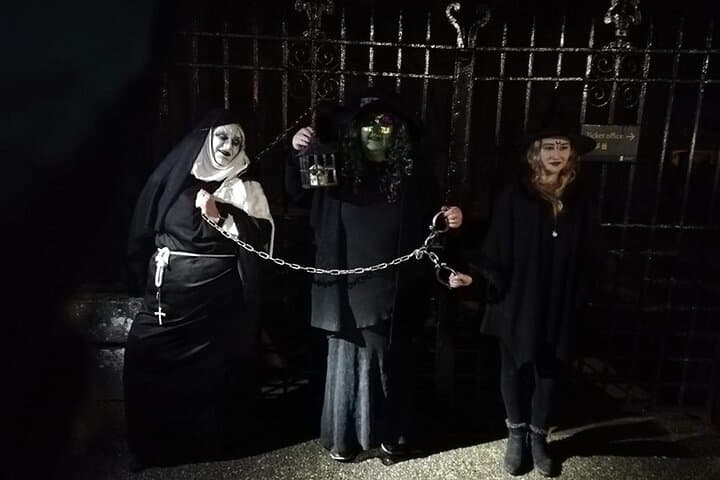
The rain-slick stones of Elgin’s High Street reflect lantern light as your guide calls the group to the Wee Cross — a prompt to step into the town’s harder stories. This walking tour threads through narrow lanes, pauses outside Elgin Cathedral and stops at the Witches Stone across from the Burger King, recreating how 17th-century trials unfolded without leaving the present-day pavement.
The rain-slick stones of Elgin’s High Street reflect lantern light as your guide calls the group to the Wee Cross — a prompt to step into the town’s harder stories. This walking tour threads through narrow lanes, pauses outside Elgin Cathedral and stops at the Witches Stone across from the Burger King, recreating how 17th-century trials unfolded without leaving the present-day pavement.
Elgin sits on the fertile floodplain of the River Lossie where sandstone and flagstone buildings tell a 900-year civic history. The tour focuses on local witch trials of the 1600s, presenting dramatized proceedings and little-known archival details about Greyfriars and civic buildings used for hearings. Expect sober interpretation more than sensationalism; guides highlight social conditions, legal processes and community tensions that produced accusations.
Culturally, the walk connects religious reform, rural poverty and changing Scottish law. Geologically the cathedral’s stonework—weathered sandstone—explains why facades patina quickly in coastal-influenced weather. Small photo stops at Elgin Cathedral give time for context and images.
Practical notes: the route is on paved streets with curb cuts and is wheelchair accessible; total time runs about 60–120 minutes. Wear waterproof layers and sturdy walking shoes—Scotland’s weather can shift mid-tour. Public transport serves the town centre; the tour begins at the Wee Cross and finishes at the Witches Stone. Be prepared for sensitive material: the presentation addresses pain and injustice rather than glorifying cruelty. Bring a charged phone for photos, and allow extra time to explore the cathedral and local cafés after the walk.