THE ADVENTURE COLLECTIVE® · Independent discovery and booking for outdoor travel

Ride the ferry across Mumbai Harbour to Elephanta Island, climb the carved stone steps to the Shiva cave, and weave in Mumbai’s key landmarks on a guided full-day tour. A practical, scenic introduction to the island’s rock-cut art and the city’s coastal pulse.
Ride the ferry across Mumbai Harbour to Elephanta Island, climb the carved stone steps to the Shiva cave, and weave in Mumbai’s key landmarks on a guided full-day tour. A practical, scenic introduction to the island’s rock-cut art and the city’s coastal pulse.
You step off the ferry and the harbour wind cuts through the haze of Mumbai — salt on your lips, gulls circling the wake. The island’s stone steps rise immediately from the jetty; the path climbs past scrub and hungry macaques until the first carved relief appears, sudden and human-sized against the cave’s shadowed rock.
Verified experiences and guided adventures in the surrounding area.
Operated by Mystical Mumbai · Mumbai, Maharashtra
You step off the ferry and the harbour wind cuts through the haze of Mumbai — salt on your lips, gulls circling the wake. The island’s stone steps rise immediately from the jetty; the path climbs past scrub and hungry macaques until the first carved relief appears, sudden and human-sized against the cave’s shadowed rock.
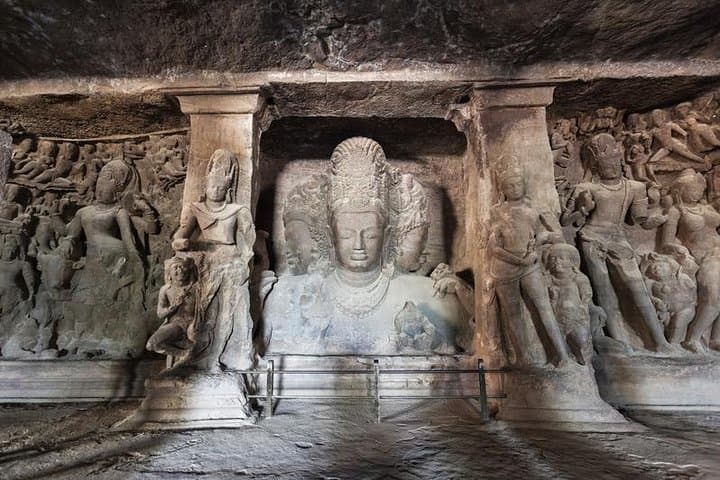
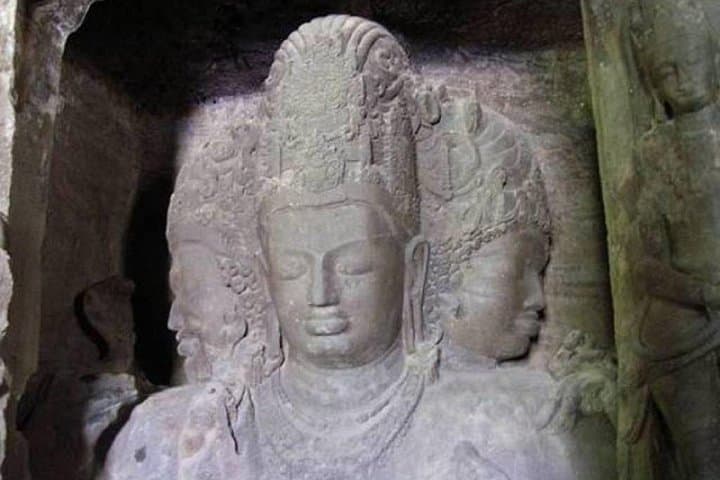
The caves at Gharapuri (Elephanta) are a compact classroom in early medieval Hindu art and coastal geology. Hewn from basalt in roughly the 5th–8th centuries CE, the main Shiva cave holds the massive Trimurti carving and panels that narrate mythic episodes: Shiva’s tandava, his wedding, and slaying of demons. Portuguese colonial history later repurposed parts of the island, leaving a layered record of worship, neglect, and rediscovery. Back on the mainland the tour passes Mumbai landmarks — from the Gothic station facades to the Taj Palace and Marine Drive — offering a quick cultural sweep of the city’s colonial and postcolonial life.
Practically, the day is straightforward: expect a one-hour ferry each way, roughly 100–130 stone steps up from the landing, and several hours on mostly uneven rock floors inside the caves. Bring water, sun protection and steady footwear; the site is protected as a heritage monument so stay on marked paths and avoid touching fragile reliefs. Hotel pickup, ferry cost and a local guide are included in most packages, making this a good full-day option for first-time visitors who want a concentrated dose of Mumbai’s maritime history and monumental sculpture.
easy.
6–7 hours.
Suitable for average fitness; the only sustained exertion is the climb of roughly 100–130 uneven stone steps.
The ferry takes about one hour each way from the Gateway of India harbour, though timings vary with tide and vessel type.
Many full-day tours include the ferry and basic admissions; confirm with your operator — this particular itinerary lists ferry cost and guide as included.
Access involves a steep flight of stone steps and uneven floors; the site is not fully wheelchair accessible and requires moderate mobility to navigate safely.
There are basic stalls near the jetty and some vendors on the island, but carrying snacks is recommended; avoid leaving litter and follow local rules.
The Elephanta caves, carved from basalt between the 5th and 8th centuries CE, are primarily devoted to Shaiva worship; colonial periods altered parts of the island but the caves retain major sculptural ensembles.
Elephanta is a protected archaeological site and UNESCO-listed; visitor pressure and humidity-driven erosion are managed by controlled access and conservation programs, so follow guidelines and avoid touching carvings.
Mystical Mumbai operates guided outdoor trips and adventures with an emphasis on safety, stewardship, and memorable experiences.

You step off the ferry and the harbour wind cuts through the haze of Mumbai — salt on your lips, gulls circling the wake. The island’s stone steps rise immediately from the jetty; the path climbs past scrub and hungry macaques until the first carved relief appears, sudden and human-sized against the cave’s shadowed rock.
You step off the ferry and the harbour wind cuts through the haze of Mumbai — salt on your lips, gulls circling the wake. The island’s stone steps rise immediately from the jetty; the path climbs past scrub and hungry macaques until the first carved relief appears, sudden and human-sized against the cave’s shadowed rock.
The caves at Gharapuri (Elephanta) are a compact classroom in early medieval Hindu art and coastal geology. Hewn from basalt in roughly the 5th–8th centuries CE, the main Shiva cave holds the massive Trimurti carving and panels that narrate mythic episodes: Shiva’s tandava, his wedding, and slaying of demons. Portuguese colonial history later repurposed parts of the island, leaving a layered record of worship, neglect, and rediscovery. Back on the mainland the tour passes Mumbai landmarks — from the Gothic station facades to the Taj Palace and Marine Drive — offering a quick cultural sweep of the city’s colonial and postcolonial life.
Practically, the day is straightforward: expect a one-hour ferry each way, roughly 100–130 stone steps up from the landing, and several hours on mostly uneven rock floors inside the caves. Bring water, sun protection and steady footwear; the site is protected as a heritage monument so stay on marked paths and avoid touching fragile reliefs. Hotel pickup, ferry cost and a local guide are included in most packages, making this a good full-day option for first-time visitors who want a concentrated dose of Mumbai’s maritime history and monumental sculpture.