THE ADVENTURE COLLECTIVE® · Independent discovery and booking for outdoor travel

Stand beneath a towering red sandstone ‘elephant’ on a short, memorable visit from AlUla. This practical guide covers the geology, timing, and what to pack for a safe, photogenic stop at Jebel Al‑Fil.
Stand beneath a towering red sandstone ‘elephant’ on a short, memorable visit from AlUla. This practical guide covers the geology, timing, and what to pack for a safe, photogenic stop at Jebel Al‑Fil.
You arrive to the desert on a low, late-afternoon light; wind has smoothed the day’s heat and sand takes on a warm, burnished tone. Ahead, a giant of red sandstone lifts from the plain — Elephant Rock (Jebel Al‑Fil) — its trunk-shaped arch carved by wind and water until the formation looks poised to take a slow step.
Verified experiences and guided adventures in the surrounding area.
Operated by Desert Point Tourism LLC · AlUla, Al Madinah Region
You arrive to the desert on a low, late-afternoon light; wind has smoothed the day’s heat and sand takes on a warm, burnished tone. Ahead, a giant of red sandstone lifts from the plain — Elephant Rock (Jebel Al‑Fil) — its trunk-shaped arch carved by wind and water until the formation looks poised to take a slow step.
Geology here is straightforward and dramatic: Jurassic and Cretaceous sandstones sculpted over millions of years by abrasion and rare flash floods. Unlike nearby Hegra (Madain Saleh), whose Nabataean tombs show human craft, the elephant’s shape is pure erosion — an instructive contrast between human and natural history in the same landscape.
AlUla has long been a crossroads — caravan routes, Bedouin camps, and now a rising heritage destination. Guides often frame the rock within local stories, and sunsets are when the area’s layered colors sharpen and silhouettes become photographic icons.
Practical guidance: most visits are short drives from AlUla with easy, flat walking around the base; expect sandy patches and some low rock scrambling. Bring sun protection, 1–2 liters of water, sturdy shoes, and a camera with a wide lens for scale shots. Aim for late afternoon for the best light and cooler temperatures; mornings also work but mornings can be cool in winter.
Respect signage and any access restrictions — climbing on the formation may be prohibited to protect fragile rock. Leave no trace: pack out trash, avoid marking stone, and follow your guide’s directions to preserve this dramatic natural landmark for the next traveler.
easy.
1.5–2 hours.
Suitable for most fitness levels; involves short walks on sand and easy rock approaches
Elephant Rock is a short drive from AlUla city — most tours include transportation and the round trip typically takes under an hour of driving each way depending on route and stops.
Access arrangements vary; popular guided tours include transport and guidance. Check with your operator for any site fees or timed entry policies before you go.
Climbing is often discouraged or restricted to protect the fragile sandstone; follow posted rules and your guide’s instructions to avoid fines or damage.
Late fall through early spring offers milder temperatures; early mornings and late afternoons are best for light and cooler conditions year-round.
AlUla sits along historic caravan routes and close to Hegra (Madain Saleh), a Nabataean necropolis whose carved tomb facades contrast with Elephant Rock’s natural formation.
Visitor management and restrictions on climbing help protect soft sandstone from accelerated erosion; follow leave‑no‑trace practices and local guidance.
Desert Point Tourism LLC operates guided outdoor trips and adventures with an emphasis on safety, stewardship, and memorable experiences.
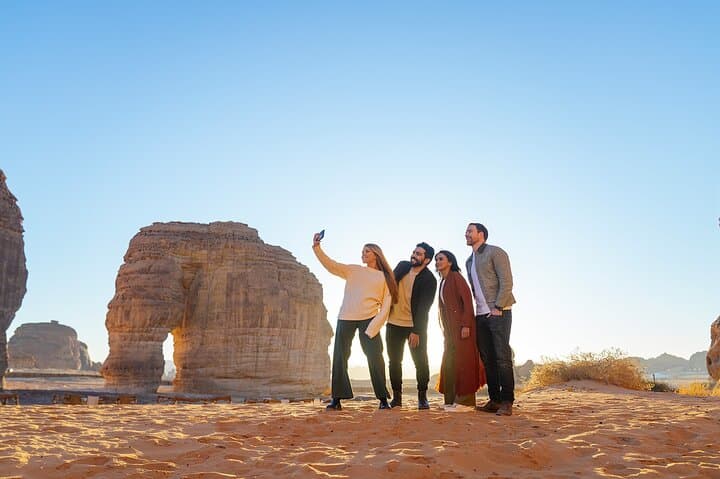
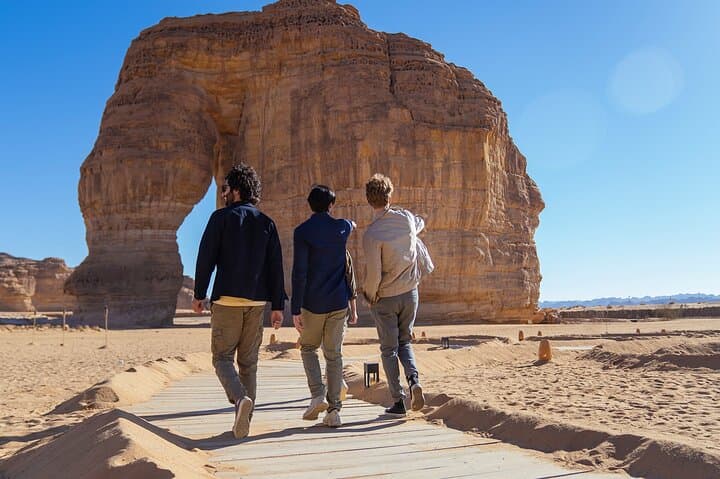
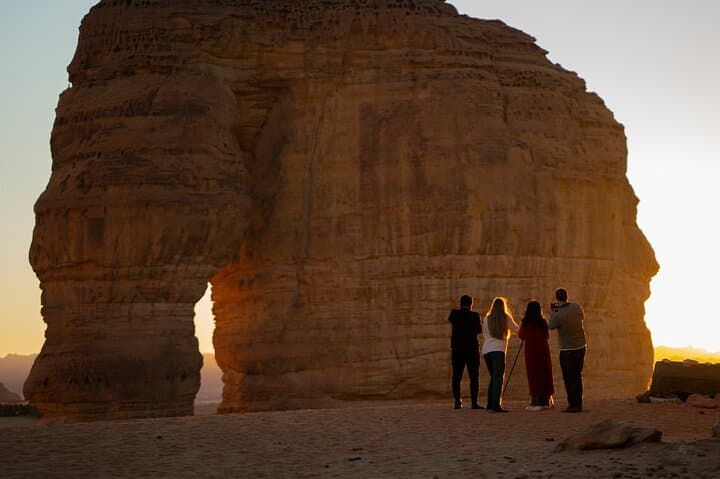
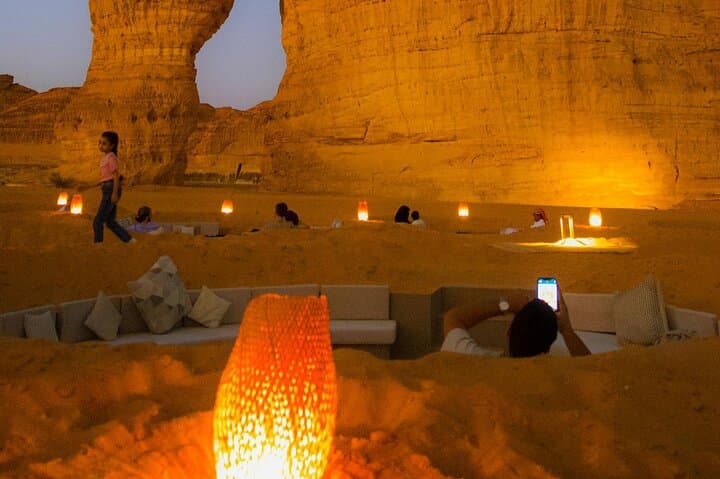
You arrive to the desert on a low, late-afternoon light; wind has smoothed the day’s heat and sand takes on a warm, burnished tone. Ahead, a giant of red sandstone lifts from the plain — Elephant Rock (Jebel Al‑Fil) — its trunk-shaped arch carved by wind and water until the formation looks poised to take a slow step.
You arrive to the desert on a low, late-afternoon light; wind has smoothed the day’s heat and sand takes on a warm, burnished tone. Ahead, a giant of red sandstone lifts from the plain — Elephant Rock (Jebel Al‑Fil) — its trunk-shaped arch carved by wind and water until the formation looks poised to take a slow step.
Geology here is straightforward and dramatic: Jurassic and Cretaceous sandstones sculpted over millions of years by abrasion and rare flash floods. Unlike nearby Hegra (Madain Saleh), whose Nabataean tombs show human craft, the elephant’s shape is pure erosion — an instructive contrast between human and natural history in the same landscape.
AlUla has long been a crossroads — caravan routes, Bedouin camps, and now a rising heritage destination. Guides often frame the rock within local stories, and sunsets are when the area’s layered colors sharpen and silhouettes become photographic icons.
Practical guidance: most visits are short drives from AlUla with easy, flat walking around the base; expect sandy patches and some low rock scrambling. Bring sun protection, 1–2 liters of water, sturdy shoes, and a camera with a wide lens for scale shots. Aim for late afternoon for the best light and cooler temperatures; mornings also work but mornings can be cool in winter.
Respect signage and any access restrictions — climbing on the formation may be prohibited to protect fragile rock. Leave no trace: pack out trash, avoid marking stone, and follow your guide’s directions to preserve this dramatic natural landmark for the next traveler.