THE ADVENTURE COLLECTIVE® · Independent discovery and booking for outdoor travel

Ride an electric shuttle through L'Aquila's compact historic center, stopping at basilicas, fountains and municipal landmarks. This 90–110 minute accessible tour offers a low-impact way to see rebuilt medieval streets and learn local history.
Ride an electric shuttle through L'Aquila's compact historic center, stopping at basilicas, fountains and municipal landmarks. This 90–110 minute accessible tour offers a low-impact way to see rebuilt medieval streets and learn local history.
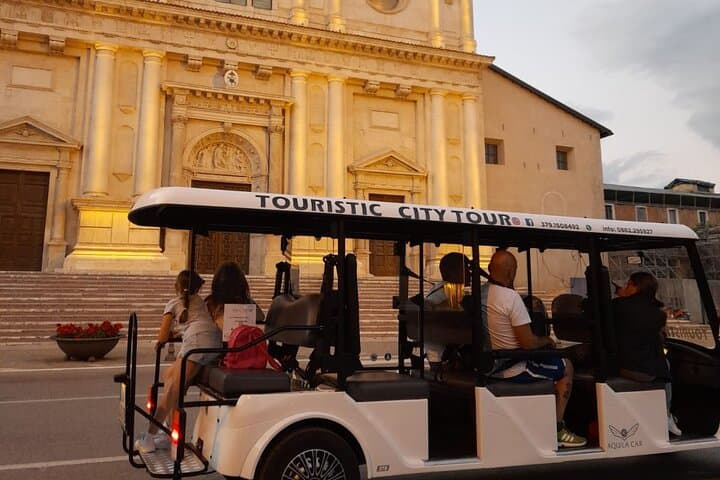
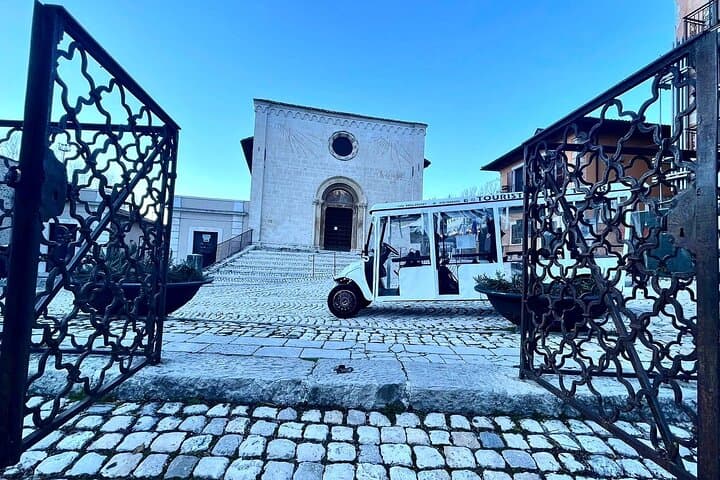
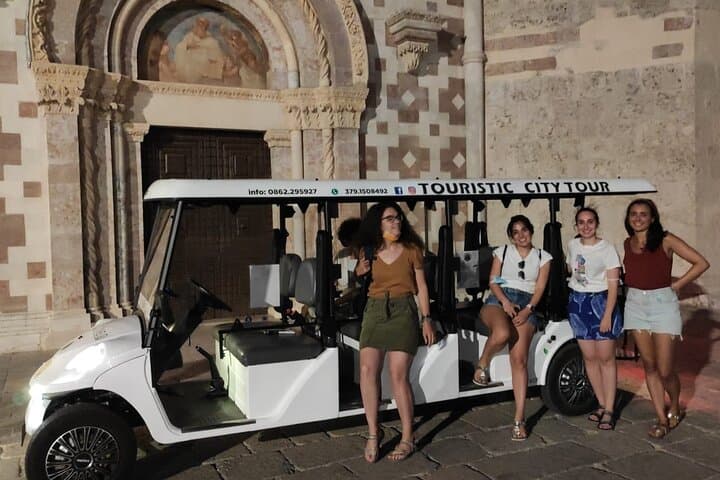
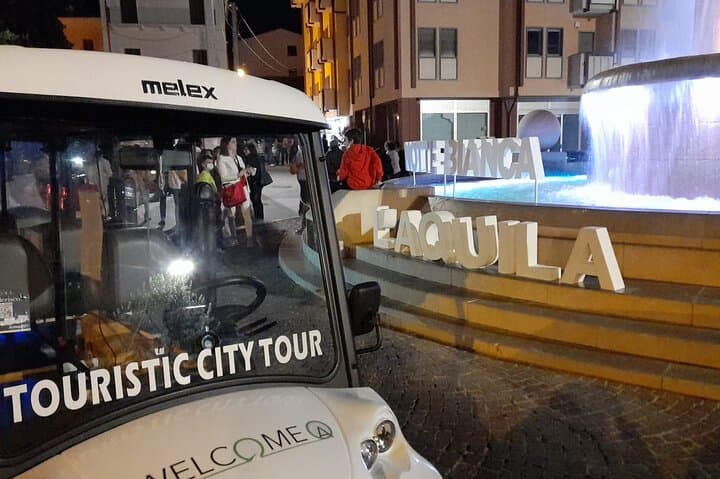
You climb aboard a compact electric shuttle at the Church of the Holy Souls, windows framing the pale stone of L'Aquila as the Apennines watch on the horizon. The vehicle hums rather than roars; your guide points out a luminous fountain, an austere basilica doorway and narrow cobbled streets that open like pages of the city’s past.
Verified experiences and guided adventures in the surrounding area.
Operated by Welcome AQ · L'Aquila, Abruzzo
You climb aboard a compact electric shuttle at the Church of the Holy Souls, windows framing the pale stone of L'Aquila as the Apennines watch on the horizon. The vehicle hums rather than roars; your guide points out a luminous fountain, an austere basilica doorway and narrow cobbled streets that open like pages of the city’s past.
L'Aquila was founded in the Middle Ages and rebuilt repeatedly after earthquakes; the 2009 quake reshaped both fabric and conservation priorities. Geologically the city sits in a basin cut into the central Apennines—stone façades and plazas reflect that mountainous geology and the city’s long role as a regional crossroads. Culturally you’ll catch Abruzzo’s reserved pride: festivals, local cuisine, and the Perdonanza tradition tied to the Basilica di Santa Maria di Collemaggio.
The shuttle pauses at five short stops—Basilica, San Silvestro, the Hemicycle Palace, the Luminous Fountain and return to Piazza del Duomo—so you can step down and stretch, photograph carved portals, and feel the scale of reconstructed architecture.
Practicalities: the tour runs about 90–110 minutes, accepts mobile tickets, and is wheelchair accessible. Dress in layers—stone streets can be cool in shade but hot in sun—and bring cash for small vendors. Peak summer afternoons are busy; mornings or late afternoons offer softer light for photos. The electric shuttle is low-impact transport, a quiet way to scan the city without long walks while still getting out to touch monuments and absorb L'Aquila’s layered history.
easy.
90–110 minutes.
Suitable for all fitness levels; minimal walking required when you stay on the shuttle, short walks at stops.
Yes — the service and vehicle are wheelchair accessible and service animals are allowed; confirm any special needs at booking.
Yes — the itinerary includes several short stops where guests may disembark to visit basilicas and fountains and reboard later.
No — the tour may allow you to enter sites at stops but admissions or donations to churches are not included.
The operator may cancel for bad weather and offers a full refund if canceled at least 24 hours before departure; check the provider’s terms when you book.
L'Aquila grew in the 13th century as a federation of mountain hamlets and has been rebuilt many times; the 2009 earthquake accelerated conservation and adaptive restoration of historic monuments.
The electric shuttle reduces local traffic emissions and the city emphasizes careful restoration of stonework; visitors are encouraged to follow paths, avoid touching fragile carvings and support local guides.
Welcome AQ operates guided outdoor trips and adventures with an emphasis on safety, stewardship, and memorable experiences.
You climb aboard a compact electric shuttle at the Church of the Holy Souls, windows framing the pale stone of L'Aquila as the Apennines watch on the horizon. The vehicle hums rather than roars; your guide points out a luminous fountain, an austere basilica doorway and narrow cobbled streets that open like pages of the city’s past.
You climb aboard a compact electric shuttle at the Church of the Holy Souls, windows framing the pale stone of L'Aquila as the Apennines watch on the horizon. The vehicle hums rather than roars; your guide points out a luminous fountain, an austere basilica doorway and narrow cobbled streets that open like pages of the city’s past.
L'Aquila was founded in the Middle Ages and rebuilt repeatedly after earthquakes; the 2009 quake reshaped both fabric and conservation priorities. Geologically the city sits in a basin cut into the central Apennines—stone façades and plazas reflect that mountainous geology and the city’s long role as a regional crossroads. Culturally you’ll catch Abruzzo’s reserved pride: festivals, local cuisine, and the Perdonanza tradition tied to the Basilica di Santa Maria di Collemaggio.
The shuttle pauses at five short stops—Basilica, San Silvestro, the Hemicycle Palace, the Luminous Fountain and return to Piazza del Duomo—so you can step down and stretch, photograph carved portals, and feel the scale of reconstructed architecture.
Practicalities: the tour runs about 90–110 minutes, accepts mobile tickets, and is wheelchair accessible. Dress in layers—stone streets can be cool in shade but hot in sun—and bring cash for small vendors. Peak summer afternoons are busy; mornings or late afternoons offer softer light for photos. The electric shuttle is low-impact transport, a quiet way to scan the city without long walks while still getting out to touch monuments and absorb L'Aquila’s layered history.