THE ADVENTURE COLLECTIVE® · Independent discovery and booking for outdoor travel

Quiet electric scooters thread Kinosaki’s alleys and riverside, linking Genbudo Cave, Maruyama River islets and a Ramsar-listed wetland in a 120-minute self-guided loop. Ideal for short windows between check-in and evening onsen.
Quiet electric scooters thread Kinosaki’s alleys and riverside, linking Genbudo Cave, Maruyama River islets and a Ramsar-listed wetland in a 120-minute self-guided loop. Ideal for short windows between check-in and evening onsen.
You roll quietly through a street still damp from an early mist, the scooter’s motor a soft hum under the wooden eaves and paper lanterns. Riverside willows lean close like curious guides; a stork lifts off downstream and the town exhales steam from distant rotenburo.
Verified experiences and guided adventures in the surrounding area.
Operated by Attractive JAPAN · Kinosaki Onsen, Hyogo Prefecture
You roll quietly through a street still damp from an early mist, the scooter’s motor a soft hum under the wooden eaves and paper lanterns. Riverside willows lean close like curious guides; a stork lifts off downstream and the town exhales steam from distant rotenburo.
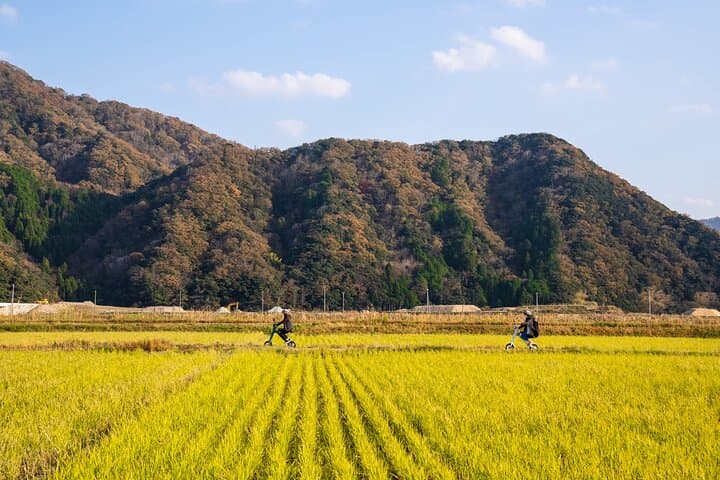
Kinosaki Onsen grew around thermal springs used since at least the Edo period, when travelers paused here between sea and mountain routes. The Natural Treasures route threads geology and culture: columnar basalt at Genbudo Cave hints at ancient lava flows, while the Maruyama River’s small islands and Toshima wetlands host migratory birds that returned after conservation efforts.
Cultural notes are part of the ride — guests still walk the town in yukata and geta, and seasonal snow crab and local seafood define menus. The electric scooter tour is designed as a self-guided, 120-minute loop with an original map and safety briefing; it’s a short, low-impact way to see both village streets and riverside nature without a car.
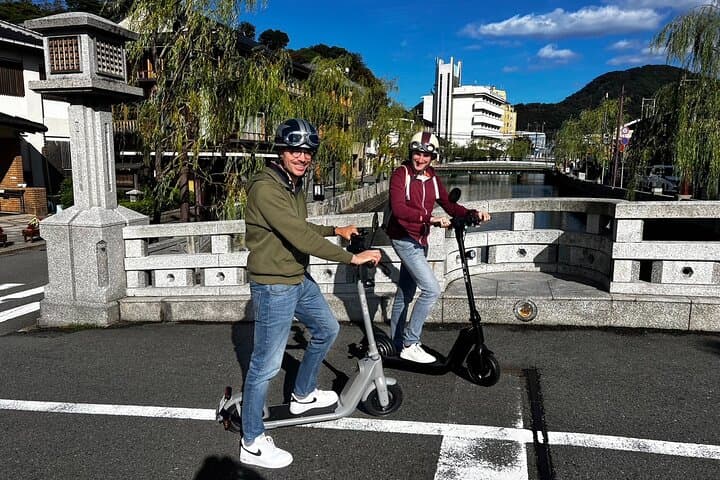
Practical guidance: allow 8–12 km depending on stops, factor in traffic near train times, and follow local vehicle rules — no international license required but riders must be 16+ and under 100 kg. Helmets and a practice session are provided; use the loaned smartphone for navigation and bring a light jacket for river breezes. Hydrate, park considerately near onsen districts, and plan photo stops at Genbudo and the wetland outlook — the pace is calm, but the views reward attention.
easy.
2 hours.
Minimal fitness required—able to stand and balance for short practice and control the scooter for up to two hours.
No — this rental does not require an international driver’s license, but riders must be 16 or older and able to follow local traffic rules.
The operator will notify by email by 3:00 p.m. the day before if the route is canceled for weather; all sales are final per policy but weather cancellations are communicated in advance.
Yes — a supervised practice session is included so riders can get comfortable before starting the route.
Yes — maximum weight is 100 kg; not recommended for travelers with certain spinal or cardiovascular conditions and pregnant participants should consult a doctor.
Kinosaki’s onsen dates to the Edo period and developed as a stop for travelers; local crab fisheries and ryokan culture grew around the springs.
The Toshima wetlands are a Ramsar-listed site; riders should minimize disturbance, avoid littering, and follow marked viewpoints to protect habitat.
Attractive JAPAN operates guided outdoor trips and adventures with an emphasis on safety, stewardship, and memorable experiences.
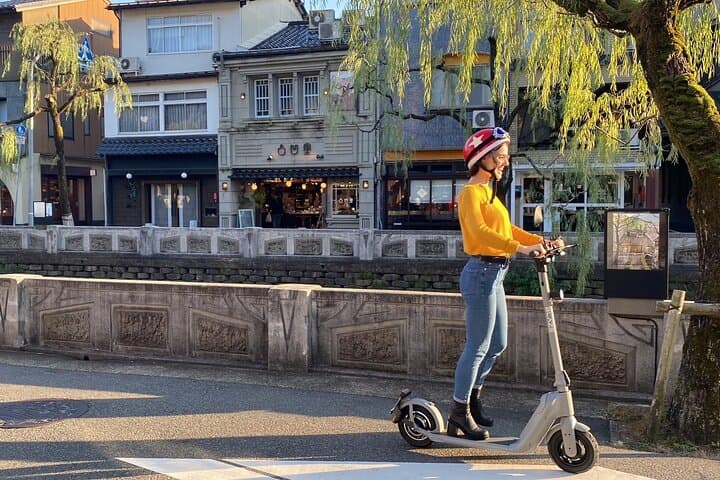
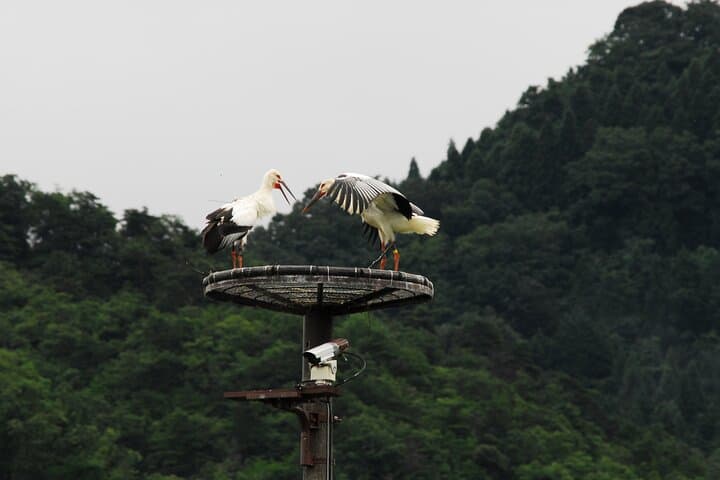
You roll quietly through a street still damp from an early mist, the scooter’s motor a soft hum under the wooden eaves and paper lanterns. Riverside willows lean close like curious guides; a stork lifts off downstream and the town exhales steam from distant rotenburo.
You roll quietly through a street still damp from an early mist, the scooter’s motor a soft hum under the wooden eaves and paper lanterns. Riverside willows lean close like curious guides; a stork lifts off downstream and the town exhales steam from distant rotenburo.
Kinosaki Onsen grew around thermal springs used since at least the Edo period, when travelers paused here between sea and mountain routes. The Natural Treasures route threads geology and culture: columnar basalt at Genbudo Cave hints at ancient lava flows, while the Maruyama River’s small islands and Toshima wetlands host migratory birds that returned after conservation efforts.
Cultural notes are part of the ride — guests still walk the town in yukata and geta, and seasonal snow crab and local seafood define menus. The electric scooter tour is designed as a self-guided, 120-minute loop with an original map and safety briefing; it’s a short, low-impact way to see both village streets and riverside nature without a car.
Practical guidance: allow 8–12 km depending on stops, factor in traffic near train times, and follow local vehicle rules — no international license required but riders must be 16+ and under 100 kg. Helmets and a practice session are provided; use the loaned smartphone for navigation and bring a light jacket for river breezes. Hydrate, park considerately near onsen districts, and plan photo stops at Genbudo and the wetland outlook — the pace is calm, but the views reward attention.