THE ADVENTURE COLLECTIVE® · Independent discovery and booking for outdoor travel

Glide through Amsterdam aboard the restored 1928 Jonckvrouw on an intimate electric canal cruise. This 90‑minute small‑group tour focuses on flexible routing, local stories, and comfortable onboard amenities.
Glide through Amsterdam aboard the restored 1928 Jonckvrouw on an intimate electric canal cruise. This 90‑minute small‑group tour focuses on flexible routing, local stories, and comfortable onboard amenities.
A low-slung wooden boat slips under an iron bridge as the city exhales—bicycles click, conversations ripple and the canal invites you forward. On the Jonckvrouw, a 1928 Royal Dutch vessel restored for silent electric running, the water becomes a neighborhood street: brick facades glide past, gabled roofs lean in to listen, and the city’s stories are told by a captain who knows which turn reveals the best light.
Verified experiences and guided adventures in the surrounding area.
Operated by Captain Dave Amsterdam · Amsterdam, North Holland
A low-slung wooden boat slips under an iron bridge as the city exhales—bicycles click, conversations ripple and the canal invites you forward. On the Jonckvrouw, a 1928 Royal Dutch vessel restored for silent electric running, the water becomes a neighborhood street: brick facades glide past, gabled roofs lean in to listen, and the city’s stories are told by a captain who knows which turn reveals the best light.
The canal ring dates to Amsterdam’s 17th‑century Golden Age; these waterways were engineered on reclaimed peat and clay, a human-made geography that shaped trade, wealth, and the city’s compact urban fabric. On a ninety-minute loop the boat threads the Grachtengordel and the Amstel, passing the Skinny Bridge, the Seven Bridges, the Stopera and the Anne Frank House while the guide mixes local history, architecture, and candid anecdotes.
Culturally, the cruise reads like a neighborhood visit rather than a lecture—expect spontaneous route choices based on weather and group mood. The Jonckvrouw’s electric motor keeps exhaust silent and wakes minimal, making it one of the gentler ways to see Amsterdam from water level.
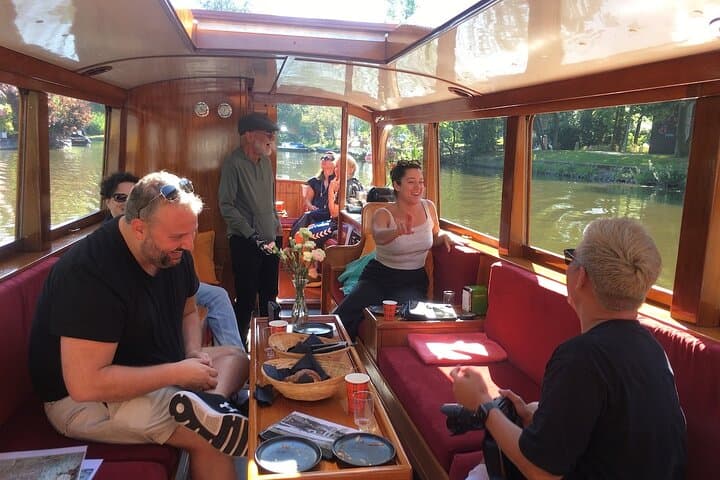
Practicalities: meet at Prinsengracht 397 (look for the Jonckvrouw), arrive 10 minutes early, and avoid using Apple Maps for directions. The boat is heated, has sliding windows, a sunroof, an open aft deck and a small restroom; capacity is a dozen guests. Dress in layers, bring a charged camera, and carry ID for the open bar. If you want calmer light for photos, book a late‑afternoon slot; if you prefer livelier energy, choose midday. Small‑group format makes for conversation, not canned commentary—come ready to ask questions and to leave with a stronger sense of how Amsterdam moves on water.
easy.
1.5 hours (90 minutes).
Suitable for all fitness levels—boarding involves a short step; mostly seated experience.
The dock is at Prinsengracht 397 (odd side of the canal); the crew will be on the canal side near that address about 10 minutes before departure.
Yes—the Jonckvrouw has heating, sliding windows and extra blankets to stay comfortable in changeable Dutch weather.
Children are welcome and service animals are permitted; check with the operator about seating and safety for small children.
The boat requires a short step to board; contact the operator ahead of time to discuss accessibility arrangements and boarding assistance.
Amsterdam’s canal ring (Grachtengordel) was built in the 17th century during the Dutch Golden Age; the Jonckvrouw itself dates to 1928 and served civic and royal passengers before its restoration.
The boat’s electric propulsion reduces emissions and wakes; operators encourage low-impact behavior—no littering, limited restroom use, and mindful noise to protect canal ecosystems.
Captain Dave Amsterdam operates guided outdoor trips and adventures with an emphasis on safety, stewardship, and memorable experiences.
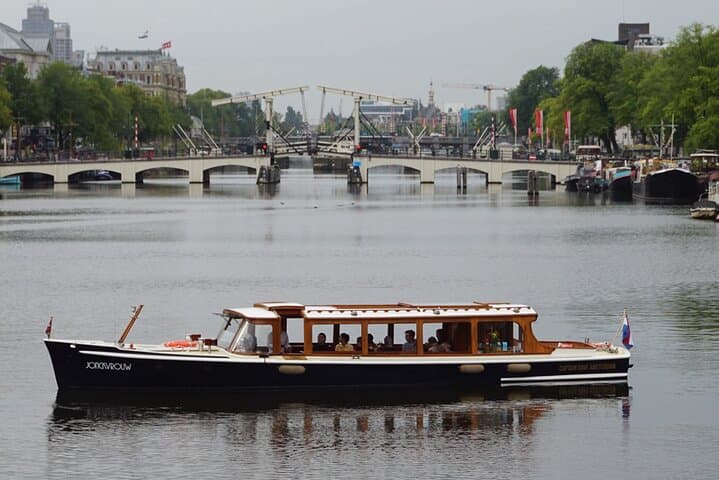


A low-slung wooden boat slips under an iron bridge as the city exhales—bicycles click, conversations ripple and the canal invites you forward. On the Jonckvrouw, a 1928 Royal Dutch vessel restored for silent electric running, the water becomes a neighborhood street: brick facades glide past, gabled roofs lean in to listen, and the city’s stories are told by a captain who knows which turn reveals the best light.
A low-slung wooden boat slips under an iron bridge as the city exhales—bicycles click, conversations ripple and the canal invites you forward. On the Jonckvrouw, a 1928 Royal Dutch vessel restored for silent electric running, the water becomes a neighborhood street: brick facades glide past, gabled roofs lean in to listen, and the city’s stories are told by a captain who knows which turn reveals the best light.
The canal ring dates to Amsterdam’s 17th‑century Golden Age; these waterways were engineered on reclaimed peat and clay, a human-made geography that shaped trade, wealth, and the city’s compact urban fabric. On a ninety-minute loop the boat threads the Grachtengordel and the Amstel, passing the Skinny Bridge, the Seven Bridges, the Stopera and the Anne Frank House while the guide mixes local history, architecture, and candid anecdotes.
Culturally, the cruise reads like a neighborhood visit rather than a lecture—expect spontaneous route choices based on weather and group mood. The Jonckvrouw’s electric motor keeps exhaust silent and wakes minimal, making it one of the gentler ways to see Amsterdam from water level.
Practicalities: meet at Prinsengracht 397 (look for the Jonckvrouw), arrive 10 minutes early, and avoid using Apple Maps for directions. The boat is heated, has sliding windows, a sunroof, an open aft deck and a small restroom; capacity is a dozen guests. Dress in layers, bring a charged camera, and carry ID for the open bar. If you want calmer light for photos, book a late‑afternoon slot; if you prefer livelier energy, choose midday. Small‑group format makes for conversation, not canned commentary—come ready to ask questions and to leave with a stronger sense of how Amsterdam moves on water.