THE ADVENTURE COLLECTIVE® · Independent discovery and booking for outdoor travel

Glide silently from Port de l'Arsenal through the long Bastille tunnel on a 75‑minute electric cruise of the Canal Saint‑Martin. This low‑impact urban waterway tour pairs close-up Paris street life with the rare hush of an underground canal.
Glide silently from Port de l'Arsenal through the long Bastille tunnel on a 75‑minute electric cruise of the Canal Saint‑Martin. This low‑impact urban waterway tour pairs close-up Paris street life with the rare hush of an underground canal.
You step aboard at Port de l'Arsenal and the city eases itself into silence — only the soft hum of electric motors and the lapping of canal water against the hull. The afternoon light picks out iron footbridges and graffiti-studded quays as the boat slips beneath the low arches leading into the long Bastille tunnel.
Verified experiences and guided adventures in the surrounding area.
You step aboard at Port de l'Arsenal and the city eases itself into silence — only the soft hum of electric motors and the lapping of canal water against the hull. The afternoon light picks out iron footbridges and graffiti-studded quays as the boat slips beneath the low arches leading into the long Bastille tunnel.
Built in the early 19th century to bring fresh water and commercial connectivity into Paris, the Canal Saint‑Martin threads through working neighborhoods and conditioned green spaces. The route alternates exposed quays, cast-iron swing bridges, and the subterranean tunnel that has long given the canal its slightly mysterious reputation. Geologically, the canal cuts across the Seine's low-lying basin — the route is defined more by urban engineering than dramatic relief, but the change from open sky to vaulted darkness is striking.
Culturally, this waterway has fed markets, inspired writers and supported small boat traffic for two centuries; today, quieter electric craft offer a low-impact way to experience that history up close. Expect a mix of close-up street life — cafés, market stalls, locals fishing — and the peculiar hush of the tunnel where the city’s noise is momentarily swallowed.
Practical guidance: the cruise runs about 75 minutes, boarding at Port de l'Arsenal and finishing near Square Follereau. Arrive 15–20 minutes early, bring a light jacket (it’s cooler on the water and in the tunnel), and keep a camera at the ready for low-light scenes in the tunnel. The electric format minimizes wake and emissions, making this an easy, sensitive urban waterway outing ideal for families and photographers.
easy.
1–1.5 hours.
Minimal fitness required—mostly seated with short walks at boarding/disembarkation
Boarding is at Port de l'Arsenal near Place de la Bastille; the cruise concludes near Square Follereau, a short walk from local cafés and shops.
Yes—this relaxed, seated cruise is family-friendly and generally accessible to seniors, though mobility restrictions should be checked with the operator in advance.
Smaller canal boats sometimes lack onboard toilets; check booking details or plan to use facilities at the departure point before boarding.
Many operators offer basic multilingual commentary or printed notes; confirm language options when booking if you need commentary in a specific language.
The Canal Saint‑Martin was developed in the early 19th century to supply Paris with fresh water and to link northeastern waterways to the Seine, reshaping local trade and neighborhoods.
Electric boats reduce noise and emissions, and local groups monitor bank vegetation and water quality to balance leisure use with ecological health.
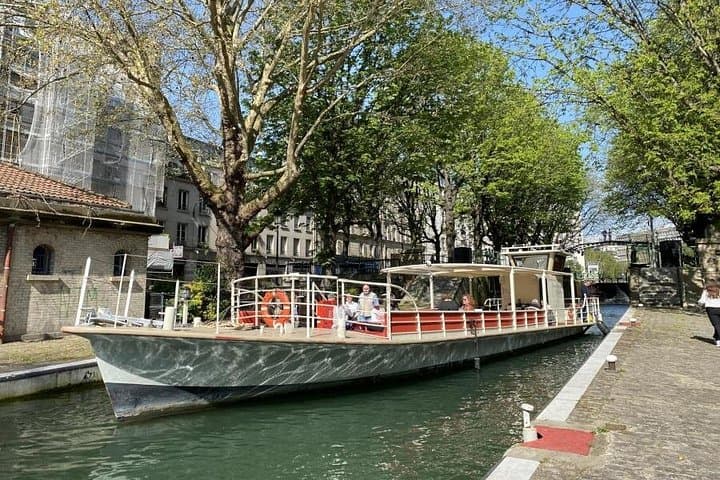
You step aboard at Port de l'Arsenal and the city eases itself into silence — only the soft hum of electric motors and the lapping of canal water against the hull. The afternoon light picks out iron footbridges and graffiti-studded quays as the boat slips beneath the low arches leading into the long Bastille tunnel.
You step aboard at Port de l'Arsenal and the city eases itself into silence — only the soft hum of electric motors and the lapping of canal water against the hull. The afternoon light picks out iron footbridges and graffiti-studded quays as the boat slips beneath the low arches leading into the long Bastille tunnel.
Built in the early 19th century to bring fresh water and commercial connectivity into Paris, the Canal Saint‑Martin threads through working neighborhoods and conditioned green spaces. The route alternates exposed quays, cast-iron swing bridges, and the subterranean tunnel that has long given the canal its slightly mysterious reputation. Geologically, the canal cuts across the Seine's low-lying basin — the route is defined more by urban engineering than dramatic relief, but the change from open sky to vaulted darkness is striking.
Culturally, this waterway has fed markets, inspired writers and supported small boat traffic for two centuries; today, quieter electric craft offer a low-impact way to experience that history up close. Expect a mix of close-up street life — cafés, market stalls, locals fishing — and the peculiar hush of the tunnel where the city’s noise is momentarily swallowed.
Practical guidance: the cruise runs about 75 minutes, boarding at Port de l'Arsenal and finishing near Square Follereau. Arrive 15–20 minutes early, bring a light jacket (it’s cooler on the water and in the tunnel), and keep a camera at the ready for low-light scenes in the tunnel. The electric format minimizes wake and emissions, making this an easy, sensitive urban waterway outing ideal for families and photographers.