THE ADVENTURE COLLECTIVE® · Independent discovery and booking for outdoor travel

Ride an electric bike from Rio’s historic center to Ipanema, tracing colonial plazas, samba roots at Pedra do Sal, and seaside bike paths. This guided 3–4 hour tour balances urban history, bold street art, and approachable hills with electric assist.
Ride an electric bike from Rio’s historic center to Ipanema, tracing colonial plazas, samba roots at Pedra do Sal, and seaside bike paths. This guided 3–4 hour tour balances urban history, bold street art, and approachable hills with electric assist.
A warm Atlantic breeze pushes you along Avenida Rio Branco as the city wakes: vendors, tile façades, and the rumble of trams give way to wide seaside promenades and the surf beyond Arpoador.
Verified experiences and guided adventures in the surrounding area.
Operated by DiCria e-Bike Tour · Rio de Janeiro, Rio de Janeiro
A warm Atlantic breeze pushes you along Avenida Rio Branco as the city wakes: vendors, tile façades, and the rumble of trams give way to wide seaside promenades and the surf beyond Arpoador.
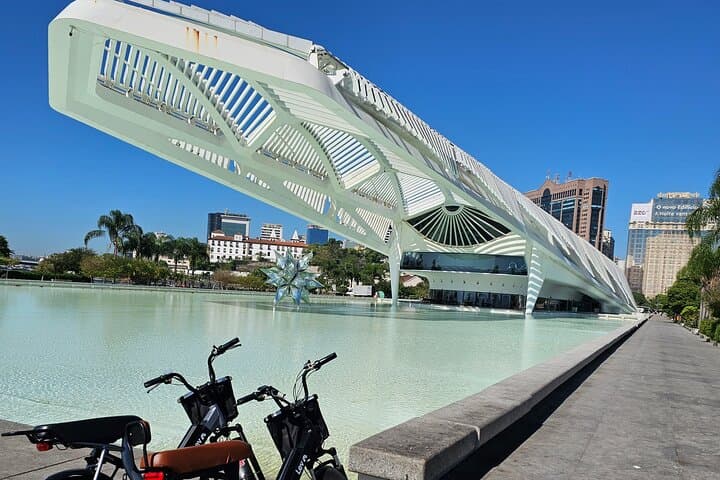
This guided e-bike route threads downtown Rio’s imperial plazas and street‑art corridors to the palm‑lined bike paths of Copacabana and Ipanema. Along the way the guide stops at Pedra do Sal to explain samba’s Afro‑Brazilian roots, points out the art‑deco grandeur of Theatro Municipal, and frames Sugarloaf and Christ the Redeemer across the bay. Geologically Rio is a mosaic of granite inselbergs—Sugarloaf and Corcovado rise from older coastal plain deposits—so views change from tight cobbled streets to broad ocean panoramas in minutes.
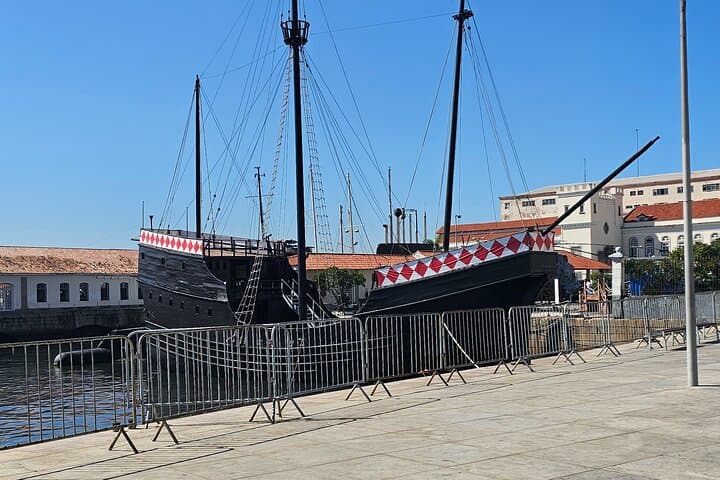
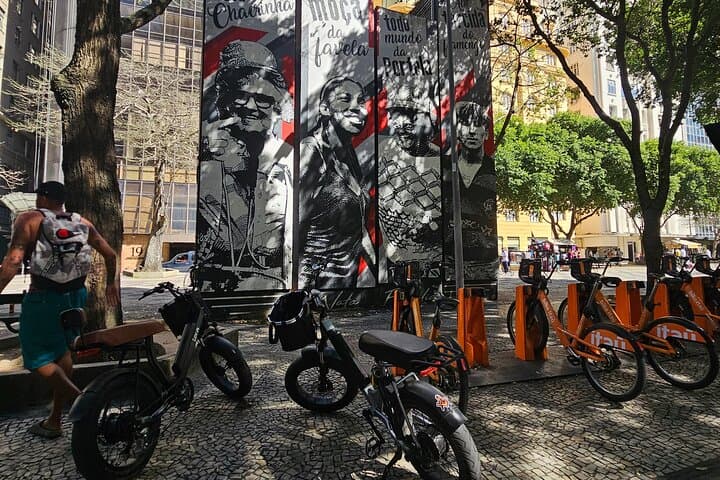
Culturally the ride is compact history: colonial trade, the imperial era centered around Praça XV, and the living street culture of Lapa and Cinelândia. Expect bold murals by Kobra, reminders of Portugal’s royal transfer, and public parks where Cariocas move between work and beach.
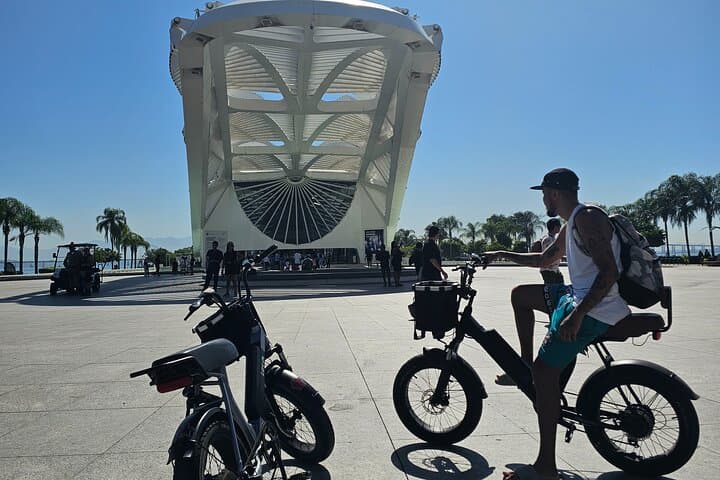
Practically, the electric assist levels make hills approachable even for casual cyclists, but you’ll still navigate city traffic and mixed‑use paths. Wear closed‑toe shoes, use sunscreen, and keep a light rain layer handy—tropical squalls are common. The tour runs about 3–4 hours and includes a local guide in English, Spanish, or Portuguese and private transportation. Plan to start early to avoid midday heat and settle into a steady rhythm: pedal, glide, listen, and look—Rio rewards the curious rider with history, coastline, and the pulse of the city.
easy.
3–4 hours.
Suitable for most fitness levels; some stamina helps for repeated short climbs despite e‑assist
The guided route is about 3–4 hours with frequent stops; expect a mix of flat coastal stretches and short urban hills made easier by e‑bike assist.
Yes—quality electric bikes and helmets are provided; you only need to bring appropriate clothing and water.
Guides typically speak English, Spanish, and Portuguese as noted in the tour inclusions.
The provider notes the tour is not recommended for travelers with spinal injuries; discuss any mobility concerns before booking.
The route connects Rio’s colonial Praça XV and imperial-era buildings with Afro‑Brazilian cultural sites like Pedra do Sal, reflecting the city’s layered past from Portuguese rule to samba.
Stay on designated paths and avoid littering on beaches and parks; Rio’s coastal ecosystems and urban forests face pressure from tourism and require respectful, low‑impact visitation.
DiCria e-Bike Tour operates guided outdoor trips and adventures with an emphasis on safety, stewardship, and memorable experiences.
A warm Atlantic breeze pushes you along Avenida Rio Branco as the city wakes: vendors, tile façades, and the rumble of trams give way to wide seaside promenades and the surf beyond Arpoador.
A warm Atlantic breeze pushes you along Avenida Rio Branco as the city wakes: vendors, tile façades, and the rumble of trams give way to wide seaside promenades and the surf beyond Arpoador.
This guided e-bike route threads downtown Rio’s imperial plazas and street‑art corridors to the palm‑lined bike paths of Copacabana and Ipanema. Along the way the guide stops at Pedra do Sal to explain samba’s Afro‑Brazilian roots, points out the art‑deco grandeur of Theatro Municipal, and frames Sugarloaf and Christ the Redeemer across the bay. Geologically Rio is a mosaic of granite inselbergs—Sugarloaf and Corcovado rise from older coastal plain deposits—so views change from tight cobbled streets to broad ocean panoramas in minutes.
Culturally the ride is compact history: colonial trade, the imperial era centered around Praça XV, and the living street culture of Lapa and Cinelândia. Expect bold murals by Kobra, reminders of Portugal’s royal transfer, and public parks where Cariocas move between work and beach.
Practically, the electric assist levels make hills approachable even for casual cyclists, but you’ll still navigate city traffic and mixed‑use paths. Wear closed‑toe shoes, use sunscreen, and keep a light rain layer handy—tropical squalls are common. The tour runs about 3–4 hours and includes a local guide in English, Spanish, or Portuguese and private transportation. Plan to start early to avoid midday heat and settle into a steady rhythm: pedal, glide, listen, and look—Rio rewards the curious rider with history, coastline, and the pulse of the city.