THE ADVENTURE COLLECTIVE® · Independent discovery and booking for outdoor travel

Glide through Marrakech’s maze of alleys on an electric bike: a 2.5-hour guided loop that blends the bustle of Jemaa el-Fna, the silence of hidden courtyards, and stops at traditional bakeries and zellige workshops. Ideal for travelers who want an efficient, sensory primer on the medina.
Glide through Marrakech’s maze of alleys on an electric bike: a 2.5-hour guided loop that blends the bustle of Jemaa el-Fna, the silence of hidden courtyards, and stops at traditional bakeries and zellige workshops. Ideal for travelers who want an efficient, sensory primer on the medina.
A morning in Marrakech opens with sun striking the city’s ochre walls and the medina waking like a slow, vibrant machine. Riders mount quiet electric bikes and slip into alleys where scooters and handcarts thread between stalls; the motor gives an easy nudge up short rises while the senses sharpen to spices, copper lamps, and distant call to prayer.
Verified experiences and guided adventures in the surrounding area.
A morning in Marrakech opens with sun striking the city’s ochre walls and the medina waking like a slow, vibrant machine. Riders mount quiet electric bikes and slip into alleys where scooters and handcarts thread between stalls; the motor gives an easy nudge up short rises while the senses sharpen to spices, copper lamps, and distant call to prayer.
The medina dates to the 11th century under the Almoravid dynasty; its red ramparts and narrow lanes—carved from local sandstone—hold layers of history from Saadian tombs and the ornate Bahia Palace to the living, chaotic square of Jemaa el-Fna. Guides point out traditional zellige tilework and stop at a working tannery, a community bakery, and a zellige workshop to explain craft techniques that survived centuries.
Expect roughly 6–8 km covered in 2.5–3 hours on largely flat but cobbled terrain; frequent stops make pace conversational rather than athletic. The ride emphasizes situational awareness—pedestrians, motorbikes, and mule-drawn carts share the same arteries—so basic bike handling in tight spaces is useful.
Practical advice: wear closed-toe shoes, bring a refillable water bottle, and dress modestly for respect and sun protection. Morning or late afternoon departures avoid midday heat and the busiest market moments. The experience is low-impact compared with motor tours and supports local artisans when visits include workshops and bakeries. For travelers who want an efficient, sensory introduction to Marrakech’s heart, an electric-bike medina tour balances ease, history, and hands-on cultural stops.
moderate.
2–3 hours.
Light-to-moderate fitness; comfortable walking and basic bike handling in tight spaces recommended
The tour lasts about 2.5–3 hours and covers roughly 6–8 km with frequent stops; most riding is short stretches through the medina’s alleys and larger connecting roads.
No—e-bikes provide pedal-assist and the guide sets a controlled pace, but basic balance and confidence in crowded spaces are helpful.
Guides usually stop outside major monuments and explain their history; some tours include short external visits or coordinated entry depending on booking specifics.
Older children comfortable on bikes and in crowds can join; check age and height requirements with the operator and ensure helmets fit properly.
Marrakech was founded in the 11th century by the Almoravids; the medina’s red walls and palaces reflect centuries of Berber and Islamic architecture, with notable sites like the Saadian Tombs and Bahia Palace.
Human-powered tours reduce emissions in crowded historic districts; support local craftspeople and avoid single-use plastics to limit your footprint.
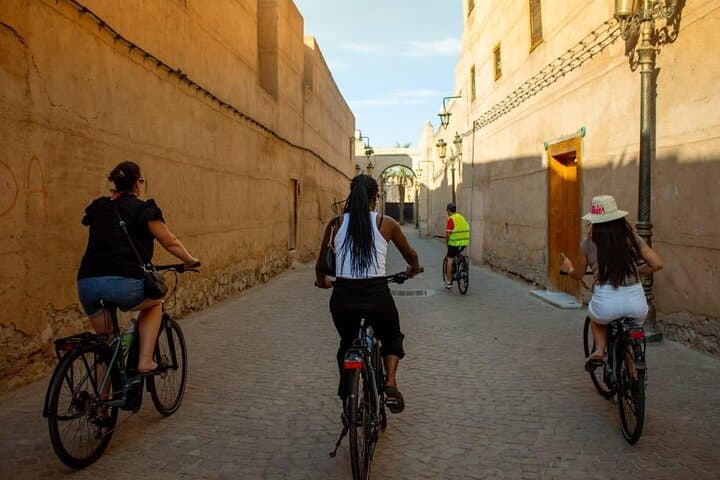
A morning in Marrakech opens with sun striking the city’s ochre walls and the medina waking like a slow, vibrant machine. Riders mount quiet electric bikes and slip into alleys where scooters and handcarts thread between stalls; the motor gives an easy nudge up short rises while the senses sharpen to spices, copper lamps, and distant call to prayer.
A morning in Marrakech opens with sun striking the city’s ochre walls and the medina waking like a slow, vibrant machine. Riders mount quiet electric bikes and slip into alleys where scooters and handcarts thread between stalls; the motor gives an easy nudge up short rises while the senses sharpen to spices, copper lamps, and distant call to prayer.
The medina dates to the 11th century under the Almoravid dynasty; its red ramparts and narrow lanes—carved from local sandstone—hold layers of history from Saadian tombs and the ornate Bahia Palace to the living, chaotic square of Jemaa el-Fna. Guides point out traditional zellige tilework and stop at a working tannery, a community bakery, and a zellige workshop to explain craft techniques that survived centuries.
Expect roughly 6–8 km covered in 2.5–3 hours on largely flat but cobbled terrain; frequent stops make pace conversational rather than athletic. The ride emphasizes situational awareness—pedestrians, motorbikes, and mule-drawn carts share the same arteries—so basic bike handling in tight spaces is useful.
Practical advice: wear closed-toe shoes, bring a refillable water bottle, and dress modestly for respect and sun protection. Morning or late afternoon departures avoid midday heat and the busiest market moments. The experience is low-impact compared with motor tours and supports local artisans when visits include workshops and bakeries. For travelers who want an efficient, sensory introduction to Marrakech’s heart, an electric-bike medina tour balances ease, history, and hands-on cultural stops.