THE ADVENTURE COLLECTIVE® · Independent discovery and booking for outdoor travel

Float 22 km along the Elbe from Děčín to Bad Schandau through towering sandstone canyons straddling Bohemian and Saxon Switzerland. This relaxed, guided raft trip pairs steady currents with dramatic cliff views and a convenient train exit in Bad Schandau.
Float 22 km along the Elbe from Děčín to Bad Schandau through towering sandstone canyons straddling Bohemian and Saxon Switzerland. This relaxed, guided raft trip pairs steady currents with dramatic cliff views and a convenient train exit in Bad Schandau.
A low sun slides across the Elbe and the raft answers with a soft slap as it leaves Camp Děčín. Paddles dip in unison; sandstone walls loom and the Shepherd's Wall—its iron rungs and via ferrata—watches the procession while Děčín chateau perches above the opposite bank. The river takes command, a slow, insistent current that pushes travelers through a canyon scored by wind and water.
Verified experiences and guided adventures in the surrounding area.
Operated by Active Point Decin · Děčín, Ústí nad Labem Region
A low sun slides across the Elbe and the raft answers with a soft slap as it leaves Camp Děčín. Paddles dip in unison; sandstone walls loom and the Shepherd's Wall—its iron rungs and via ferrata—watches the procession while Děčín chateau perches above the opposite bank. The river takes command, a slow, insistent current that pushes travelers through a canyon scored by wind and water.
The passage splits two countries and two protected parks: Bohemian Switzerland to the Czech side and Saxon Switzerland across the border. Those sandstone towers are Late Cretaceous rock, shaped into cliffs, arches and narrow gorges by erosion over millions of years. The Elbe was once a trade artery, and towns like Děčín and Bad Schandau grew where water and rail met, now offering spas, cafés and timber-framed streets for post-paddle recovery.
Expect 22 km of mostly flatwater paddling at a relaxed pace—about 4–5 hours on the river—punctuated by tight canyon views, occasional ferries or small river traffic and easy beaches for breaks. Guides hand over rafts, life vests and dry bags at the start and collect gear at a small beach near Bad Schandau station.
Practical notes: bring footwear that grips wet rock, layered clothing for wind off the gorge, and a small snack in addition to the provided dry bag. If returning by train, the station sits seconds from the handover beach. Weather can change quickly in the canyon—check forecasts and pack a light waterproof. This trip is as much about steady paddling and river reading as it is about the landscape; the Elbe insists you pay attention, and rewards you with one of Central Europe’s most dramatic river corridors.
moderate.
4–5 hours.
Participants should have moderate fitness—able to paddle for sustained periods and climb in/out of a raft from shallow banks.
No—this is a guided, low-grade river trip suitable for beginners with a short safety briefing and basic instruction provided.
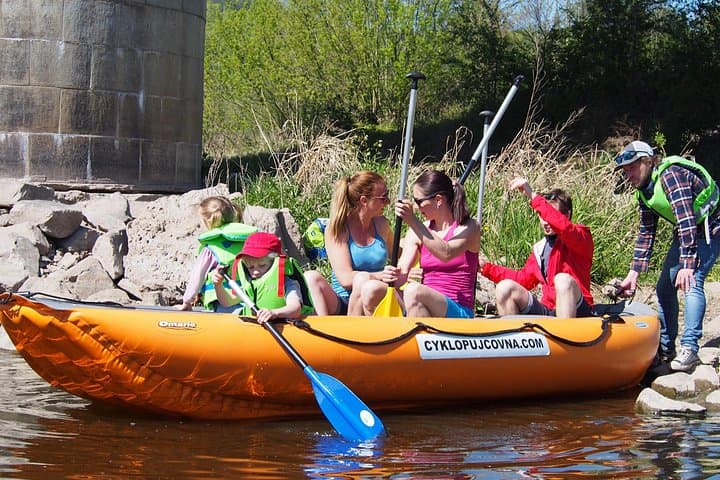
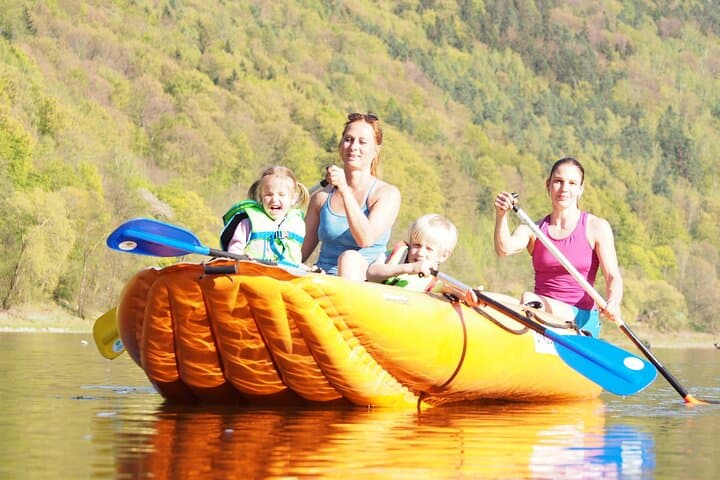
Yes—rafts, paddles, life jackets and a dry bag are included and collected at the handover point in Bad Schandau.
Yes—the train station in Bad Schandau is a short walk from the handover beach and offers regular regional services back to Děčín.
Operators may cancel if conditions are unsafe; check the cancellation policy and local forecasts—rescheduling or refunds are usually offered if cancelled 24+ hours in advance.
The Elbe long served as a trade and transport corridor; settlements like Děčín and Bad Schandau developed around river crossings and rail connections in the 19th century.
The route passes protected parkland—stick to designated access points, pack out waste, and avoid disturbing riverbanks to help preserve fragile sandstone habitats.
Active Point Decin operates guided outdoor trips and adventures with an emphasis on safety, stewardship, and memorable experiences.
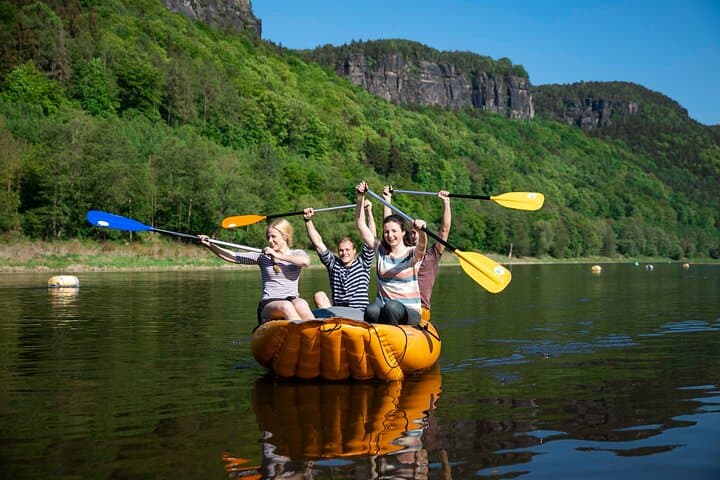
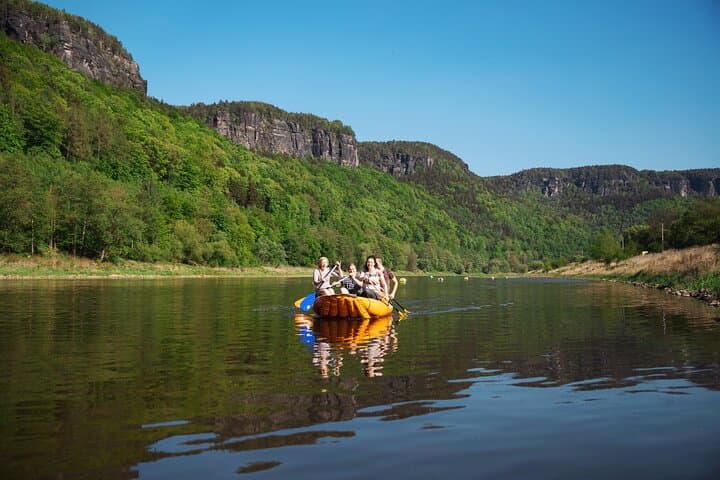
A low sun slides across the Elbe and the raft answers with a soft slap as it leaves Camp Děčín. Paddles dip in unison; sandstone walls loom and the Shepherd's Wall—its iron rungs and via ferrata—watches the procession while Děčín chateau perches above the opposite bank. The river takes command, a slow, insistent current that pushes travelers through a canyon scored by wind and water.
A low sun slides across the Elbe and the raft answers with a soft slap as it leaves Camp Děčín. Paddles dip in unison; sandstone walls loom and the Shepherd's Wall—its iron rungs and via ferrata—watches the procession while Děčín chateau perches above the opposite bank. The river takes command, a slow, insistent current that pushes travelers through a canyon scored by wind and water.
The passage splits two countries and two protected parks: Bohemian Switzerland to the Czech side and Saxon Switzerland across the border. Those sandstone towers are Late Cretaceous rock, shaped into cliffs, arches and narrow gorges by erosion over millions of years. The Elbe was once a trade artery, and towns like Děčín and Bad Schandau grew where water and rail met, now offering spas, cafés and timber-framed streets for post-paddle recovery.
Expect 22 km of mostly flatwater paddling at a relaxed pace—about 4–5 hours on the river—punctuated by tight canyon views, occasional ferries or small river traffic and easy beaches for breaks. Guides hand over rafts, life vests and dry bags at the start and collect gear at a small beach near Bad Schandau station.
Practical notes: bring footwear that grips wet rock, layered clothing for wind off the gorge, and a small snack in addition to the provided dry bag. If returning by train, the station sits seconds from the handover beach. Weather can change quickly in the canyon—check forecasts and pack a light waterproof. This trip is as much about steady paddling and river reading as it is about the landscape; the Elbe insists you pay attention, and rewards you with one of Central Europe’s most dramatic river corridors.