THE ADVENTURE COLLECTIVE® · Independent discovery and booking for outdoor travel

Drive inland from La Paz to El Triunfo for a full day of mining history, local art, and regional cuisine. Visit La Ramona, Muvaca, and the Silver Route museum while sampling traditional Baja dishes.
Drive inland from La Paz to El Triunfo for a full day of mining history, local art, and regional cuisine. Visit La Ramona, Muvaca, and the Silver Route museum while sampling traditional Baja dishes.
A morning drive from La Paz peels away the coast and drops you into a sun-baked mining town where brick chimneys pierce a wide sky. Visitors step off the van into streets of low stone buildings, the air carrying the scent of fresh coffee and tortillas. The town’s most visible relic, La Ramona, rises like a weathered lighthouse of the silver era — a place that makes the past feel physically present.
Verified experiences and guided adventures in the surrounding area.
Operated by La Paz City Map · El Triunfo, Baja California Sur
A morning drive from La Paz peels away the coast and drops you into a sun-baked mining town where brick chimneys pierce a wide sky. Visitors step off the van into streets of low stone buildings, the air carrying the scent of fresh coffee and tortillas. The town’s most visible relic, La Ramona, rises like a weathered lighthouse of the silver era — a place that makes the past feel physically present.
El Triunfo grew during the 19th-century silver boom; its buildings and slag heaps tell a straightforward story of industry, immigration, and slow decline. Geologically the area sits on mineral-rich veins carved into volcanic and metamorphic rock, and the surrounding scrubland supports hardy desert plants that shaped local life. Cultural life today is a mix of art galleries, small museums such as Muvaca and the Ruta de Plata, and cafés preserving regional recipes.
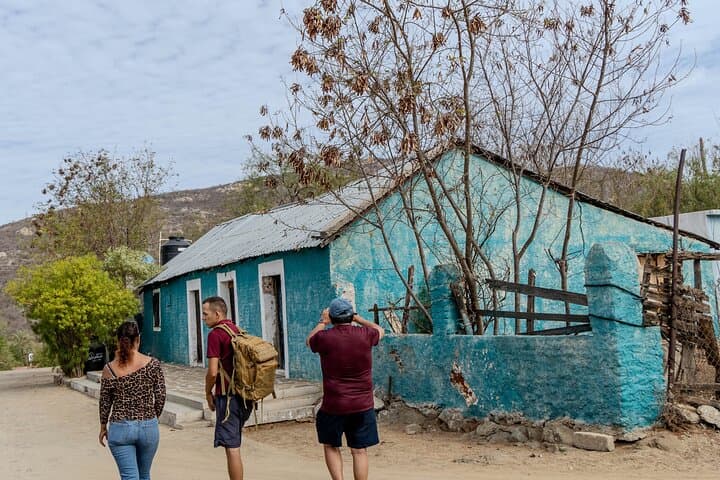
On a guided walking tour participants move between interpretation centers and panoramic outlooks, sampling breakfast at Café Las Alforjas and stopping at curated exhibits of miners’ tools and period photographs. The pace is gentle but uneven underfoot — narrow sidewalks and dirt lanes require attention.
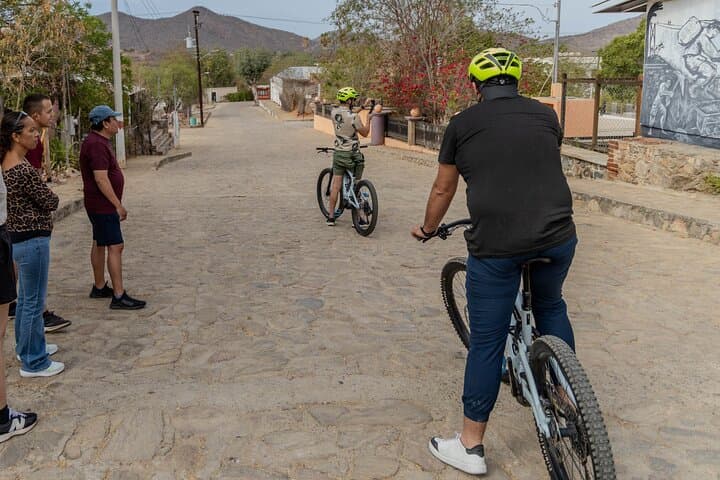
Practical guidance: expect a roughly 45-minute drive each way, a mostly flat but uneven walking route, and full-day timing (about 7–8 hours). Bring sun protection, cash for small purchases, and comfortable shoes for cobbles and packed earth. Morning departures avoid midday heat; photography and respectful behavior inside museums are encouraged to protect fragile displays.
easy.
7–8 hours.
Low fitness required; must be able to walk for several short segments on uneven surfaces.
Yes — private van pickup from accommodation in La Paz at 7:00 AM is provided.
Breakfast at Café Las Alforjas is included; additional tastings or lunch are optional and may cost extra.
The tour is listed as suitable for all fitness levels; however, participants should be able to walk short distances on uneven ground.
Full refund available if canceled at least 24 hours before departure; no refund within 24 hours.
El Triunfo flourished in the late 19th and early 20th centuries as a silver-mining center; La Ramona chimney is an emblem of that industrial past.
The desert environment is fragile—stay on marked paths, avoid collecting artifacts, and support local businesses that practice responsible tourism.
La Paz City Map operates guided outdoor trips and adventures with an emphasis on safety, stewardship, and memorable experiences.
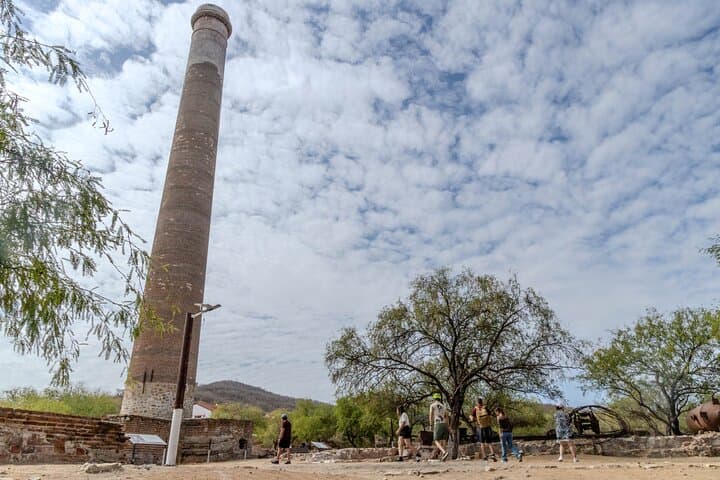
A morning drive from La Paz peels away the coast and drops you into a sun-baked mining town where brick chimneys pierce a wide sky. Visitors step off the van into streets of low stone buildings, the air carrying the scent of fresh coffee and tortillas. The town’s most visible relic, La Ramona, rises like a weathered lighthouse of the silver era — a place that makes the past feel physically present.
A morning drive from La Paz peels away the coast and drops you into a sun-baked mining town where brick chimneys pierce a wide sky. Visitors step off the van into streets of low stone buildings, the air carrying the scent of fresh coffee and tortillas. The town’s most visible relic, La Ramona, rises like a weathered lighthouse of the silver era — a place that makes the past feel physically present.
El Triunfo grew during the 19th-century silver boom; its buildings and slag heaps tell a straightforward story of industry, immigration, and slow decline. Geologically the area sits on mineral-rich veins carved into volcanic and metamorphic rock, and the surrounding scrubland supports hardy desert plants that shaped local life. Cultural life today is a mix of art galleries, small museums such as Muvaca and the Ruta de Plata, and cafés preserving regional recipes.
On a guided walking tour participants move between interpretation centers and panoramic outlooks, sampling breakfast at Café Las Alforjas and stopping at curated exhibits of miners’ tools and period photographs. The pace is gentle but uneven underfoot — narrow sidewalks and dirt lanes require attention.
Practical guidance: expect a roughly 45-minute drive each way, a mostly flat but uneven walking route, and full-day timing (about 7–8 hours). Bring sun protection, cash for small purchases, and comfortable shoes for cobbles and packed earth. Morning departures avoid midday heat; photography and respectful behavior inside museums are encouraged to protect fragile displays.