THE ADVENTURE COLLECTIVE® · Independent discovery and booking for outdoor travel

Float within arm’s reach of a 30‑meter drop and swim in turquoise pools on this full‑day Huasteca Potosina tour from Ciudad Valles. The day pairs a canoe approach to Mirador El Meco with playful swims and jumps at El Salto.
Float within arm’s reach of a 30‑meter drop and swim in turquoise pools on this full‑day Huasteca Potosina tour from Ciudad Valles. The day pairs a canoe approach to Mirador El Meco with playful swims and jumps at El Salto.
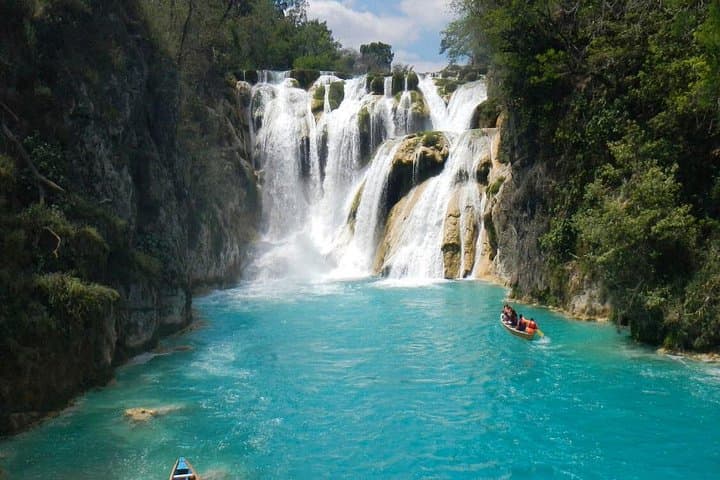
The morning air in Huasteca Potosina tastes of wet stone and green river. You step from an air‑conditioned van into a narrow canyon where the river is already practicing its thunder. Downstream, El Salto opens like a breach in the limestone—turquoise pools rimmed by smooth boulders—while higher up a sheer 30‑meter face at Mirador El Meco frames the sky.
Verified experiences and guided adventures in the surrounding area.
Operated by Huasteca Viva · Ciudad Valles, San Luis Potosí
The morning air in Huasteca Potosina tastes of wet stone and green river. You step from an air‑conditioned van into a narrow canyon where the river is already practicing its thunder. Downstream, El Salto opens like a breach in the limestone—turquoise pools rimmed by smooth boulders—while higher up a sheer 30‑meter face at Mirador El Meco frames the sky.
On this full‑day loop from Ciudad Valles you get two distinct waterfall experiences. El Salto is intimate and tactile: shallow lagoons to swim in, rope swings and naturally formed slides, and a short walk through palms and fig trees to the pools. The water here is mineral‑clear; currents will nudge you and, if you dare, you can jump from rock ledges up to about 8 meters with the safety gear supplied by guides.
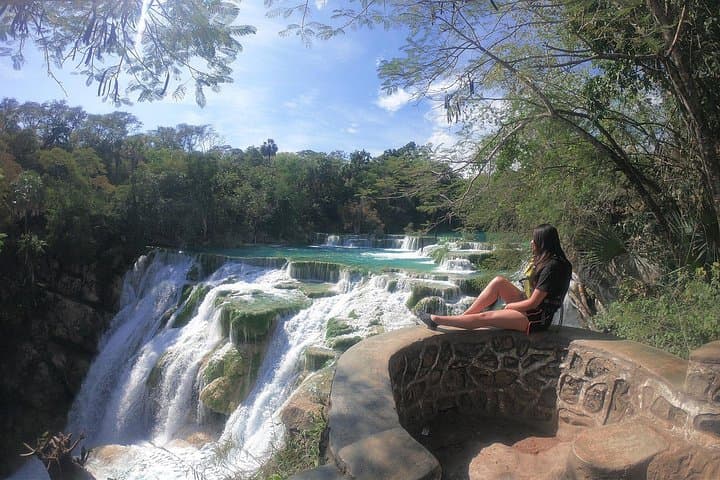
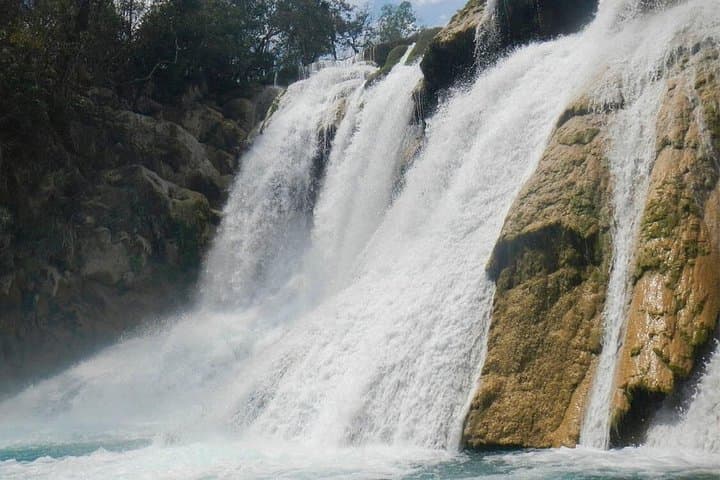
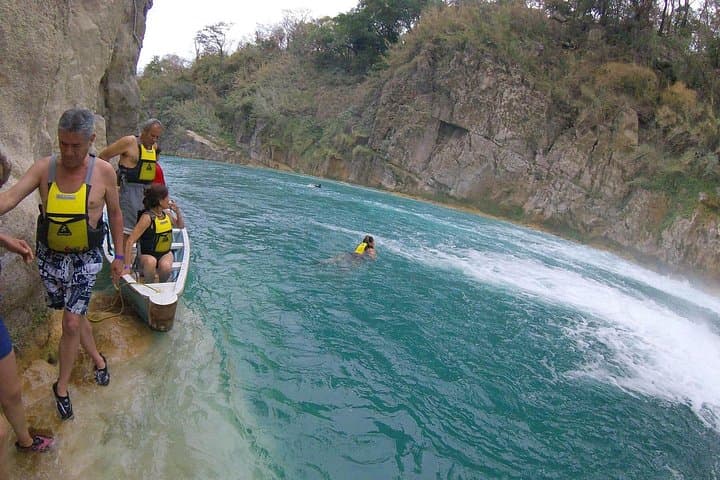
Mirador El Meco is a different mood. A short approach leads to a concrete viewpoint that looks out over a 30‑meter drop. Guides load a canoe and paddle you upstream against a lively current until you sit within 10 meters of the falling water—enough to taste the spray and hear the canyon move. The geology of the region—karstic limestone shaped by millennia of tropical rains—creates abrupt cliffs, underground streams and the brilliant blue pools that appear almost painted.
Huasteca Potosina’s culture is as present as the water: small riverside towns where tortilla presses and roadside ceviche stands do steady business, and where local families have long guided visitors to the best swimming holes. The tour includes entrance fees, flotation vests and helmets, a guide, and a full meal at the end; transport and hotel pickup are typically provided from Ciudad Valles.
Practical edge: expect a full day (about 10 hours) with light walking (1–3 km total) on uneven, sometimes slick terrain. Footwear with traction, a dry bag and the ability to swim comfortably are musts. The guides manage canoeing and basic water safety, but currents are active and the canyon can change with rainfall—avoid jumps when staff advise against them.
Timing matters: go early in the dry season for clearer water and easier trails; the rainy season fills the pools and makes river features dramatic but occasionally off‑limits. Bring sunscreen, a quick‑dry towel, insect repellent, cash for local snacks, and a waterproof camera or phone case—the photo from the mirador and the canoe approach are the images you’ll keep.
In short, this is a hands‑on Huasteca day that pairs playful swimming with a close, loud encounter with a vertical waterfall. It’s part adrenaline and part restorative: cold water, bright rock, and a canyon that, for a few hours, insists you slow down to float.
moderate.
10 hours (full day).
Suitable for people who can walk short uneven trails and are comfortable in moving water; basic swimming ability recommended.
Most pickups are within Ciudad Valles; the operator can collect you from hotels or addresses in town—expect to be on the road 20–40 minutes to the first site.
No—swimming is optional but many stops invite you into the pools; flotation vests are provided for safety.
Yes—infants must sit on laps and the tour is rated physically easy for young kids, but check with the operator about specific ages for canoe or jump sections.
Basic facilities exist at some tourist sites; bring hand sanitizer and small change for local fees where applicable.
The tour may be canceled or routes adjusted if rainfall makes river conditions unsafe—operators typically notify you and offer refunds per the cancellation policy.
The operator lists basic accessibility, but some viewpoints and canoe access require steps and uneven ground; contact the supplier ahead to confirm accommodations.
The Huasteca region has long been home to indigenous groups and rural river communities; many local guides are descendants who have worked these rivers for generations.
Visitors are asked to avoid soaps and sunscreens that harm aquatic ecosystems; operators typically enforce no‑litter rules and limit group sizes to reduce impact.
Huasteca Viva operates guided outdoor trips and adventures with an emphasis on safety, stewardship, and memorable experiences.
The morning air in Huasteca Potosina tastes of wet stone and green river. You step from an air‑conditioned van into a narrow canyon where the river is already practicing its thunder. Downstream, El Salto opens like a breach in the limestone—turquoise pools rimmed by smooth boulders—while higher up a sheer 30‑meter face at Mirador El Meco frames the sky.
The morning air in Huasteca Potosina tastes of wet stone and green river. You step from an air‑conditioned van into a narrow canyon where the river is already practicing its thunder. Downstream, El Salto opens like a breach in the limestone—turquoise pools rimmed by smooth boulders—while higher up a sheer 30‑meter face at Mirador El Meco frames the sky.
On this full‑day loop from Ciudad Valles you get two distinct waterfall experiences. El Salto is intimate and tactile: shallow lagoons to swim in, rope swings and naturally formed slides, and a short walk through palms and fig trees to the pools. The water here is mineral‑clear; currents will nudge you and, if you dare, you can jump from rock ledges up to about 8 meters with the safety gear supplied by guides.
Mirador El Meco is a different mood. A short approach leads to a concrete viewpoint that looks out over a 30‑meter drop. Guides load a canoe and paddle you upstream against a lively current until you sit within 10 meters of the falling water—enough to taste the spray and hear the canyon move. The geology of the region—karstic limestone shaped by millennia of tropical rains—creates abrupt cliffs, underground streams and the brilliant blue pools that appear almost painted.
Huasteca Potosina’s culture is as present as the water: small riverside towns where tortilla presses and roadside ceviche stands do steady business, and where local families have long guided visitors to the best swimming holes. The tour includes entrance fees, flotation vests and helmets, a guide, and a full meal at the end; transport and hotel pickup are typically provided from Ciudad Valles.
Practical edge: expect a full day (about 10 hours) with light walking (1–3 km total) on uneven, sometimes slick terrain. Footwear with traction, a dry bag and the ability to swim comfortably are musts. The guides manage canoeing and basic water safety, but currents are active and the canyon can change with rainfall—avoid jumps when staff advise against them.
Timing matters: go early in the dry season for clearer water and easier trails; the rainy season fills the pools and makes river features dramatic but occasionally off‑limits. Bring sunscreen, a quick‑dry towel, insect repellent, cash for local snacks, and a waterproof camera or phone case—the photo from the mirador and the canoe approach are the images you’ll keep.
In short, this is a hands‑on Huasteca day that pairs playful swimming with a close, loud encounter with a vertical waterfall. It’s part adrenaline and part restorative: cold water, bright rock, and a canyon that, for a few hours, insists you slow down to float.