THE ADVENTURE COLLECTIVE® · Independent discovery and booking for outdoor travel

Spend a compact day visiting El Djem’s vast Roman Coliseum and the coastal charms of Monastir. This 5–6 hour private outing pairs world-class ruins with seaside views and practical tips for touring comfortably.
Spend a compact day visiting El Djem’s vast Roman Coliseum and the coastal charms of Monastir. This 5–6 hour private outing pairs world-class ruins with seaside views and practical tips for touring comfortably.
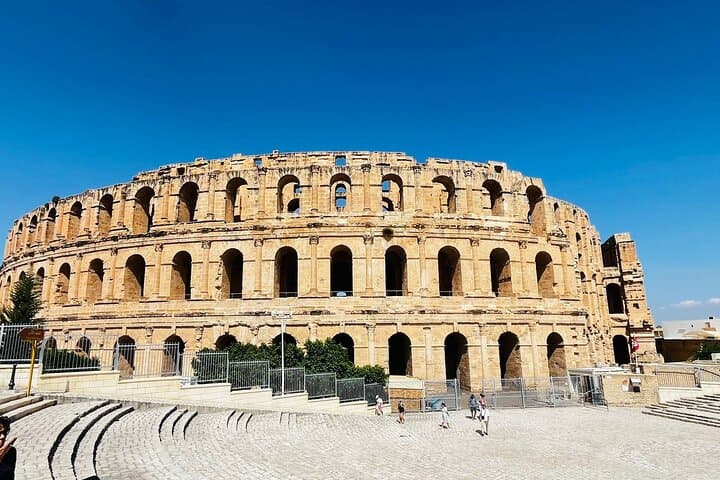
You arrive at dawn on a low-slung road between olive groves and wheat fields; the Coliseum rises ahead like a ruined engine of an empire, its limestone arches throwing long shadows across the plain.
Verified experiences and guided adventures in the surrounding area.
Operated by Tunez-Monumental · El Djem, Mahdia Governorate
You arrive at dawn on a low-slung road between olive groves and wheat fields; the Coliseum rises ahead like a ruined engine of an empire, its limestone arches throwing long shadows across the plain.
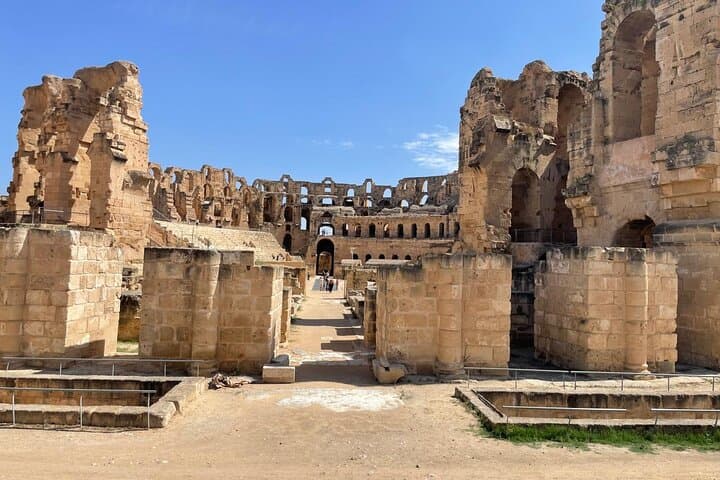
Walk the arena and imagine the crowd pressing in—stone benches that once held tens of thousands, corridors that still smell faintly of dust and history. Built in the 3rd century AD and carved from local limestone, El Djem’s form is both brutal and precise: three tiers of arches, an elliptical plan, and service passages that allowed spectacle to unfold with Roman efficiency.
Later, the bus slips toward the coast and Monastir’s white harbor, where the Mediterranean dares you to pause—sea breeze cutting through centuries of salt and trade. Monastir’s Ribat, an 8th-century fortress, offers a different layer: Islamic scholarship, defensive walls, and views where the land and sea trade light every hour.
This five- to six-hour private tour pairs architecture with coastal culture—street vendors selling grilled fish, the quiet clack of prayer calls, and the smell of citrus from local markets. Expect mostly flat walking within archaeological sites, uneven stone steps, and exposed sun on the ruins.
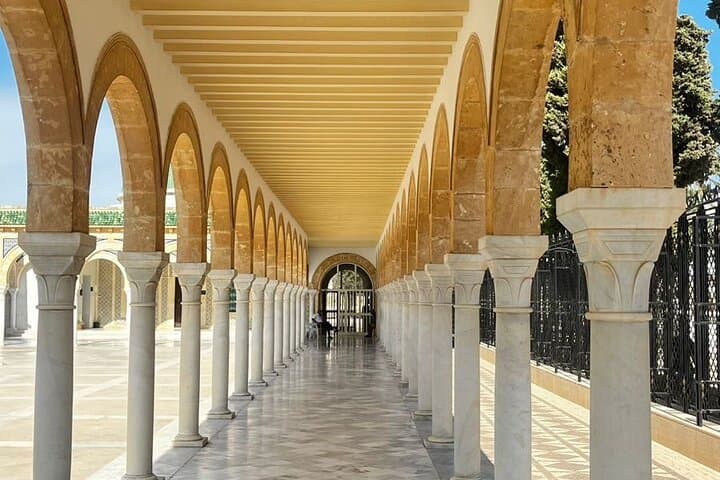
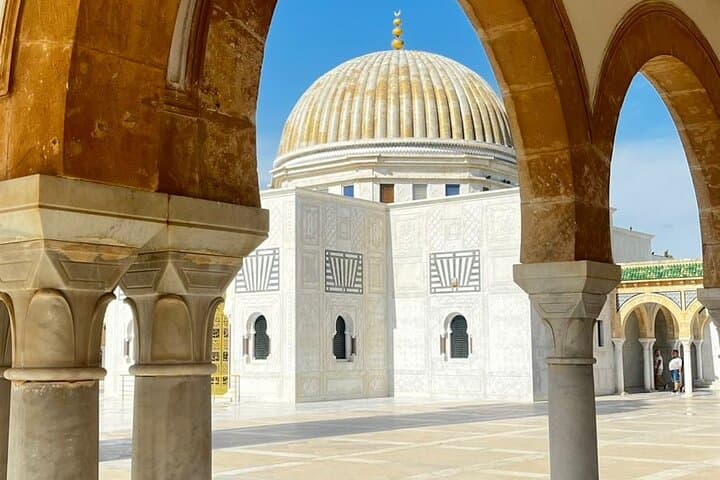
Practical guide: bring sun protection, a refillable water bottle, and sturdy closed shoes for uneven limestone. The tour includes entrance fees and air-conditioned transport; total time on the ground at El Djem is about two hours. Best photographed in morning or late afternoon light; mid-day is hottest and busiest. Keep identification and a copy of your ticket handy for monuments, and allow extra time if you plan to explore Monastir’s marina or the Bourguiba Mausoleum after the visit.
easy.
5–6 hours.
Suitable for most fitness levels; involves walking on uneven stone and some stairs but no technical exertion.
The tour runs approximately 5–6 hours, with around two hours at the El Djem Coliseum and additional time exploring Monastir.
Yes—entrance fees for the scheduled sites are included in the tour price.
Yes; the tour is rated easy and can accommodate infants (they must sit on laps) and children, though supervision on uneven stone is advised.
The itinerary usually allows short stops in Monastir for photos, a quick seaside walk, or a meal, but confirm timing with your operator if you want a longer beach visit.
El Djem (ancient Thysdrus) flourished under Roman rule in the 3rd century AD; its amphitheater is one of North Africa’s largest surviving Roman structures.
Visitor pressure and wind-blown sand are managed by controlled access and conservation measures; stick to marked paths and avoid touching fragile masonry.
Tunez-Monumental operates guided outdoor trips and adventures with an emphasis on safety, stewardship, and memorable experiences.
You arrive at dawn on a low-slung road between olive groves and wheat fields; the Coliseum rises ahead like a ruined engine of an empire, its limestone arches throwing long shadows across the plain.
You arrive at dawn on a low-slung road between olive groves and wheat fields; the Coliseum rises ahead like a ruined engine of an empire, its limestone arches throwing long shadows across the plain.
Walk the arena and imagine the crowd pressing in—stone benches that once held tens of thousands, corridors that still smell faintly of dust and history. Built in the 3rd century AD and carved from local limestone, El Djem’s form is both brutal and precise: three tiers of arches, an elliptical plan, and service passages that allowed spectacle to unfold with Roman efficiency.
Later, the bus slips toward the coast and Monastir’s white harbor, where the Mediterranean dares you to pause—sea breeze cutting through centuries of salt and trade. Monastir’s Ribat, an 8th-century fortress, offers a different layer: Islamic scholarship, defensive walls, and views where the land and sea trade light every hour.
This five- to six-hour private tour pairs architecture with coastal culture—street vendors selling grilled fish, the quiet clack of prayer calls, and the smell of citrus from local markets. Expect mostly flat walking within archaeological sites, uneven stone steps, and exposed sun on the ruins.
Practical guide: bring sun protection, a refillable water bottle, and sturdy closed shoes for uneven limestone. The tour includes entrance fees and air-conditioned transport; total time on the ground at El Djem is about two hours. Best photographed in morning or late afternoon light; mid-day is hottest and busiest. Keep identification and a copy of your ticket handy for monuments, and allow extra time if you plan to explore Monastir’s marina or the Bourguiba Mausoleum after the visit.