THE ADVENTURE COLLECTIVE® · Independent discovery and booking for outdoor travel

A two-hour small-group boat tour that pairs a close approach to El Arco with seasonal whale watching off Cabo San Lucas. Expect calm mornings, photo opportunities, and knowledgeable local guides who emphasize safety and responsible viewing.
A two-hour small-group boat tour that pairs a close approach to El Arco with seasonal whale watching off Cabo San Lucas. Expect calm mornings, photo opportunities, and knowledgeable local guides who emphasize safety and responsible viewing.
Morning light slices across the marina as passengers step onto a low-profile, stable boat bound for El Arco. Sea spray lifts off the wake; gulls wheel overhead and the city slips behind. The rock arch—the locus where the Pacific meets the Sea of Cortez—appears as a raw, sculpted doorway. If it’s whale season, the horizon punctuates with blows and the slow, deliberate backs of humpbacks as guides read the water and point.
Verified experiences and guided adventures in the surrounding area.
Operated by De Cabo A Cabo · Cabo San Lucas, Baja California Sur
Morning light slices across the marina as passengers step onto a low-profile, stable boat bound for El Arco. Sea spray lifts off the wake; gulls wheel overhead and the city slips behind. The rock arch—the locus where the Pacific meets the Sea of Cortez—appears as a raw, sculpted doorway. If it’s whale season, the horizon punctuates with blows and the slow, deliberate backs of humpbacks as guides read the water and point.
El Arco is a product of relentless wave erosion along volcanic and sedimentary rock where two seas converge, shaping a coastline long used by fishermen and travelers. Cabo San Lucas grew from a fishing outpost into a modern port, but the maritime culture remains: panga boats, local captains, and an economy tuned to the sea. Guides typically weave natural history—migration routes, sea lion colonies, and marine-protected areas—into the ride.
Practically, expect a roughly 2-hour small-group outing leaving from the marina, with a short 10–15 minute run to the arch depending on conditions. Tours prioritize safety—life jackets provided—and photography windows are frequent; bring a tele lens or binoculars. In peak season (December–April) whales are the draw; mornings are calmer and light is better for photos. Wear reef-safe sunscreen, layered windproof clothing, and consider motion-sickness prevention. Respect wildlife viewing rules: keep distance, avoid loud noises, and let the animals set the pace. For travelers seeking a tactile, marine-focused half-day, this pairing of geology and wildlife delivers a compact, memorable stretch of sea and sky.
easy.
2 hours.
Low exertion—suitable for most fitness levels; must be able to step into and out of a small boat.
Peak season is generally December through April when humpback and gray whales migrate to the region to breed and calf; mornings offer calmer seas and better visibility.
From the main marina it’s typically a 10–15 minute run each way depending on sea conditions; the full experience is about two hours including time near the arch.
Yes—operators use stable, family-friendly boats and provide life jackets, but it’s not recommended for guests with serious spinal, heart, or pregnancy-related restrictions per the operator’s guidance.
Bring a telephoto lens or compact binoculars, stabilize with a fast shutter speed for movement, and use a polarized filter to cut glare off the water; mornings provide the best light.
El Arco formed through prolonged wave erosion at the meeting point of the Pacific Ocean and the Sea of Cortez; Cabo evolved from a fishing village into a strategic port with strong maritime traditions.
Operators follow responsible viewing guidelines—maintain distance from whales, avoid chasing or loud engines, and favor reef-safe products to protect local marine ecosystems.
De Cabo A Cabo operates guided outdoor trips and adventures with an emphasis on safety, stewardship, and memorable experiences.

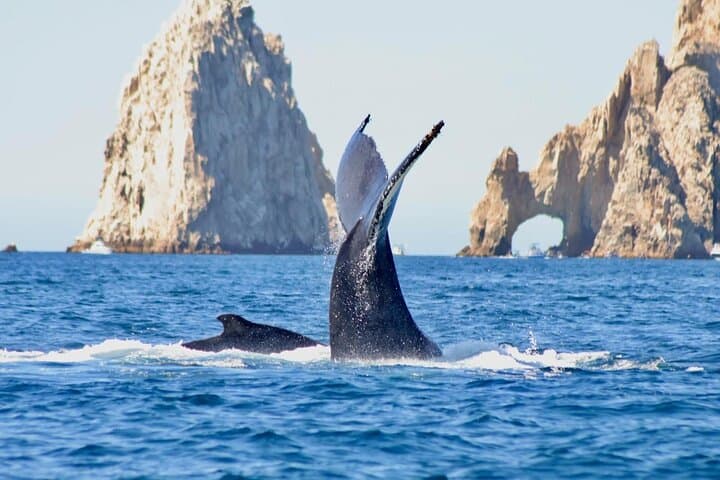


Morning light slices across the marina as passengers step onto a low-profile, stable boat bound for El Arco. Sea spray lifts off the wake; gulls wheel overhead and the city slips behind. The rock arch—the locus where the Pacific meets the Sea of Cortez—appears as a raw, sculpted doorway. If it’s whale season, the horizon punctuates with blows and the slow, deliberate backs of humpbacks as guides read the water and point.
Morning light slices across the marina as passengers step onto a low-profile, stable boat bound for El Arco. Sea spray lifts off the wake; gulls wheel overhead and the city slips behind. The rock arch—the locus where the Pacific meets the Sea of Cortez—appears as a raw, sculpted doorway. If it’s whale season, the horizon punctuates with blows and the slow, deliberate backs of humpbacks as guides read the water and point.
El Arco is a product of relentless wave erosion along volcanic and sedimentary rock where two seas converge, shaping a coastline long used by fishermen and travelers. Cabo San Lucas grew from a fishing outpost into a modern port, but the maritime culture remains: panga boats, local captains, and an economy tuned to the sea. Guides typically weave natural history—migration routes, sea lion colonies, and marine-protected areas—into the ride.
Practically, expect a roughly 2-hour small-group outing leaving from the marina, with a short 10–15 minute run to the arch depending on conditions. Tours prioritize safety—life jackets provided—and photography windows are frequent; bring a tele lens or binoculars. In peak season (December–April) whales are the draw; mornings are calmer and light is better for photos. Wear reef-safe sunscreen, layered windproof clothing, and consider motion-sickness prevention. Respect wildlife viewing rules: keep distance, avoid loud noises, and let the animals set the pace. For travelers seeking a tactile, marine-focused half-day, this pairing of geology and wildlife delivers a compact, memorable stretch of sea and sky.