THE ADVENTURE COLLECTIVE® · Independent discovery and booking for outdoor travel

Ride a unique standing wave in the heart of Munich’s Englischer Garten. This guided Eisbach experience pairs city energy with hands-on instruction—ideal for confident swimmers and surfers who want a compact, technical session.
Ride a unique standing wave in the heart of Munich’s Englischer Garten. This guided Eisbach experience pairs city energy with hands-on instruction—ideal for confident swimmers and surfers who want a compact, technical session.
You step off Prinzregentenstraße into a pocket of surf: the Eisbach’s standing wave hisses and folds between concrete banks, throwing spray into the faces of watching tourists. The wave is only half a metre high, but the current tugs at your board and the city hums all around—trams, bicycles, and the wide green of the Englischer Garten a short walk away.
Verified experiences and guided adventures in the surrounding area.
Operated by Uvita Surf Experience · Munich, Bavaria
You step off Prinzregentenstraße into a pocket of surf: the Eisbach’s standing wave hisses and folds between concrete banks, throwing spray into the faces of watching tourists. The wave is only half a metre high, but the current tugs at your board and the city hums all around—trams, bicycles, and the wide green of the Englischer Garten a short walk away.
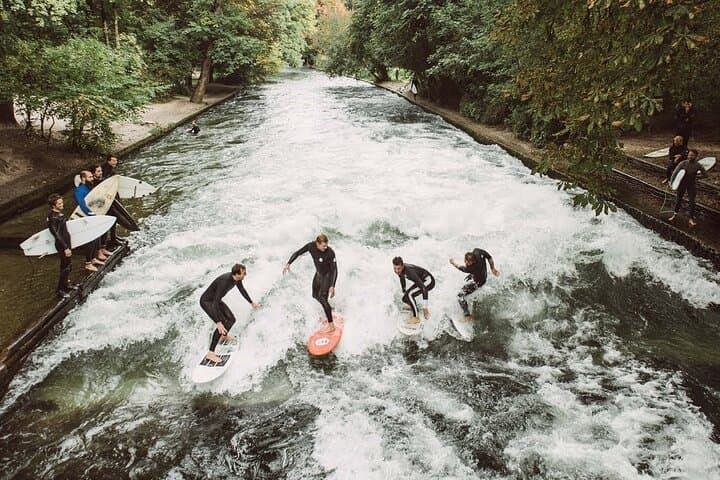
The Eisbachwelle was born from urban hydraulics and a few stubborn surfers four decades ago. A stone step and a controlled outlet form a standing wave where Isar-channel flow meets engineered geometry; the physics are simple, the culture complex. Locals treat the wave as a public forum—respectful queuing, quick shifts, and a hands-on surf etiquette passed between generations.
Geology matters here in an engineered sense: the wave depends on flow rate, water level, and the channel’s stone lip. Culturally it’s Munich—beer gardens and art galleries like the nearby Haus der Kunst frame the spot—and the Englischer Garten stretches north with quieter riverside paths.
Practically: arrive early to avoid crowds, bring a wetsuit (water stays cool most of the year), and be honest about your swimming and board control. Instructors and guided sessions cover basics, push you into the wave, and explain right-of-way rules. Expect 3–4 hours for a guided session that includes setup, practice, and time in the line.
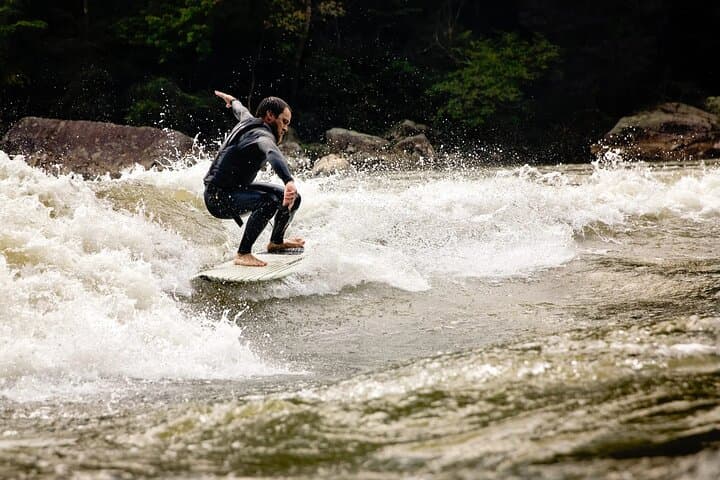
You’ll leave with a sharper feel for river dynamics—the current more insistent than any ocean shorebreak—and a bruise of urban exhilaration that only a citywave can deliver.
challenging.
3–4 hours.
Moderate to strong fitness—good balance, core strength, and confident swimming ability required.
Prior surf experience helps but guided sessions accept confident beginners who can swim strongly and follow instructor guidance.
The spot is not suitable for young children; participants should be competent swimmers and meet any age/weight requirements set by operators.
Guides typically meet near the Eisbachwelle at Himmelreichstraße (close to Haus der Kunst)—verify the exact address and arrival time on booking confirmation.
Operators manage sessions and may rotate surfers, delay starts, or adjust instruction if flow or crowding make conditions unsafe.
Surfers have been riding the Eisbachwelle for around 40 years; the wave grew from DIY repairs and a local surfing community that adapted to the city’s engineered waterways.
This urban spot is sensitive to litter and pollution—leave no trace, avoid contaminating the channel, and support local rules that protect water quality.
Uvita Surf Experience operates guided outdoor trips and adventures with an emphasis on safety, stewardship, and memorable experiences.
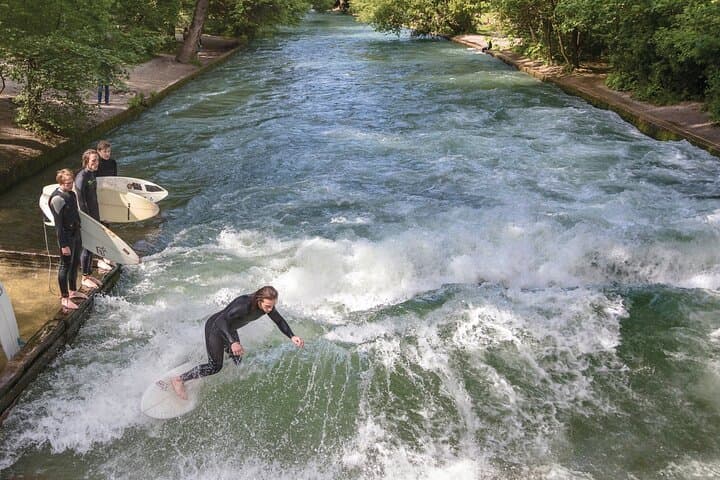
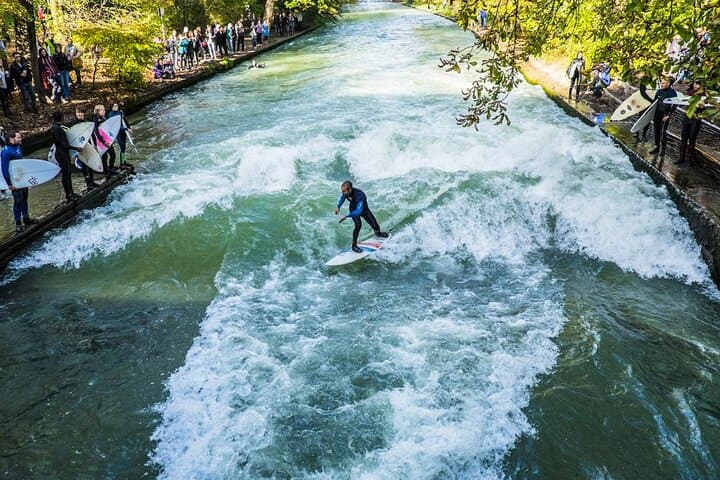
You step off Prinzregentenstraße into a pocket of surf: the Eisbach’s standing wave hisses and folds between concrete banks, throwing spray into the faces of watching tourists. The wave is only half a metre high, but the current tugs at your board and the city hums all around—trams, bicycles, and the wide green of the Englischer Garten a short walk away.
You step off Prinzregentenstraße into a pocket of surf: the Eisbach’s standing wave hisses and folds between concrete banks, throwing spray into the faces of watching tourists. The wave is only half a metre high, but the current tugs at your board and the city hums all around—trams, bicycles, and the wide green of the Englischer Garten a short walk away.
The Eisbachwelle was born from urban hydraulics and a few stubborn surfers four decades ago. A stone step and a controlled outlet form a standing wave where Isar-channel flow meets engineered geometry; the physics are simple, the culture complex. Locals treat the wave as a public forum—respectful queuing, quick shifts, and a hands-on surf etiquette passed between generations.
Geology matters here in an engineered sense: the wave depends on flow rate, water level, and the channel’s stone lip. Culturally it’s Munich—beer gardens and art galleries like the nearby Haus der Kunst frame the spot—and the Englischer Garten stretches north with quieter riverside paths.
Practically: arrive early to avoid crowds, bring a wetsuit (water stays cool most of the year), and be honest about your swimming and board control. Instructors and guided sessions cover basics, push you into the wave, and explain right-of-way rules. Expect 3–4 hours for a guided session that includes setup, practice, and time in the line.
You’ll leave with a sharper feel for river dynamics—the current more insistent than any ocean shorebreak—and a bruise of urban exhilaration that only a citywave can deliver.