THE ADVENTURE COLLECTIVE® · Independent discovery and booking for outdoor travel

Make eight double dives inside Capo Carbonara MPA with guided outings that visit reefs, caves and Posidonia meadows. Morning and afternoon trips include snacks, guides and free nitrox for certified divers — ideal for repeat dives and close study of Mediterranean marine life.
Make eight double dives inside Capo Carbonara MPA with guided outings that visit reefs, caves and Posidonia meadows. Morning and afternoon trips include snacks, guides and free nitrox for certified divers — ideal for repeat dives and close study of Mediterranean marine life.
You step off the tender and the sea opens — blue-green plates fractured by light, the hull sliding away like a promise. Two guided dives per outing mean you drop twice into ledges, caves and Posidonia meadows that define Capo Carbonara: each descent tightens focus on fish that patrol crevices and on seagrass beds that ripple as if breathing.
Verified experiences and guided adventures in the surrounding area.
Operated by SubAquaDive Service · Villasimius, Sardinia
You step off the tender and the sea opens — blue-green plates fractured by light, the hull sliding away like a promise. Two guided dives per outing mean you drop twice into ledges, caves and Posidonia meadows that define Capo Carbonara: each descent tightens focus on fish that patrol crevices and on seagrass beds that ripple as if breathing.
The marine protected area was created to preserve these coastal shelves and the habitats around Villasimius. Geologically the cape is granite and schist cut by wave-worked terraces; archaeologists and fishermen have long known the shoreline’s value. Locals still fish sustainably and small harbors host boats that ferry divers to distinct sites — reefs, drop-offs, and the sheltered coves of Isola dei Cavoli.
Practically, expect 4-hour outings either in the morning or afternoon with two guided dives; the operator runs groups up to 12 and provides snacks, drinks, and AC transport. Nitrox is available free for certified divers; full rental kit costs about €128 per person per package and should be reserved in advance. Visibility is typically best in summer but spring and fall offer quieter water and active marine life. Equalize early, monitor no-decompression limits, and respect no-anchoring zones to protect Posidonia. Bring a dive computer, a well-fitting mask, and reef-safe sunscreen. If you plan the full eight double dives, spread them over multiple days to avoid fatigue and follow local guidance on surface intervals. Capo Carbonara rewards repetitive diving—each site reveals new angles on an already rich Mediterranean world.
moderate.
4 hours per outing.
Comfortable swimming ability and moderate fitness for repeated dives; able to manage surface swims and basic gear handling.
Yes—these guided double dives typically require at least Open Water certification; check with the operator for intro or guided discovery options.
Yes, nitrox mixture is provided free for certified divers, which helps extend bottom time on repetitive dives when used properly.
Full rental for the package is offered locally for about €128 to be paid on arrival—reserve early as sizes and sets can be limited.
Full refund available if you cancel at least 24 hours before the scheduled departure; later cancellations are not refundable.
The Capo Carbonara area was designated a marine protected area in the late 20th century to safeguard seagrass meadows and coastal biodiversity important to local fisheries and tourism.
Operators follow MPA rules—no anchoring on Posidonia, no collection of marine life, and emphasis on low-impact procedures; support guides who brief on local regulations.
SubAquaDive Service operates guided outdoor trips and adventures with an emphasis on safety, stewardship, and memorable experiences.
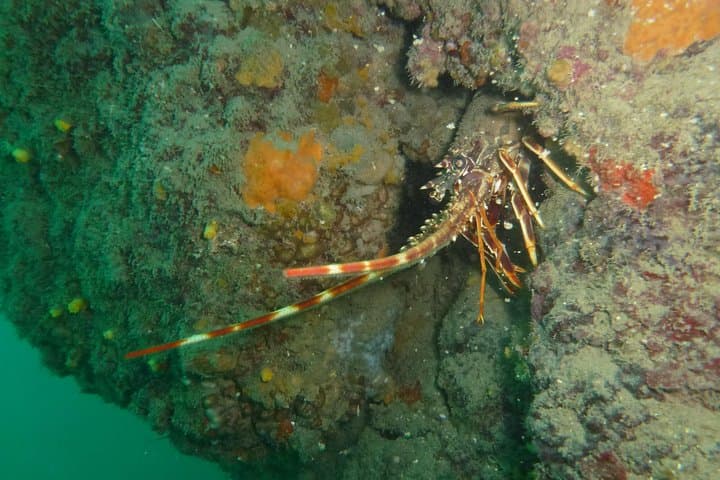
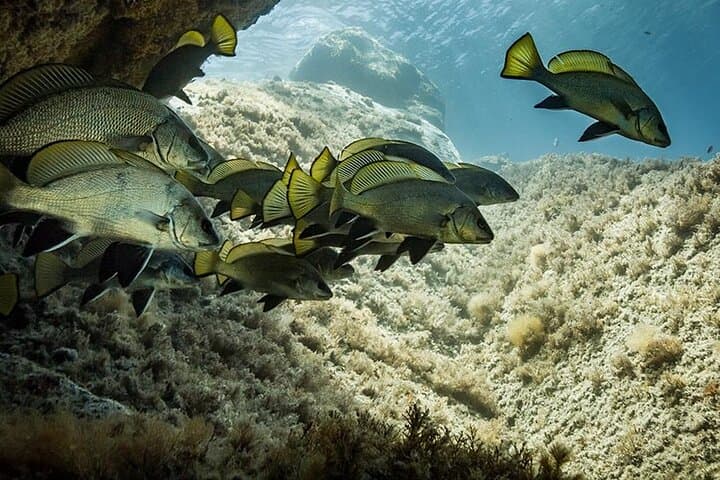
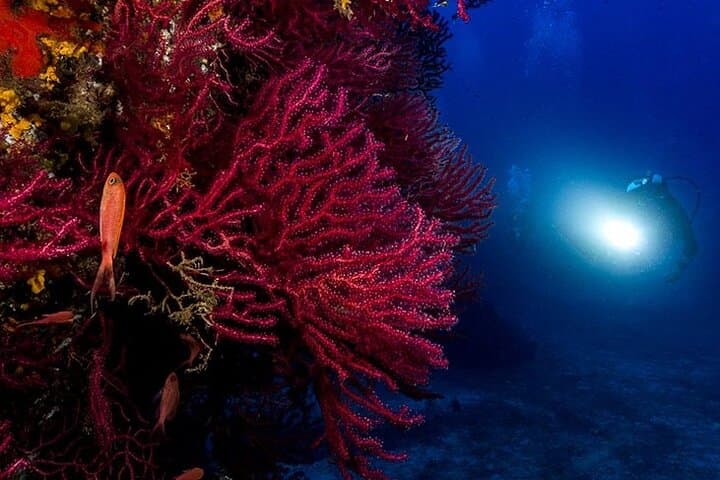
You step off the tender and the sea opens — blue-green plates fractured by light, the hull sliding away like a promise. Two guided dives per outing mean you drop twice into ledges, caves and Posidonia meadows that define Capo Carbonara: each descent tightens focus on fish that patrol crevices and on seagrass beds that ripple as if breathing.
You step off the tender and the sea opens — blue-green plates fractured by light, the hull sliding away like a promise. Two guided dives per outing mean you drop twice into ledges, caves and Posidonia meadows that define Capo Carbonara: each descent tightens focus on fish that patrol crevices and on seagrass beds that ripple as if breathing.
The marine protected area was created to preserve these coastal shelves and the habitats around Villasimius. Geologically the cape is granite and schist cut by wave-worked terraces; archaeologists and fishermen have long known the shoreline’s value. Locals still fish sustainably and small harbors host boats that ferry divers to distinct sites — reefs, drop-offs, and the sheltered coves of Isola dei Cavoli.
Practically, expect 4-hour outings either in the morning or afternoon with two guided dives; the operator runs groups up to 12 and provides snacks, drinks, and AC transport. Nitrox is available free for certified divers; full rental kit costs about €128 per person per package and should be reserved in advance. Visibility is typically best in summer but spring and fall offer quieter water and active marine life. Equalize early, monitor no-decompression limits, and respect no-anchoring zones to protect Posidonia. Bring a dive computer, a well-fitting mask, and reef-safe sunscreen. If you plan the full eight double dives, spread them over multiple days to avoid fatigue and follow local guidance on surface intervals. Capo Carbonara rewards repetitive diving—each site reveals new angles on an already rich Mediterranean world.