THE ADVENTURE COLLECTIVE® · Independent discovery and booking for outdoor travel

Skip the long lines and ride the elevator to the Eiffel Tower’s second floor and summit with a host to guide your entry. This ticket gives you fast access, practical assistance to the 2nd floor, and independent time at the summit to take in Paris from above.
Skip the long lines and ride the elevator to the Eiffel Tower’s second floor and summit with a host to guide your entry. This ticket gives you fast access, practical assistance to the 2nd floor, and independent time at the summit to take in Paris from above.
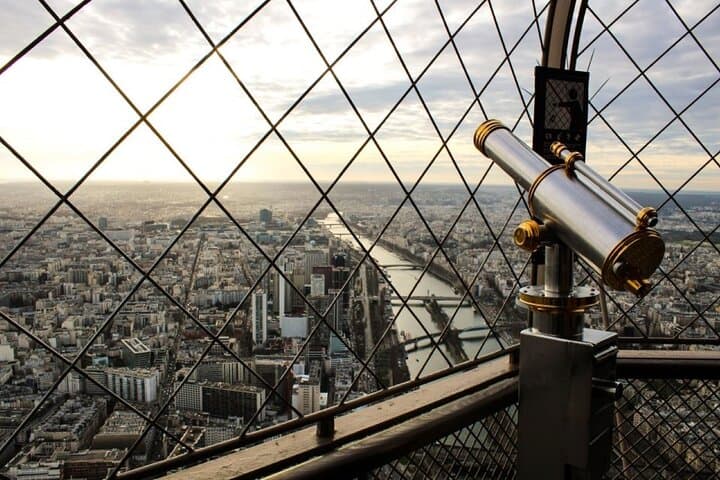
You meet at the corner outside Le Champ de Mars Café as Paris hums around you — scooters threading through morning light, the Seine glinting a few blocks away. A host reviews tickets and leads the group toward security; the elevators then carry you upward, metal and glass rising through the tower’s lattice until the city opens beneath you.
Verified experiences and guided adventures in the surrounding area.
Operated by Global Tours and Tickets · Paris, Île-de-France
You meet at the corner outside Le Champ de Mars Café as Paris hums around you — scooters threading through morning light, the Seine glinting a few blocks away. A host reviews tickets and leads the group toward security; the elevators then carry you upward, metal and glass rising through the tower’s lattice until the city opens beneath you.
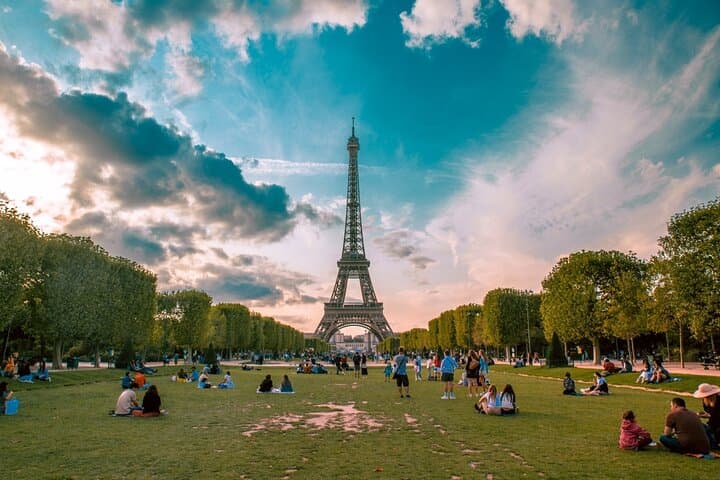
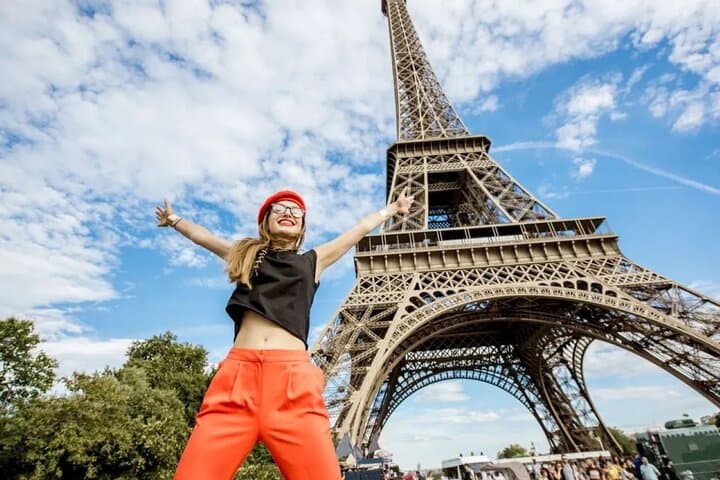
Completed for the 1889 Exposition Universelle, the Eiffel Tower is an iron landmark that transformed Paris’s skyline and engineering practice. Its exposed ironwork and riveted construction reveal 19th-century industrial ambition more than architectural frivolity. Below, Parisian life — cafés, boulevards, and the Seine — continues on a human scale; above, wide rooftops and ordered avenues extend to the horizon.
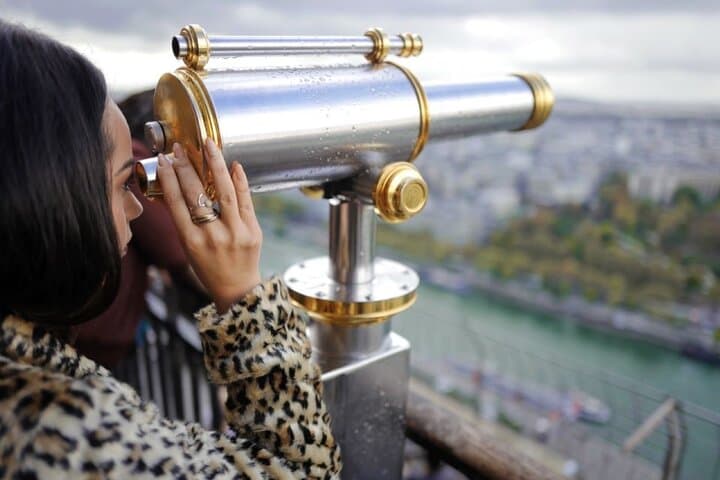
Culture here is performative and casual: lovers take photos on the second floor, students sketch the view, and vendors circulate with postcards and maps. Be aware the summit occasionally closes for maintenance or weather, and staff enforce strict security rules, including limits on bags.
Practically speaking, arrive 15 minutes early, carry your mobile ticket, and expect security lines. The visit is mostly elevator-based, but you’ll stand and walk between viewpoints. Photography is excellent at sunrise and golden hour; afternoons can be crowded. Wheelchair access is available to the second floor only. Hydrate, dress for wind at the summit, and factor in 60–120 minutes to move through checkpoints and enjoy the views. This experience balances efficient access with independent time to explore Paris from one of its highest public points.
easy.
2 hours.
Suitable for all fitness levels; mostly elevator access but requires standing and short walks
Meet outside Le Champ de Mars Café at 45 Av. de la Bourdonnais — do not enter the café; the host will gather the group there and walk you to the tower.
No — wheelchair access is only available up to the second floor; visitors with reduced mobility cannot access the summit elevators.
If the summit is closed for maintenance or safety, you will still access the 1st and 2nd floors; refunds are only handled per the operator’s limited refund policy for extended closures.
Strollers and large bags are not allowed inside the tower; travel with only small personal items to pass security quickly.
Built by Gustave Eiffel for the 1889 World’s Fair, the tower was originally a temporary exhibit that became a permanent symbol of Paris and engineering innovation.
Visitor management and regular structural maintenance preserve the tower; follow on-site rules to reduce wear and avoid littering to protect the monument.
Global Tours and Tickets operates guided outdoor trips and adventures with an emphasis on safety, stewardship, and memorable experiences.
You meet at the corner outside Le Champ de Mars Café as Paris hums around you — scooters threading through morning light, the Seine glinting a few blocks away. A host reviews tickets and leads the group toward security; the elevators then carry you upward, metal and glass rising through the tower’s lattice until the city opens beneath you.
You meet at the corner outside Le Champ de Mars Café as Paris hums around you — scooters threading through morning light, the Seine glinting a few blocks away. A host reviews tickets and leads the group toward security; the elevators then carry you upward, metal and glass rising through the tower’s lattice until the city opens beneath you.
Completed for the 1889 Exposition Universelle, the Eiffel Tower is an iron landmark that transformed Paris’s skyline and engineering practice. Its exposed ironwork and riveted construction reveal 19th-century industrial ambition more than architectural frivolity. Below, Parisian life — cafés, boulevards, and the Seine — continues on a human scale; above, wide rooftops and ordered avenues extend to the horizon.
Culture here is performative and casual: lovers take photos on the second floor, students sketch the view, and vendors circulate with postcards and maps. Be aware the summit occasionally closes for maintenance or weather, and staff enforce strict security rules, including limits on bags.
Practically speaking, arrive 15 minutes early, carry your mobile ticket, and expect security lines. The visit is mostly elevator-based, but you’ll stand and walk between viewpoints. Photography is excellent at sunrise and golden hour; afternoons can be crowded. Wheelchair access is available to the second floor only. Hydrate, dress for wind at the summit, and factor in 60–120 minutes to move through checkpoints and enjoy the views. This experience balances efficient access with independent time to explore Paris from one of its highest public points.