THE ADVENTURE COLLECTIVE® · Independent discovery and booking for outdoor travel

Skip the crowds and ascend to the Eiffel Tower summit with timed entry and an English-speaking guide. Enjoy sweeping Paris views, the summit’s vantage points and a glass-floor descent — but arrive light and on time.
Skip the crowds and ascend to the Eiffel Tower summit with timed entry and an English-speaking guide. Enjoy sweeping Paris views, the summit’s vantage points and a glass-floor descent — but arrive light and on time.
You step out of the agency on Avenue de la Bourdonnais and the ironwork rises above the Seine like a city-sized compass, its lattice pulling the eye upward. Inside a timed slot and with an English-speaking guide, the elevator lifts you through the Tower’s tiers; each window frames Paris differently — Haussmann boulevards, the river’s ribbon, and rooftops that flatten into a map.
Verified experiences and guided adventures in the surrounding area.
Operated by Paris TRIP · Paris, Île-de-France
You step out of the agency on Avenue de la Bourdonnais and the ironwork rises above the Seine like a city-sized compass, its lattice pulling the eye upward. Inside a timed slot and with an English-speaking guide, the elevator lifts you through the Tower’s tiers; each window frames Paris differently — Haussmann boulevards, the river’s ribbon, and rooftops that flatten into a map.
Built for the 1889 Exposition by Gustave Eiffel, the Tower rests on wrought iron girders anchored into Parisian subsoil of compacted alluvium and underlying Lutetian limestone. The structure is as much engineering as sculpture: riveted puddled iron that expands and creaks with temperature. Culturally, the summit has shifted from contested novelty to civic icon, a place where lovers, students and architects study the city’s geometry.
Expect security screens and queuing before the elevator: metal detectors are routine and some items are prohibited. The summit offers a glass floor on the descent for a quick, vertigo-tinged view; elevators, not stairs, take visitors to the top in this ticketed access. Guides provide context — spotting landmarks like the Trocadéro, Invalides and Montmartre — and practical cues for photographing Paris light.
Practical guidance: arrive 15 minutes before your slot at the meeting office (not the Tower), carry a mobile or printed ticket, and travel light — oversized luggage and many items are forbidden. Lines vary by season; mornings and late afternoons typically shorten waits. Comfortable walking shoes and a light layer will make the summit linger more enjoyable.
easy.
1–1.5 hours.
Minimal fitness required; able to stand, walk short distances, and manage elevator transitions.
The meeting point is the agency office at 41 Avenue de la Bourdonnais — not at the Eiffel Tower itself; plan to arrive 15 minutes before your scheduled time.
Small backpacks and foldable strollers are allowed; oversized luggage, non-foldable strollers and certain items like glass bottles are prohibited and will prevent entry.
Tickets are time-specific and non-refundable; changes are not permitted so confirm your schedule before booking.
The activity is generally suitable for most fitness levels, but some areas may have access restrictions; contact the operator ahead to discuss specific mobility needs.
Erected for the 1889 World’s Fair, the Eiffel Tower was initially criticized by artists but became a symbol of modern engineering and Parisian identity.
The Tower undergoes regular maintenance and painting to protect its ironwork; visitors are asked to respect signage and avoid littering to reduce wear on the site.
Paris TRIP operates guided outdoor trips and adventures with an emphasis on safety, stewardship, and memorable experiences.
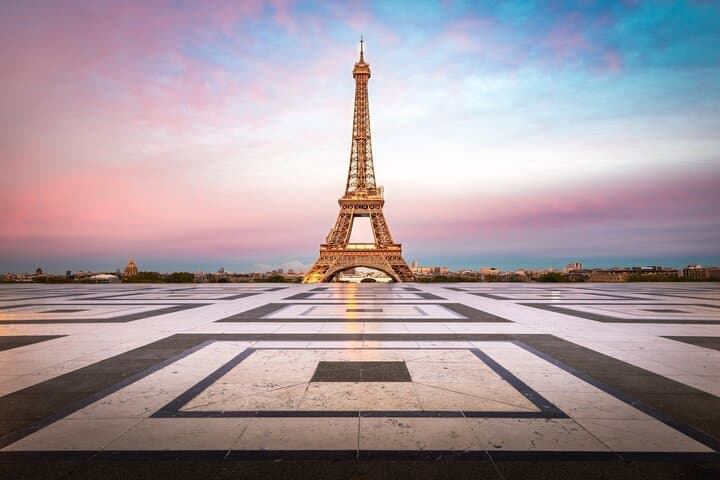
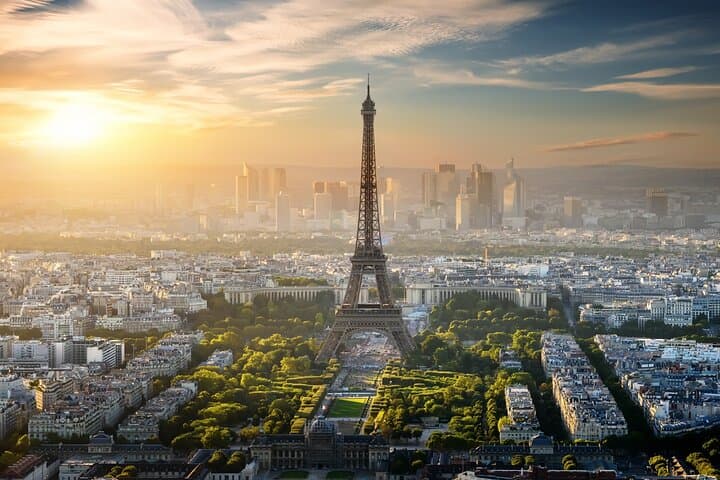
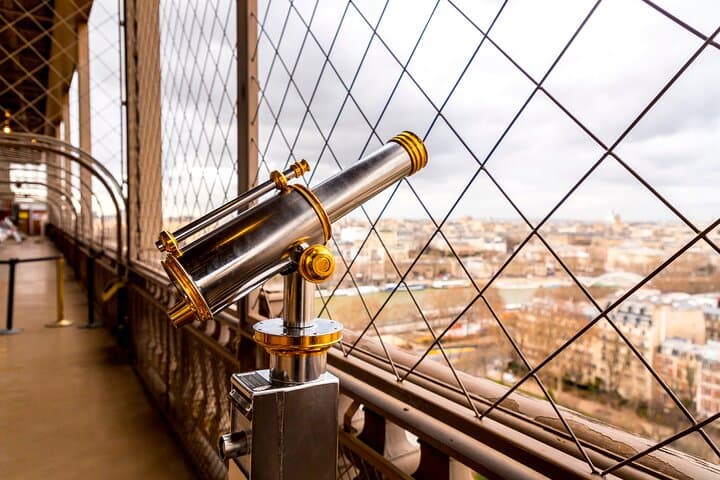
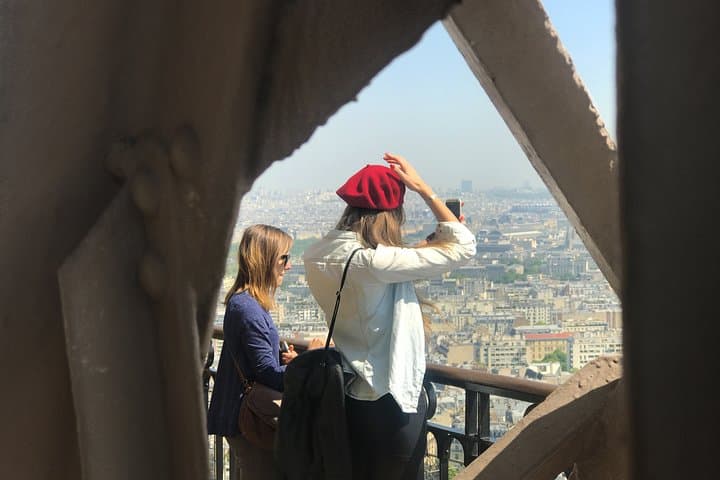
You step out of the agency on Avenue de la Bourdonnais and the ironwork rises above the Seine like a city-sized compass, its lattice pulling the eye upward. Inside a timed slot and with an English-speaking guide, the elevator lifts you through the Tower’s tiers; each window frames Paris differently — Haussmann boulevards, the river’s ribbon, and rooftops that flatten into a map.
You step out of the agency on Avenue de la Bourdonnais and the ironwork rises above the Seine like a city-sized compass, its lattice pulling the eye upward. Inside a timed slot and with an English-speaking guide, the elevator lifts you through the Tower’s tiers; each window frames Paris differently — Haussmann boulevards, the river’s ribbon, and rooftops that flatten into a map.
Built for the 1889 Exposition by Gustave Eiffel, the Tower rests on wrought iron girders anchored into Parisian subsoil of compacted alluvium and underlying Lutetian limestone. The structure is as much engineering as sculpture: riveted puddled iron that expands and creaks with temperature. Culturally, the summit has shifted from contested novelty to civic icon, a place where lovers, students and architects study the city’s geometry.
Expect security screens and queuing before the elevator: metal detectors are routine and some items are prohibited. The summit offers a glass floor on the descent for a quick, vertigo-tinged view; elevators, not stairs, take visitors to the top in this ticketed access. Guides provide context — spotting landmarks like the Trocadéro, Invalides and Montmartre — and practical cues for photographing Paris light.
Practical guidance: arrive 15 minutes before your slot at the meeting office (not the Tower), carry a mobile or printed ticket, and travel light — oversized luggage and many items are forbidden. Lines vary by season; mornings and late afternoons typically shorten waits. Comfortable walking shoes and a light layer will make the summit linger more enjoyable.