THE ADVENTURE COLLECTIVE® · Independent discovery and booking for outdoor travel

Skip the long lines and let a local guide bring the Eiffel Tower’s structure and stories to life. This 60‑minute guided visit gives reserved access to the second level with an optional summit elevator for expanded skyline views.
Skip the long lines and let a local guide bring the Eiffel Tower’s structure and stories to life. This 60‑minute guided visit gives reserved access to the second level with an optional summit elevator for expanded skyline views.
You step out of Paris traffic into an iron lattice that hums with history, the Seine glinting like a ribbon at your feet. From the meeting point on 19 Avenue de la Bourdonnais a local guide threads stories between rivets and elevators, pointing out rooftops that fan out toward Montmartre and the Arc de Triomphe.
Verified experiences and guided adventures in the surrounding area.
Operated by Europe Tourisme · Paris, Île-de-France
You step out of Paris traffic into an iron lattice that hums with history, the Seine glinting like a ribbon at your feet. From the meeting point on 19 Avenue de la Bourdonnais a local guide threads stories between rivets and elevators, pointing out rooftops that fan out toward Montmartre and the Arc de Triomphe.
Built for the 1889 Exposition Universelle by Gustave Eiffel, the tower is a wrought‑iron frame of industrial confidence — an engineered peak more than a natural one. From the second floor the city lays flat: the Louvre’s low stone roofs, Notre‑Dame’s silhouette, and the broad sweep of the Champs‑Élysées. If you choose the summit option, the third level climbs another architectural step into thinner air and wider views; the Champagne bar and glass floor on the first level add modern curiosities to the experience.
Culturally, the tower shifted from scandal to symbol within decades; today it balances tourism pressure and conservation needs, with security checks and timed entry shaping the visit. Expect mandatory screening and variable queues — busy summer afternoons can add 30–90 minutes to access times despite guided entry to the second level.
Practical guidance: arrive 15 minutes early at 19 Avenue de la Bourdonnais, carry ID, and layer for wind at height. If the summit is important, book the summit option and plan for possible closures for safety or maintenance. Combine your visit with a Seine walk or a picnic on the Champ de Mars for a fuller, grounded Paris afternoon.
easy.
1 hour.
Suitable for most fitness levels; minimal walking and elevator access, but some standing and stairs possible
Summit access is optional; the tour guarantees second‑level access and the summit is accessible only if you booked that option and the summit is open.
Meet at 19 Avenue de la Bourdonnais in front of the souvenir shop; guides wait there and you must arrive 15 minutes early.
Large bags may be subject to additional screening or restriction during security checks—travel light for faster entry.
Tickets are non‑refundable and time slots cannot be changed; summit closures for maintenance or safety may occur without refund for the base second‑floor access.
The Eiffel Tower was built by Gustave Eiffel for the 1889 World’s Fair; originally criticized by some artists and writers, it quickly became a Paris landmark and scientific platform.
High visitor numbers require ongoing maintenance and crowd management; use public transit, avoid single‑use plastics, and follow site rules to help reduce impact.
Europe Tourisme operates guided outdoor trips and adventures with an emphasis on safety, stewardship, and memorable experiences.


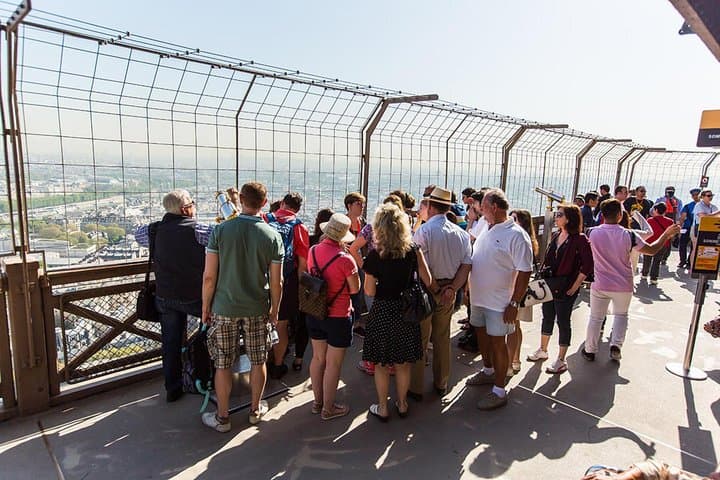
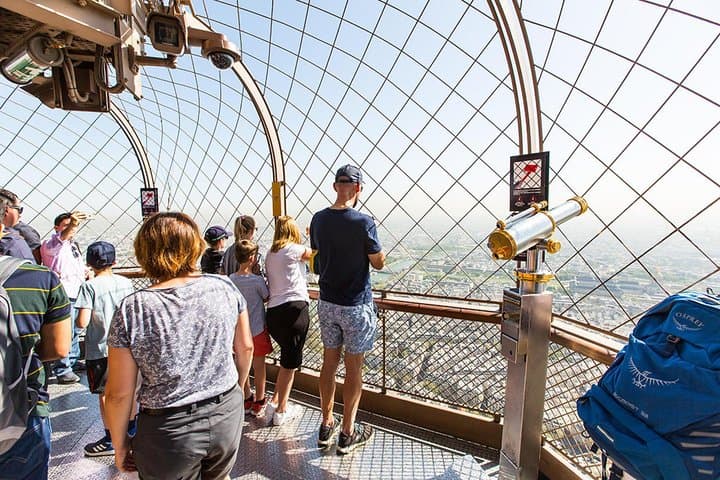
You step out of Paris traffic into an iron lattice that hums with history, the Seine glinting like a ribbon at your feet. From the meeting point on 19 Avenue de la Bourdonnais a local guide threads stories between rivets and elevators, pointing out rooftops that fan out toward Montmartre and the Arc de Triomphe.
You step out of Paris traffic into an iron lattice that hums with history, the Seine glinting like a ribbon at your feet. From the meeting point on 19 Avenue de la Bourdonnais a local guide threads stories between rivets and elevators, pointing out rooftops that fan out toward Montmartre and the Arc de Triomphe.
Built for the 1889 Exposition Universelle by Gustave Eiffel, the tower is a wrought‑iron frame of industrial confidence — an engineered peak more than a natural one. From the second floor the city lays flat: the Louvre’s low stone roofs, Notre‑Dame’s silhouette, and the broad sweep of the Champs‑Élysées. If you choose the summit option, the third level climbs another architectural step into thinner air and wider views; the Champagne bar and glass floor on the first level add modern curiosities to the experience.
Culturally, the tower shifted from scandal to symbol within decades; today it balances tourism pressure and conservation needs, with security checks and timed entry shaping the visit. Expect mandatory screening and variable queues — busy summer afternoons can add 30–90 minutes to access times despite guided entry to the second level.
Practical guidance: arrive 15 minutes early at 19 Avenue de la Bourdonnais, carry ID, and layer for wind at height. If the summit is important, book the summit option and plan for possible closures for safety or maintenance. Combine your visit with a Seine walk or a picnic on the Champ de Mars for a fuller, grounded Paris afternoon.