THE ADVENTURE COLLECTIVE® · Independent discovery and booking for outdoor travel

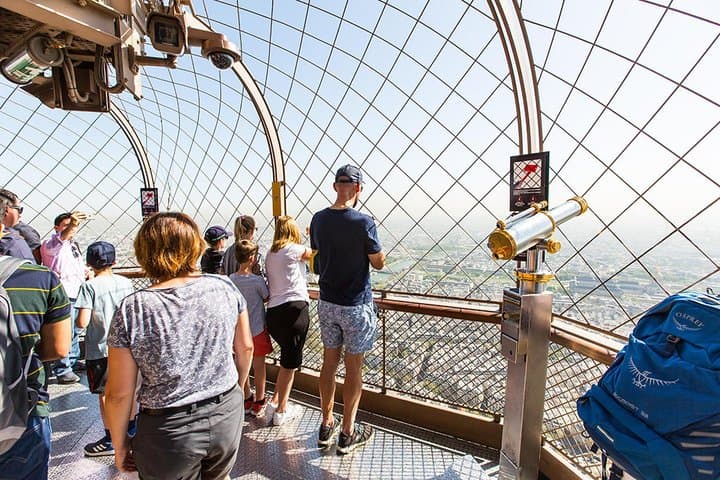
Skip long queues and ride the elevator to the Eiffel Tower’s second floor with a local guide. Enjoy panoramic city views, historical context, and free time to explore the first and second levels on your own.
Skip long queues and ride the elevator to the Eiffel Tower’s second floor with a local guide. Enjoy panoramic city views, historical context, and free time to explore the first and second levels on your own.
You step out onto 19 Avenue de la Bourdonnais, the afternoon air carrying the metallic scent of the tower itself. Your guide waits by the souvenir shop; the structure above tilts the light and the city unfolds in concentric streets beneath you.
Verified experiences and guided adventures in the surrounding area.
Operated by Europe Tourisme · Paris, Île-de-France
You step out onto 19 Avenue de la Bourdonnais, the afternoon air carrying the metallic scent of the tower itself. Your guide waits by the souvenir shop; the structure above tilts the light and the city unfolds in concentric streets beneath you.
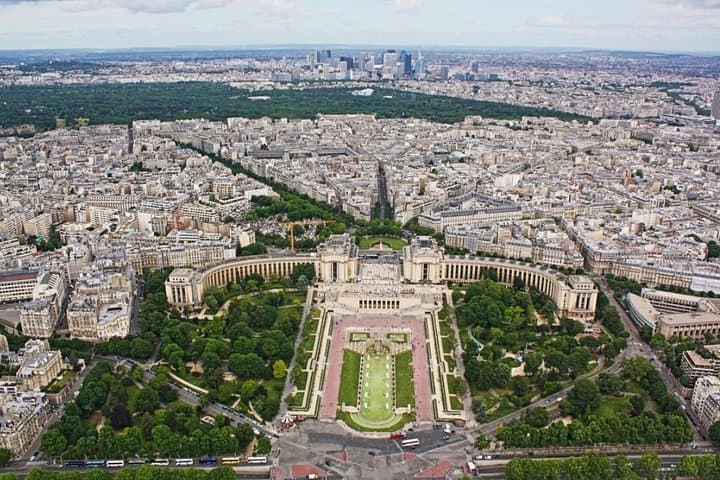
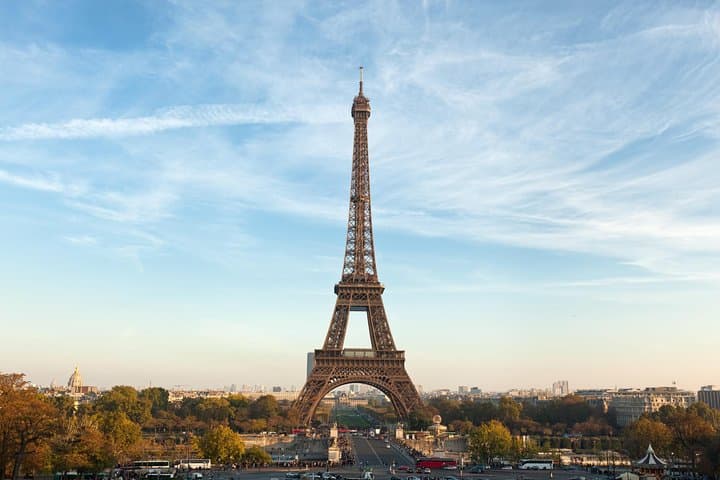
Gustave Eiffel's wrought-iron lattice rose from late-19th-century engineering ambition to become Paris’ most recognizable landmark. Built for the 1889 Exposition, the tower sits on the Champ de Mars where Seine sediments meet old river terraces — the ironwork reads as both industrial geometry and a vertical observation platform over Haussmann avenues, Les Invalides, the Louvre and the Île de la Cité.
Culturally it’s a crossroads: locals rushing home, artists sketching façades, students crowded beneath for a cheap picnic. Guides on the second floor weave anecdotes about the tower’s temporary-design origins, its wartime role, and how Parisians turned a technical curiosity into a symbol of the city.
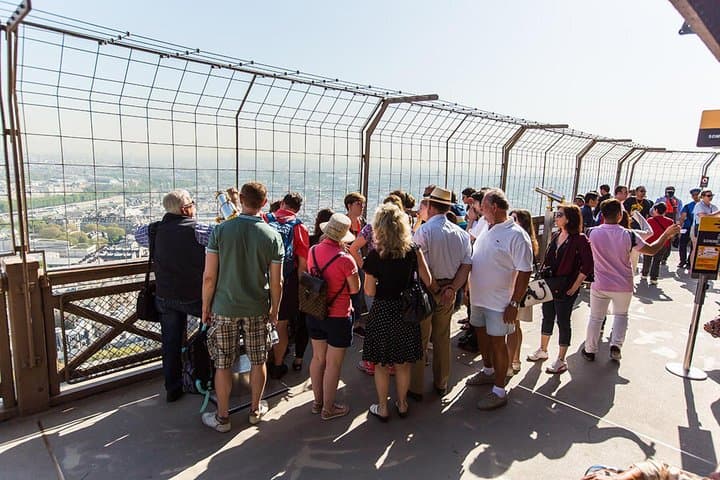
Practically, this small-group experience puts you through a managed entry and elevator to the second level where guided commentary frames the skyline. Expect brief security checks and variable lift lines; your group size (up to ~15) balances personal attention with efficient access. After the guided portion you have time to explore the 1st and 2nd floors independently — pause on the glass floor at level one if vertigo tempts you.
Bring layers, a charged camera, and a plan for onward exploration: Seine walks, the Trocadéro viewpoint across the river, or nearby cafés to debrief the perspectives you’ve just climbed into.
easy.
1–2 hours.
Suitable for all fitness levels; mostly standing and short walking on paved surfaces.
No — this small-group access includes guided entry and elevator access to the 2nd floor only; summit access is not included.
Elevators provide access to the second floor, but check with the operator ahead for mobility assistance and specifics about transfer points.
The full experience is scheduled around 2 hours; the guided segment to the second floor is typically 30–45 minutes with free time afterwards.
Children are allowed and under-3s may be free, but strollers may need to be folded during security checks and on certain elevator areas—travel light.
Completed in 1889 for the Exposition Universelle, the Eiffel Tower was initially criticized then embraced as a symbol of modern Paris.
The tower undergoes regular maintenance and repainting to protect ironwork; visitors are asked to minimize waste and use marked bins to reduce litter on the Champ de Mars.
Europe Tourisme operates guided outdoor trips and adventures with an emphasis on safety, stewardship, and memorable experiences.
You step out onto 19 Avenue de la Bourdonnais, the afternoon air carrying the metallic scent of the tower itself. Your guide waits by the souvenir shop; the structure above tilts the light and the city unfolds in concentric streets beneath you.
You step out onto 19 Avenue de la Bourdonnais, the afternoon air carrying the metallic scent of the tower itself. Your guide waits by the souvenir shop; the structure above tilts the light and the city unfolds in concentric streets beneath you.
Gustave Eiffel's wrought-iron lattice rose from late-19th-century engineering ambition to become Paris’ most recognizable landmark. Built for the 1889 Exposition, the tower sits on the Champ de Mars where Seine sediments meet old river terraces — the ironwork reads as both industrial geometry and a vertical observation platform over Haussmann avenues, Les Invalides, the Louvre and the Île de la Cité.
Culturally it’s a crossroads: locals rushing home, artists sketching façades, students crowded beneath for a cheap picnic. Guides on the second floor weave anecdotes about the tower’s temporary-design origins, its wartime role, and how Parisians turned a technical curiosity into a symbol of the city.
Practically, this small-group experience puts you through a managed entry and elevator to the second level where guided commentary frames the skyline. Expect brief security checks and variable lift lines; your group size (up to ~15) balances personal attention with efficient access. After the guided portion you have time to explore the 1st and 2nd floors independently — pause on the glass floor at level one if vertigo tempts you.
Bring layers, a charged camera, and a plan for onward exploration: Seine walks, the Trocadéro viewpoint across the river, or nearby cafés to debrief the perspectives you’ve just climbed into.