THE ADVENTURE COLLECTIVE® · Independent discovery and booking for outdoor travel

Skip the long lines and experience the Eiffel Tower with reserved second-floor access and a guided walk on the glass floor. Learn the tower’s history, spot Parisian landmarks, and get practical tips to make the most of your visit.
Skip the long lines and experience the Eiffel Tower with reserved second-floor access and a guided walk on the glass floor. Learn the tower’s history, spot Parisian landmarks, and get practical tips to make the most of your visit.
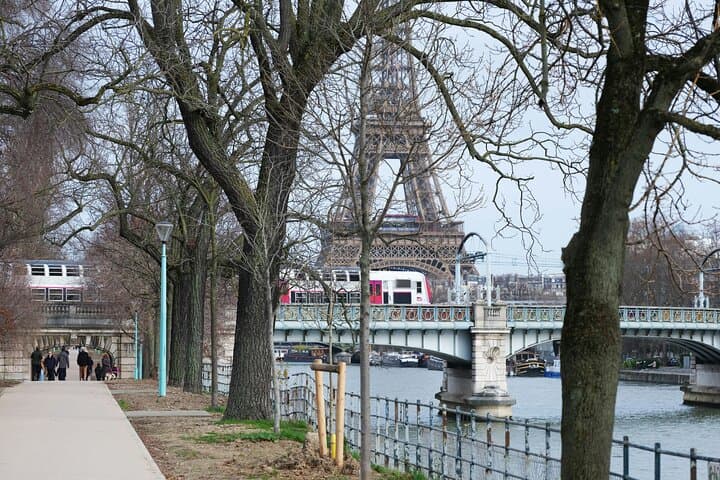
The iron lattice rises above the Champ de Mars while the Seine threads past, and you meet your guide at a designated spot — a bright backpack or white-flag marker — ready to cut through lines reserved for the group.
Verified experiences and guided adventures in the surrounding area.
Operated by Tourrr.com · Paris, Île-de-France
The iron lattice rises above the Champ de Mars while the Seine threads past, and you meet your guide at a designated spot — a bright backpack or white-flag marker — ready to cut through lines reserved for the group.
This private tour focuses on the tower’s engineered grace: built by Gustave Eiffel for the 1889 Exposition Universelle, the structure changed Paris’s skyline and demonstrated iron’s new possibilities. The nearby Seine and Paris’s flat alluvial plain provide the low horizon that makes the tower’s silhouette so dramatic; from the second floor, city blocks, Haussmann boulevards and distant monuments fan out like a map.
Culture here is immediate: street vendors, sketching artists, and the cadence of multilingual visitors create a living cityroom beneath the tower. Your guide links architectural detail to social history — why the tower was controversial at first, how it became a symbol of modernity — and points out features you might miss alone, like rivet patterns and the glass floor on the first level.
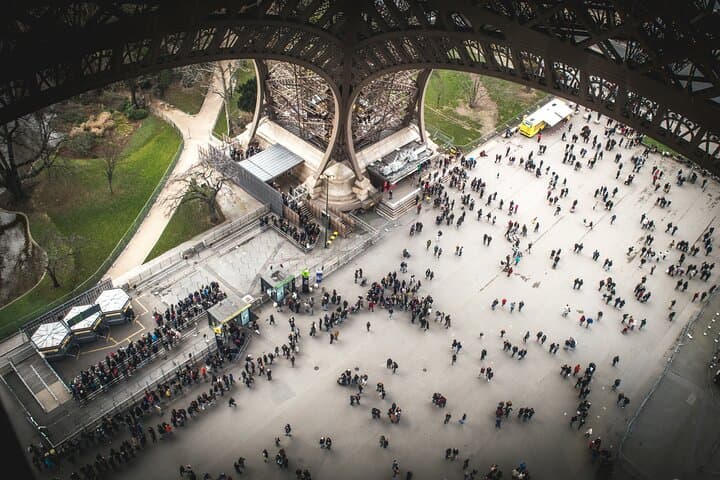
Practically, expect security checks and variable wait times; reserved access speeds entry but not security. The itinerary is modest: meet, pass security, elevator to the first-floor glass walk, then up to the second-floor viewing platform. Wear comfortable shoes for standing and photos, carry a light jacket for breezy heights, and give yourself extra time for photos or to remain on the second floor after the guided portion ends. Families with strollers can access some areas, but check in advance for elevator availability. Morning or early evening slots offer softer light and fewer crowds.
easy.
2 hours.
Suitable for most travelers; involves short walks, standing, and elevator use.
The organized guide-led segment runs about 60–90 minutes within the 2-hour booking, with additional time allowed to stay on the second floor afterward.
Elevators transport visitors between levels; climbing is optional and typically not required for this reserved-access tour.
Some access points and elevators accommodate strollers and wheelchairs, but availability can vary; contact the operator in advance to confirm arrangements.
Reserved access reduces time in queues but does not eliminate security checks; expect variable wait times depending on season and security throughput.
Completed in 1889 as a temporary fair structure, the Eiffel Tower survived planned demolition and evolved into an emblem of industrial-era engineering and Parisian identity.
Visitor flows and maintenance are managed by the tower’s operators to protect the structure; visitors should avoid littering and respect restricted zones to minimize impact.
Tourrr.com operates guided outdoor trips and adventures with an emphasis on safety, stewardship, and memorable experiences.
The iron lattice rises above the Champ de Mars while the Seine threads past, and you meet your guide at a designated spot — a bright backpack or white-flag marker — ready to cut through lines reserved for the group.
The iron lattice rises above the Champ de Mars while the Seine threads past, and you meet your guide at a designated spot — a bright backpack or white-flag marker — ready to cut through lines reserved for the group.
This private tour focuses on the tower’s engineered grace: built by Gustave Eiffel for the 1889 Exposition Universelle, the structure changed Paris’s skyline and demonstrated iron’s new possibilities. The nearby Seine and Paris’s flat alluvial plain provide the low horizon that makes the tower’s silhouette so dramatic; from the second floor, city blocks, Haussmann boulevards and distant monuments fan out like a map.
Culture here is immediate: street vendors, sketching artists, and the cadence of multilingual visitors create a living cityroom beneath the tower. Your guide links architectural detail to social history — why the tower was controversial at first, how it became a symbol of modernity — and points out features you might miss alone, like rivet patterns and the glass floor on the first level.
Practically, expect security checks and variable wait times; reserved access speeds entry but not security. The itinerary is modest: meet, pass security, elevator to the first-floor glass walk, then up to the second-floor viewing platform. Wear comfortable shoes for standing and photos, carry a light jacket for breezy heights, and give yourself extra time for photos or to remain on the second floor after the guided portion ends. Families with strollers can access some areas, but check in advance for elevator availability. Morning or early evening slots offer softer light and fewer crowds.