THE ADVENTURE COLLECTIVE® · Independent discovery and booking for outdoor travel

Skip the stress and ride the elevator with a knowledgeable guide to the top of the Eiffel Tower. This guided visit pairs history and practical tips—ideal for first-time visitors who want efficient access and panoramic views.
Skip the stress and ride the elevator with a knowledgeable guide to the top of the Eiffel Tower. This guided visit pairs history and practical tips—ideal for first-time visitors who want efficient access and panoramic views.
You step out of the Métro and the ironwork looms ahead, elevators humming like a city preparing to rise. The guide meets the group just beyond the security line, and within minutes the tower stops feeling like a distant postcard and starts behaving like a place with stories—of engineers, audacious schedules, and Parisian crowds.
Verified experiences and guided adventures in the surrounding area.
You step out of the Métro and the ironwork looms ahead, elevators humming like a city preparing to rise. The guide meets the group just beyond the security line, and within minutes the tower stops feeling like a distant postcard and starts behaving like a place with stories—of engineers, audacious schedules, and Parisian crowds.
Built for the 1889 Exposition, the Eiffel Tower was an engineering demonstration as much as an attraction. Its lattice of puddled iron sits on foundations bored into the Seine's alluvial plain, a structural answer to the city’s soft soils. From the second level the river becomes a silver ribbon, the Seine daring you to trace its bridges. Local culture folds into the moment: picnickers on the Champ de Mars, vendors with crepes, and a skyline that names itself—Montparnasse, Les Invalides—one landmark nudging another.
Practical guidance: this guided elevator tour reduces navigation stress with pre-booked entry and top-floor options handled in advance. Expect tight security and lines at peak hours; mornings or late afternoons shrink waits. Elevators move quickly but can be crowded—if you’re prone to vertigo, notify your guide. Bring a lightweight bag for quick inspections, charge your camera, and plan 75 minutes for the core experience; add time for photos or a coffee below.
Accessibility is good to the second level; top-floor access requires elevator ascent. Watch for seasonal wind that can make exposed viewing platforms brisk. The tour blends historical context and local color with a pragmatic rhythm that gets you up the Tower with minimal friction and maximum perspective.
easy.
1–1.5 hours.
Minimal fitness required; able to stand and walk short distances and handle stairs if choosing to descend on foot.
Top-floor access is optional; confirm that your booking includes it. Some tickets provide access only to lower levels unless upgraded.
Yes—elevators serve the main levels and staff can assist; notify the operator in advance for any special assistance.
The guided elevator tour itself runs about 75 minutes; allow extra time for security, photos, and time on the Champ de Mars.
There are cafes and small kiosks on different levels; service can be limited on peak days, so plan accordingly.
Constructed for the 1889 Exposition Universelle, the iron tower proved controversial at first before becoming an enduring symbol of technological ambition.
Visitor pressure requires crowd management and strict security; follow stay-on-path rules and minimize waste to reduce impact on the site and surrounding public gardens.
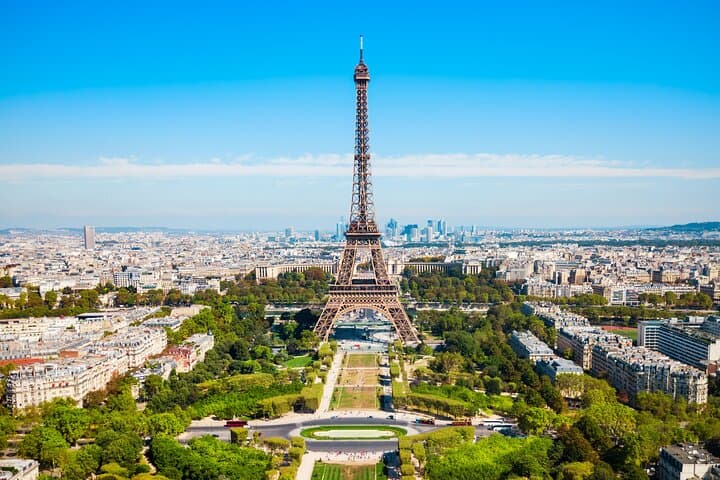
You step out of the Métro and the ironwork looms ahead, elevators humming like a city preparing to rise. The guide meets the group just beyond the security line, and within minutes the tower stops feeling like a distant postcard and starts behaving like a place with stories—of engineers, audacious schedules, and Parisian crowds.
You step out of the Métro and the ironwork looms ahead, elevators humming like a city preparing to rise. The guide meets the group just beyond the security line, and within minutes the tower stops feeling like a distant postcard and starts behaving like a place with stories—of engineers, audacious schedules, and Parisian crowds.
Built for the 1889 Exposition, the Eiffel Tower was an engineering demonstration as much as an attraction. Its lattice of puddled iron sits on foundations bored into the Seine's alluvial plain, a structural answer to the city’s soft soils. From the second level the river becomes a silver ribbon, the Seine daring you to trace its bridges. Local culture folds into the moment: picnickers on the Champ de Mars, vendors with crepes, and a skyline that names itself—Montparnasse, Les Invalides—one landmark nudging another.
Practical guidance: this guided elevator tour reduces navigation stress with pre-booked entry and top-floor options handled in advance. Expect tight security and lines at peak hours; mornings or late afternoons shrink waits. Elevators move quickly but can be crowded—if you’re prone to vertigo, notify your guide. Bring a lightweight bag for quick inspections, charge your camera, and plan 75 minutes for the core experience; add time for photos or a coffee below.
Accessibility is good to the second level; top-floor access requires elevator ascent. Watch for seasonal wind that can make exposed viewing platforms brisk. The tour blends historical context and local color with a pragmatic rhythm that gets you up the Tower with minimal friction and maximum perspective.