THE ADVENTURE COLLECTIVE® · Independent discovery and booking for outdoor travel

Ascend the Eiffel Tower with a guide who translates rivets and ironwork into Parisian history, then choose whether to push up to the summit for 300‑meter panoramas. Expect security checks, possible queues, and summit availability that depends on weather.
Ascend the Eiffel Tower with a guide who translates rivets and ironwork into Parisian history, then choose whether to push up to the summit for 300‑meter panoramas. Expect security checks, possible queues, and summit availability that depends on weather.
Standing at the base of the Eiffel Tower, the iron lattice looms above the Seine, elevators humming as visitors thread through security and climb toward the city’s patchwork of rooftops.
Verified experiences and guided adventures in the surrounding area.
Operated by PARIS DIVA TOURS · Paris, Île-de-France
Standing at the base of the Eiffel Tower, the iron lattice looms above the Seine, elevators humming as visitors thread through security and climb toward the city’s patchwork of rooftops.
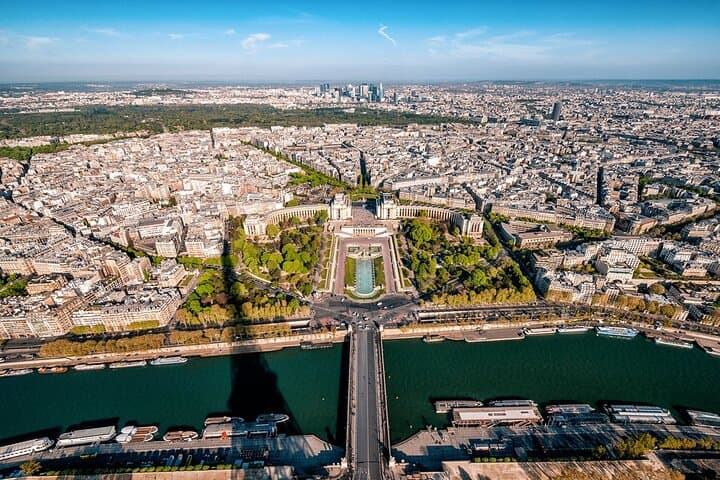
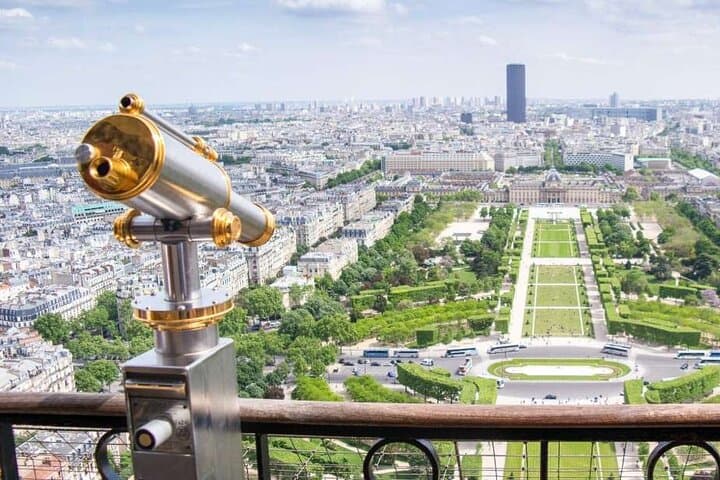
Constructed for the 1889 Exposition by Gustave Eiffel, the tower marked a turning point in iron architecture and in Paris’s identity. The guided elevator tour moves from foundation to second floor — then, if available and selected, all the way to the summit at roughly 300 meters for expansive views that reveal boulevards, parks, and the distant dome of Sacré‑Cœur.
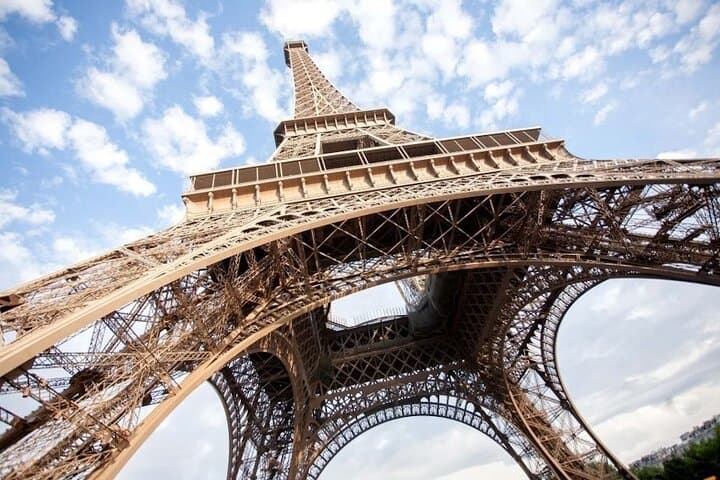
The experience blends history and urban geology: riveted girders, early industrial engineering, and the tower’s role as antenna and cultural icon across two centuries. Guides share stories about construction challenges, wartime survival, and the tower's transformation from reviled curiosity to global symbol.
Practical details matter. Meet at 3 Avenue Suffren 30 minutes before departure; groups are capped to keep the experience focused. Expect security checks and elevator queues—waits commonly range from half an hour to two hours depending on season and time of day. Summit access is weather- and operationally dependent; if the top is closed you receive a partial refund. The tour is not suitable for wheelchair users or those requiring crutches.
Plan for standing, short walks, and plenty of photo stops: wear comfortable shoes, carry a small daypack, and bring layers — wind and temperature shift with altitude. For clearer skies, aim for early morning or late afternoon; sunset trips can be spectacular but busiest. With a little timing and light packing, the elevator tour turns an iconic silhouette into a readable, memorable panorama.
easy.
1–2 hours.
Suitable for average fitness — mostly standing, short walks, and elevator rides; not physically demanding.
No. Summit access is subject to daily operational and weather conditions; if the summit is closed you'll receive a partial refund for the difference between 2nd-floor and summit tickets.
This particular guided tour is not accessible for wheelchair users or visitors requiring crutches or walkers; check official Eiffel Tower resources for accessible visit options.
Wait times vary by season and time of day; security and lift queues commonly range from 30 minutes to 1–2 hours during peak periods.
Guides ask that you arrive 30 minutes early; late arrivals may miss the departure and are not eligible for a refund, as tickets are issued on-site at the meeting point.
Built for the 1889 World’s Fair, the iron tower faced early criticism before becoming one of the world’s most recognizable structures and a hub of broadcast and scientific experiments.
The Eiffel Tower undergoes regular maintenance, painting, and visitor-capacity management to limit wear; visitors help by following marked paths and disposal rules to reduce impact.
PARIS DIVA TOURS operates guided outdoor trips and adventures with an emphasis on safety, stewardship, and memorable experiences.
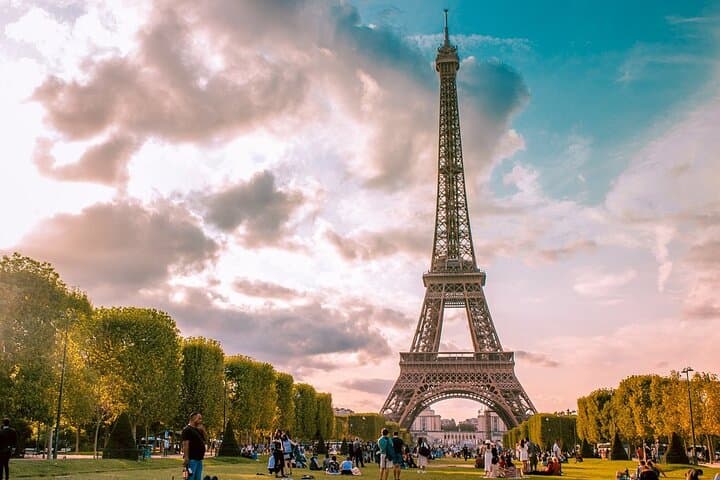
Standing at the base of the Eiffel Tower, the iron lattice looms above the Seine, elevators humming as visitors thread through security and climb toward the city’s patchwork of rooftops.
Standing at the base of the Eiffel Tower, the iron lattice looms above the Seine, elevators humming as visitors thread through security and climb toward the city’s patchwork of rooftops.
Constructed for the 1889 Exposition by Gustave Eiffel, the tower marked a turning point in iron architecture and in Paris’s identity. The guided elevator tour moves from foundation to second floor — then, if available and selected, all the way to the summit at roughly 300 meters for expansive views that reveal boulevards, parks, and the distant dome of Sacré‑Cœur.
The experience blends history and urban geology: riveted girders, early industrial engineering, and the tower’s role as antenna and cultural icon across two centuries. Guides share stories about construction challenges, wartime survival, and the tower's transformation from reviled curiosity to global symbol.
Practical details matter. Meet at 3 Avenue Suffren 30 minutes before departure; groups are capped to keep the experience focused. Expect security checks and elevator queues—waits commonly range from half an hour to two hours depending on season and time of day. Summit access is weather- and operationally dependent; if the top is closed you receive a partial refund. The tour is not suitable for wheelchair users or those requiring crutches.
Plan for standing, short walks, and plenty of photo stops: wear comfortable shoes, carry a small daypack, and bring layers — wind and temperature shift with altitude. For clearer skies, aim for early morning or late afternoon; sunset trips can be spectacular but busiest. With a little timing and light packing, the elevator tour turns an iconic silhouette into a readable, memorable panorama.