THE ADVENTURE COLLECTIVE® · Independent discovery and booking for outdoor travel

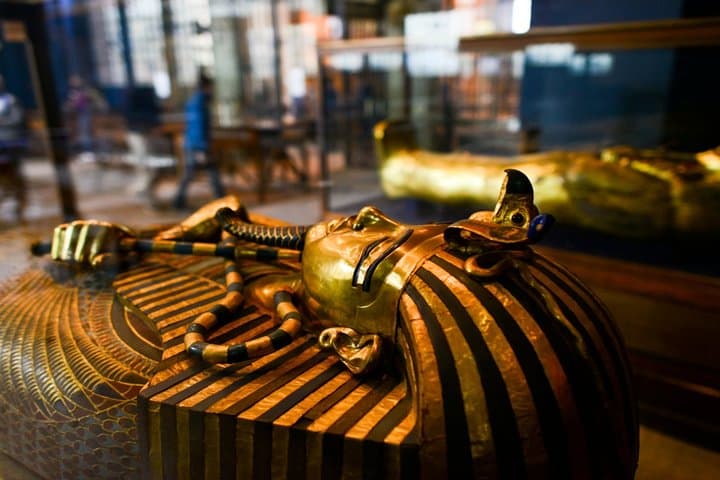
Explore five millennia of Egyptian history on a focused half-day tour of Cairo’s Egyptian Museum. A private Egyptologist guide highlights key artifacts—Tutankhamun treasures, mummies, and funerary art—followed by free time to browse the galleries.
Explore five millennia of Egyptian history on a focused half-day tour of Cairo’s Egyptian Museum. A private Egyptologist guide highlights key artifacts—Tutankhamun treasures, mummies, and funerary art—followed by free time to browse the galleries.
A thin Cairo light filters through the museum’s high windows as a guide leads a small group past cases glinting with gold. Visitors move from room to room, the city’s bustle fading to a distant hum; inside, objects five millennia old hold the attention.
Verified experiences and guided adventures in the surrounding area.
Operated by Tamer Safari · Cairo, Cairo Governorate
A thin Cairo light filters through the museum’s high windows as a guide leads a small group past cases glinting with gold. Visitors move from room to room, the city’s bustle fading to a distant hum; inside, objects five millennia old hold the attention.
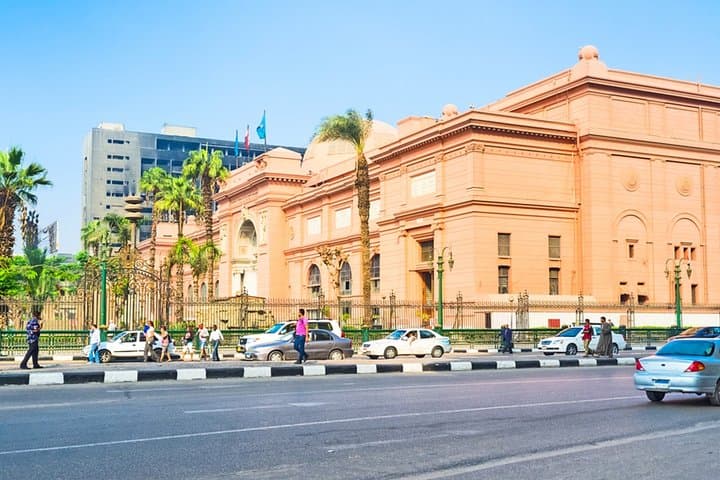
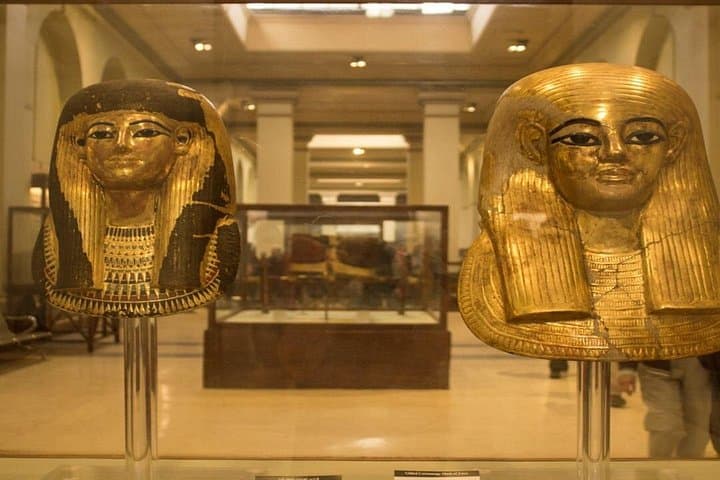
The Egyptian Museum in Tahrir was built in the early 20th century to house artifacts pulled from the Nile Valley’s tombs and temples. Its halls catalog pharaonic life—sarcophagi, funerary masks, everyday pottery—and the collection is the result of 19th- and 20th-century archaeological activity that reshaped how the world views ancient Egypt. Geology and the Nile’s floodplain are the silent backdrop: the river’s annual rise made agriculture and monumental stonework possible, which in turn created the objects now on display.
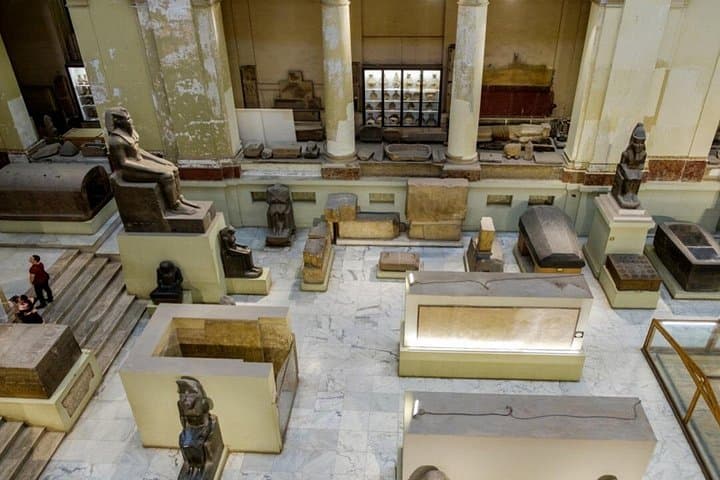
Culturally, the museum reads like a public classroom; a trained Egyptologist adds context that labels cannot—explaining trade links, religious practices, and why certain motifs repeat across dynasties. Local insight: the building’s original layout reflects early-museum design—grand staircases and small, dense galleries—so allow time to pause rather than rush.
Practical guidance: half-day tours typically include hotel pickup, a guided walkthrough of the highlights, and short free time for independent browsing or photos (respect signage). Expect moderate walking and some stair climbing; bring comfortable shoes, a bottle of water, and lightweight layers for air-conditioned galleries. Security is strict—carry ID—and mornings or late afternoons are the least crowded times to visit.
easy.
4 hours.
Suitable for most travelers with basic mobility; involves walking and some stairs
Yes—this private half-day tour includes entrance fees to the Egyptian Museum as listed in the tour inclusions.
Photography is generally permitted in many galleries without flash, but rules vary by room and special displays—follow posted signs and your guide’s directions.
The museum has multiple staircases and some historic stair-only areas; accessibility can be limited—contact the operator ahead to arrange assistance if needed.
Private pickup and return are included; you’ll confirm a pickup point and time when you book and should provide full names and passport details as requested.
The museum building dates to the early 1900s and was created to display artifacts recovered during intensive excavations across Egypt; its arrangement reflects historical museum design.
Large visitor numbers put strain on display environments—avoid touching objects, follow guide instructions, and limit flash photography to help preserve fragile materials.
Tamer Safari operates guided outdoor trips and adventures with an emphasis on safety, stewardship, and memorable experiences.
A thin Cairo light filters through the museum’s high windows as a guide leads a small group past cases glinting with gold. Visitors move from room to room, the city’s bustle fading to a distant hum; inside, objects five millennia old hold the attention.
A thin Cairo light filters through the museum’s high windows as a guide leads a small group past cases glinting with gold. Visitors move from room to room, the city’s bustle fading to a distant hum; inside, objects five millennia old hold the attention.
The Egyptian Museum in Tahrir was built in the early 20th century to house artifacts pulled from the Nile Valley’s tombs and temples. Its halls catalog pharaonic life—sarcophagi, funerary masks, everyday pottery—and the collection is the result of 19th- and 20th-century archaeological activity that reshaped how the world views ancient Egypt. Geology and the Nile’s floodplain are the silent backdrop: the river’s annual rise made agriculture and monumental stonework possible, which in turn created the objects now on display.
Culturally, the museum reads like a public classroom; a trained Egyptologist adds context that labels cannot—explaining trade links, religious practices, and why certain motifs repeat across dynasties. Local insight: the building’s original layout reflects early-museum design—grand staircases and small, dense galleries—so allow time to pause rather than rush.
Practical guidance: half-day tours typically include hotel pickup, a guided walkthrough of the highlights, and short free time for independent browsing or photos (respect signage). Expect moderate walking and some stair climbing; bring comfortable shoes, a bottle of water, and lightweight layers for air-conditioned galleries. Security is strict—carry ID—and mornings or late afternoons are the least crowded times to visit.