THE ADVENTURE COLLECTIVE® · Independent discovery and booking for outdoor travel

Learn to ride an electric hydrofoil off Charakas Beach outside Athens. This 90‑minute introduction blends hands‑on instruction, safety equipment, and videography so beginners can feel the thrill of gliding above the Aegean.
Learn to ride an electric hydrofoil off Charakas Beach outside Athens. This 90‑minute introduction blends hands‑on instruction, safety equipment, and videography so beginners can feel the thrill of gliding above the Aegean.
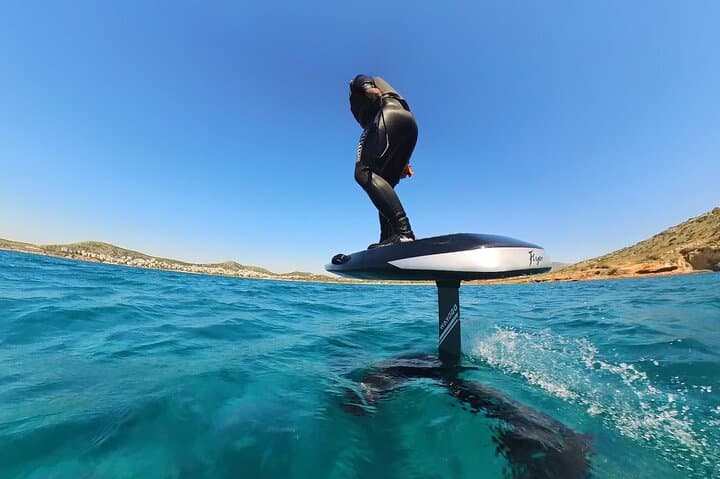
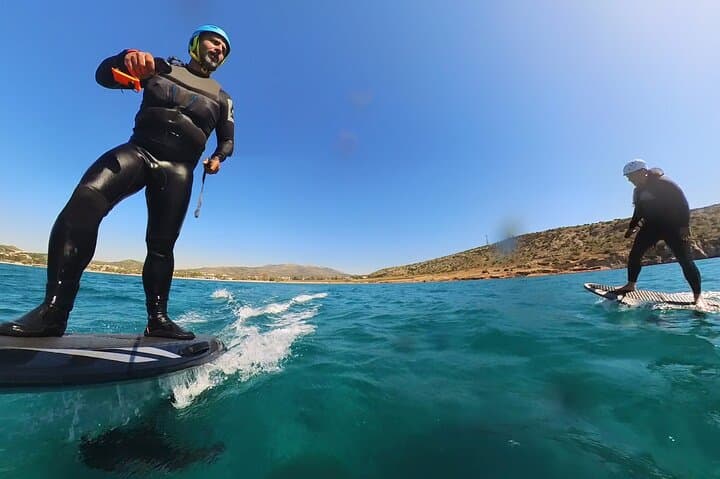
The first push is quiet — a smooth electric thrum under your feet, the Aegean glass opening up in front of you. At Charakas Beach the water dares you to try, lifting and teasing as the hydrofoil builds lift; then, almost imperceptibly, the board rises and you are flying a few inches above the sea.
Verified experiences and guided adventures in the surrounding area.
Operated by Marios Transfers Athens · Athens, Attica
The first push is quiet — a smooth electric thrum under your feet, the Aegean glass opening up in front of you. At Charakas Beach the water dares you to try, lifting and teasing as the hydrofoil builds lift; then, almost imperceptibly, the board rises and you are flying a few inches above the sea.
This is not traditional surfing. Efoiling blends board control with silent propulsion: the motor hums, the foil slices the water and suddenly the drag falls away. In Attica, where limestone headlands plunge into blue and the Saronic Gulf gathers wind and current, the sensation is part pilot, part skater — a precise balance between lean and trust.
Athens may be best known for its ruins, but the coastline south of the city has a long maritime history. Fishermen, trireme captains and modern sailors have all read the same wind patterns that make these coves predictable for small‑craft activity. Geologically the shoreline here is a mix of ancient marble and softer sedimentary beds; that contrast creates sheltered beaches and clean water where equipment can operate smoothly and safely.
Local culture around Charakas is relaxed and service‑oriented. Cafes spill onto boardwalks; families picnic with fresh fish; instructors speak a blend of Greek and English and value safety nearly as much as the thrill. Videographers often follow sessions, translating spectacular first flights into slow‑motion clips that show every tentative lean and eventual grin.
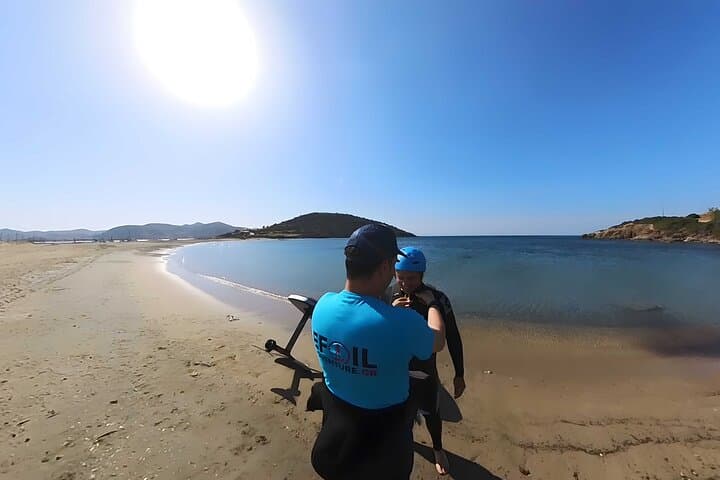
Practical nuts and bolts: the session runs 90 minutes from meeting point to finish, with guided instruction, 1:1 coaching, and helmet and life vest provided. No prior experience is required, but the activity is not recommended for pregnant travelers, those with spinal injuries, or serious heart conditions. Bring a towel, reef‑safe sunscreen, and a change of clothes. The operators ask for weight and height during booking to set equipment and ensure safety; public transport options are nearby but expect to meet at Charakas Beach.
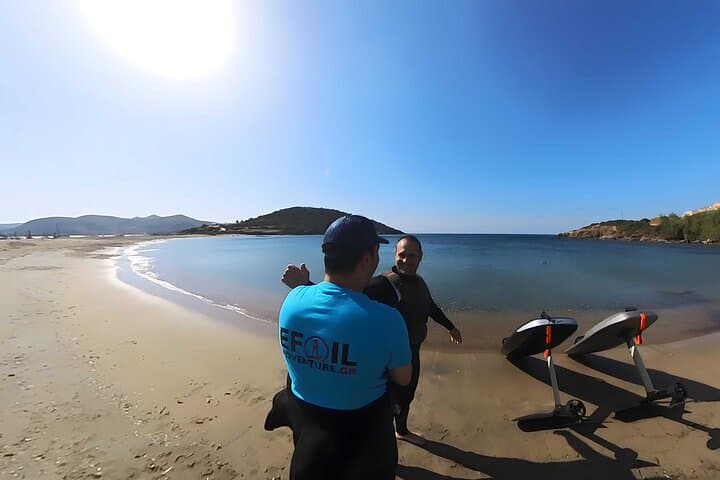
Timing matters. Early mornings offer glassy water and softer light for video; afternoons can bring crosswind that challenges beginners but rewards confident riders with longer glides. Hydrate before you go and let instructors walk you through mounting and balance drills on the sand before you attempt lift. Expect to fall — gently — during your first attempts; the foil is forgiving when you follow the basics.
For travelers: combine a session with a seaside dinner and sunset over the Gulf, or a trip inland to Athens for archaeology and espresso. Efoiling here is short, precise and unforgettable — a modern way to read the sea and feel, briefly, like you are on the edge of flying.
easy.
1.5 hours.
Moderate; suitable for people comfortable standing and with basic balance — no advanced fitness required.
No — lessons are designed for beginners with instructor guidance and progressive drills on land and water.
Helmet, life vest, a bottle of water, instructor time, and often on‑water videography are included.
Yes — operators require weight and height during booking to match equipment; provide accurate information for safety.
Swimwear, a rash guard or light windbreaker for cooler conditions, and water shoes if you prefer foot protection.
It’s suitable for most adults, but not recommended for pregnant travelers or those with spinal or serious cardiovascular issues.
Public transport options exist and are noted by the operator, but many travelers take a taxi for direct access to the meeting point.
Attica’s coastline has served seafaring communities since antiquity; many modern beaches sit on routes once used by ancient traders and coastal pilots.
Operators encourage reef‑safe sunscreen and minimal wake near sensitive shoreline areas to protect marine life and seagrass beds.
Marios Transfers Athens operates guided outdoor trips and adventures with an emphasis on safety, stewardship, and memorable experiences.
The first push is quiet — a smooth electric thrum under your feet, the Aegean glass opening up in front of you. At Charakas Beach the water dares you to try, lifting and teasing as the hydrofoil builds lift; then, almost imperceptibly, the board rises and you are flying a few inches above the sea.
The first push is quiet — a smooth electric thrum under your feet, the Aegean glass opening up in front of you. At Charakas Beach the water dares you to try, lifting and teasing as the hydrofoil builds lift; then, almost imperceptibly, the board rises and you are flying a few inches above the sea.
This is not traditional surfing. Efoiling blends board control with silent propulsion: the motor hums, the foil slices the water and suddenly the drag falls away. In Attica, where limestone headlands plunge into blue and the Saronic Gulf gathers wind and current, the sensation is part pilot, part skater — a precise balance between lean and trust.
Athens may be best known for its ruins, but the coastline south of the city has a long maritime history. Fishermen, trireme captains and modern sailors have all read the same wind patterns that make these coves predictable for small‑craft activity. Geologically the shoreline here is a mix of ancient marble and softer sedimentary beds; that contrast creates sheltered beaches and clean water where equipment can operate smoothly and safely.
Local culture around Charakas is relaxed and service‑oriented. Cafes spill onto boardwalks; families picnic with fresh fish; instructors speak a blend of Greek and English and value safety nearly as much as the thrill. Videographers often follow sessions, translating spectacular first flights into slow‑motion clips that show every tentative lean and eventual grin.
Practical nuts and bolts: the session runs 90 minutes from meeting point to finish, with guided instruction, 1:1 coaching, and helmet and life vest provided. No prior experience is required, but the activity is not recommended for pregnant travelers, those with spinal injuries, or serious heart conditions. Bring a towel, reef‑safe sunscreen, and a change of clothes. The operators ask for weight and height during booking to set equipment and ensure safety; public transport options are nearby but expect to meet at Charakas Beach.
Timing matters. Early mornings offer glassy water and softer light for video; afternoons can bring crosswind that challenges beginners but rewards confident riders with longer glides. Hydrate before you go and let instructors walk you through mounting and balance drills on the sand before you attempt lift. Expect to fall — gently — during your first attempts; the foil is forgiving when you follow the basics.
For travelers: combine a session with a seaside dinner and sunset over the Gulf, or a trip inland to Athens for archaeology and espresso. Efoiling here is short, precise and unforgettable — a modern way to read the sea and feel, briefly, like you are on the edge of flying.