THE ADVENTURE COLLECTIVE® · Independent discovery and booking for outdoor travel

Step into the house where Edward Hopper grew up and see the early works and environments that shaped his use of light. This short, accessible museum visit pairs historic rooms with rotating exhibits and river views—ideal for a half-day from New York City.
Step into the house where Edward Hopper grew up and see the early works and environments that shaped his use of light. This short, accessible museum visit pairs historic rooms with rotating exhibits and river views—ideal for a half-day from New York City.
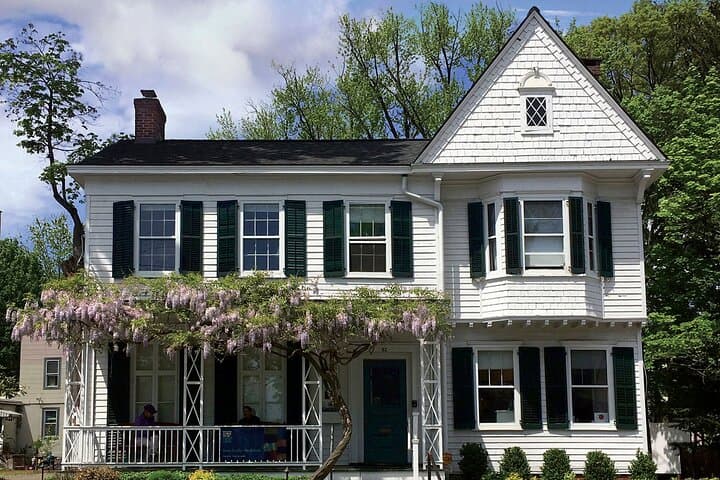
The porch faces the Hudson; light spills across clapboard and picks out the blue-gray of river water as if testing a palette. Visitors arrive on a narrow village street, steps slowing to read the brass plaque on a mid-19th-century house that sheltered Edward Hopper’s childhood; the rooms keep the ordinary angles that shaped his eye.
Verified experiences and guided adventures in the surrounding area.
Operated by Edward Hopper House Museum & Study Center · Nyack, New York
The porch faces the Hudson; light spills across clapboard and picks out the blue-gray of river water as if testing a palette. Visitors arrive on a narrow village street, steps slowing to read the brass plaque on a mid-19th-century house that sheltered Edward Hopper’s childhood; the rooms keep the ordinary angles that shaped his eye.
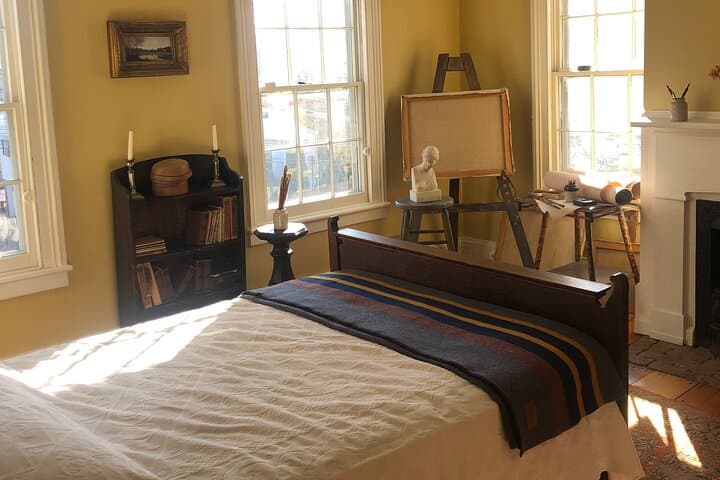
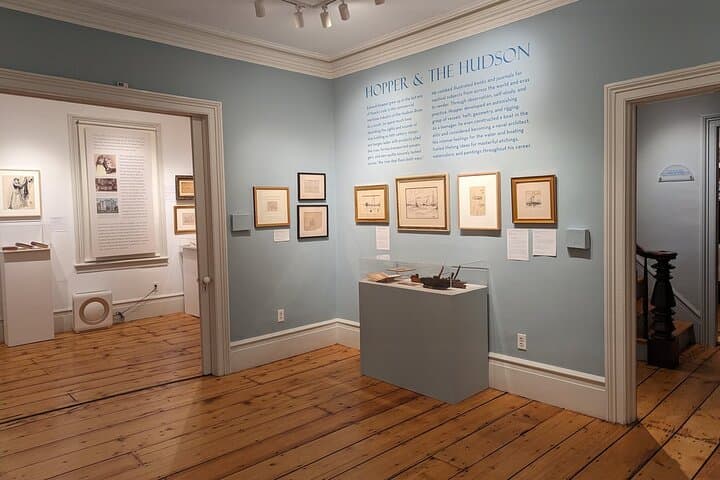
Built in 1858 with an 1882 addition, the Edward Hopper House in Nyack preserves early works, family artifacts and rotating exhibitions that trace how a small Hudson River town informed Hopper’s choices of light, composition and subject. Geologically, the river’s tidal flats and low bluffs around Nyack create the broad, horizontal views and reflected light Hopper favored. Culturally, the house sits within a walkable river village with Victorian storefronts, a working pier and an arts community that continues to engage visitors.
Expect a focused visit: a 30–90 minute self-guided or docent-led tour, an orientation film and gallery rooms in the former parlors. The second floor is reached by a historic staircase that can feel steep; an ADA restroom and ground-floor access are available. Public transit and limited street parking make the museum an easy day trip from midtown Manhattan (roughly 25 miles).
Practical guidance: arrive in the morning for quieter galleries and clearer river light; bring a compact camera for exterior studies; wear shoes suited to a mix of sidewalks and a short porch step. Respect the fragile interiors—no large bags or flash photography—and leave time to walk to Nyack Pier for a river view that completes the Hopper story.
easy.
30–90 minutes.
Suitable for all fitness levels; involves short walks and some standing during exhibits.
Tours and self-guided visits typically take 30–90 minutes depending on depth of interest and whether you view special exhibitions.
Yes — the ground floor is wheelchair accessible and there is an ADA restroom; the second floor is reached by a historic staircase and may not be accessible.
Non-flash photography is usually permitted in galleries, but large tripods and flash are not to protect artworks—confirm on arrival.
Nyack is about 25 miles north of midtown Manhattan; options include driving, commuter bus services to Nyack, or a combination of rail to nearby stations plus local transit.
The house was built in 1858 with an 1882 addition and is the birthplace and childhood home of Edward Hopper; it is listed on the National Register of Historic Places.
The museum is a member of Historic Artists’ Homes & Studios and emphasizes preservation of historic fabric; visitors are asked to respect original rooms and minimize impact by following exhibit rules.
Edward Hopper House Museum & Study Center operates guided outdoor trips and adventures with an emphasis on safety, stewardship, and memorable experiences.
The porch faces the Hudson; light spills across clapboard and picks out the blue-gray of river water as if testing a palette. Visitors arrive on a narrow village street, steps slowing to read the brass plaque on a mid-19th-century house that sheltered Edward Hopper’s childhood; the rooms keep the ordinary angles that shaped his eye.
The porch faces the Hudson; light spills across clapboard and picks out the blue-gray of river water as if testing a palette. Visitors arrive on a narrow village street, steps slowing to read the brass plaque on a mid-19th-century house that sheltered Edward Hopper’s childhood; the rooms keep the ordinary angles that shaped his eye.
Built in 1858 with an 1882 addition, the Edward Hopper House in Nyack preserves early works, family artifacts and rotating exhibitions that trace how a small Hudson River town informed Hopper’s choices of light, composition and subject. Geologically, the river’s tidal flats and low bluffs around Nyack create the broad, horizontal views and reflected light Hopper favored. Culturally, the house sits within a walkable river village with Victorian storefronts, a working pier and an arts community that continues to engage visitors.
Expect a focused visit: a 30–90 minute self-guided or docent-led tour, an orientation film and gallery rooms in the former parlors. The second floor is reached by a historic staircase that can feel steep; an ADA restroom and ground-floor access are available. Public transit and limited street parking make the museum an easy day trip from midtown Manhattan (roughly 25 miles).
Practical guidance: arrive in the morning for quieter galleries and clearer river light; bring a compact camera for exterior studies; wear shoes suited to a mix of sidewalks and a short porch step. Respect the fragile interiors—no large bags or flash photography—and leave time to walk to Nyack Pier for a river view that completes the Hopper story.