THE ADVENTURE COLLECTIVE® · Independent discovery and booking for outdoor travel

Stand at the Edge of the World outside Riyadh: a short but dramatic hike to a 1,131‑metre escarpment, a 120‑metre cave exploration with bats, a brief camel ride and a heritage dinner. This full‑day tour blends geology, culture and hands‑on desert experience.
Stand at the Edge of the World outside Riyadh: a short but dramatic hike to a 1,131‑metre escarpment, a 120‑metre cave exploration with bats, a brief camel ride and a heritage dinner. This full‑day tour blends geology, culture and hands‑on desert experience.
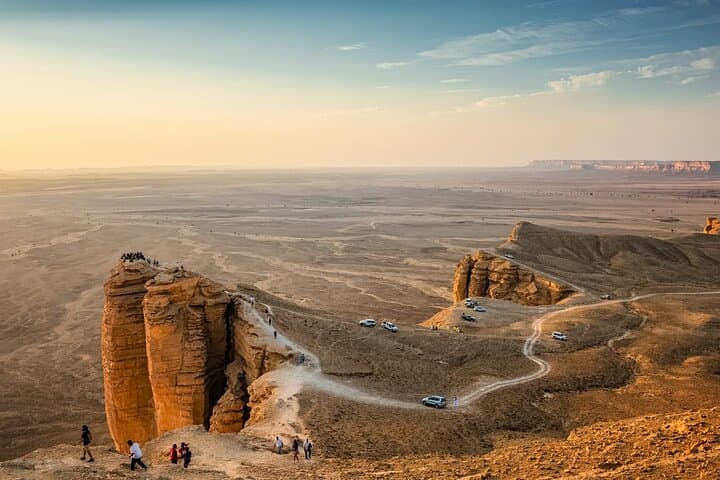
The afternoon sun slants low over a bare ridge as your convoy climbs out of Riyadh and the city’s hum falls away. Wind scrapes across the Tuwaik escarpment and the cliff’s rim — known locally as the Edge of the World — stretches in a raw, vertical line that seems to dare you to step closer.
Verified experiences and guided adventures in the surrounding area.
Operated by Track The March KSA · Riyadh, Riyadh Province
The afternoon sun slants low over a bare ridge as your convoy climbs out of Riyadh and the city’s hum falls away. Wind scrapes across the Tuwaik escarpment and the cliff’s rim — known locally as the Edge of the World — stretches in a raw, vertical line that seems to dare you to step closer.
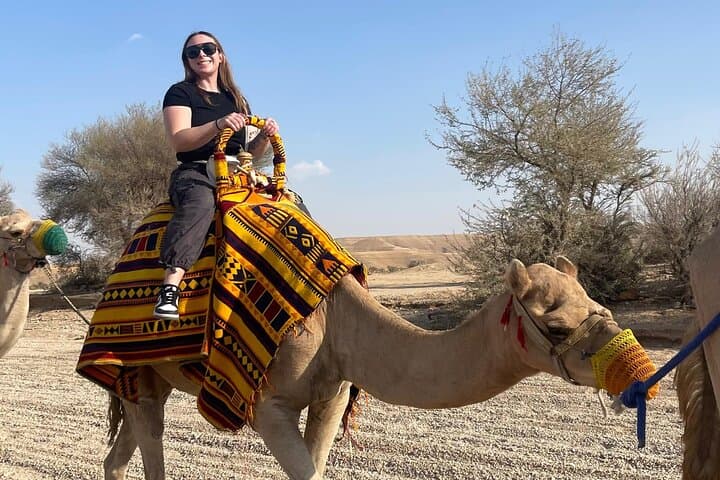
Geology here is plain and uncompromising: ancient limestone and sandstone layers carved by millennia of wind and water, forming a 1,131‑metre escarpment roughly 100 km from central Riyadh. The area is steeped in desert culture — traditional Bedouin routes once used these cliffs as navigation, and camel travel remains a living practice you’ll sample on a short guided ride.
The tour pairs a brisk 1 km one‑way hike across rocky, uneven terrain to the viewpoint with a 120‑metre exploration into Bin Rasheed cave, home to resident bats and striking mineral concretions. Expect pockets of shade inside the cave and cool, stable temperatures compared with the open desert. The day ends at an Istiraha heritage camp for dinner and cultural activities.
Practical guidance: the full outing runs about 8–9 hours with off‑road transfers in air‑conditioned vehicles. Bring sturdy shoes, 1–2 liters of water (bottled water is provided), sun protection, and a headlamp for the cave. Winter nights are cold — pack a warm layer — and the route has short steep sections; anyone with mobility or severe cardiovascular issues should take care. Respect the fragile desert and the cave ecosystem: stay on trails and avoid touching formations or disturbing bats.
moderate.
8–9 hours.
Suitable for people in regular physical condition who can manage short steep sections and walking on uneven terrain for about 2 km round trip.
The guided approach is about 1 km one way across uneven, rocky terrain with short steep sections to reach the cliff rim.
You’ll travel roughly 120 m into the cave over formed floors and low passages; no technical climbing is needed, but basic mobility and low‑light navigation are required.
Toilets are available before the off‑road section; once in the open desert there are no permanent washrooms, so plan accordingly.
The tour is marketed as suitable for most fitness levels, but it’s not recommended for guests with spinal, heart conditions, or pregnancy due to uneven terrain and cave passages.
The Tuwaik escarpment has been a geographic landmark for centuries; local Bedouin tribes historically used ridge lines for navigation and grazing corridors.
This environment is fragile—stick to established routes, avoid disturbing cave fauna (especially bats), and pack out all trash to limit impact on the desert ecosystem.
Track The March KSA operates guided outdoor trips and adventures with an emphasis on safety, stewardship, and memorable experiences.

The afternoon sun slants low over a bare ridge as your convoy climbs out of Riyadh and the city’s hum falls away. Wind scrapes across the Tuwaik escarpment and the cliff’s rim — known locally as the Edge of the World — stretches in a raw, vertical line that seems to dare you to step closer.
The afternoon sun slants low over a bare ridge as your convoy climbs out of Riyadh and the city’s hum falls away. Wind scrapes across the Tuwaik escarpment and the cliff’s rim — known locally as the Edge of the World — stretches in a raw, vertical line that seems to dare you to step closer.
Geology here is plain and uncompromising: ancient limestone and sandstone layers carved by millennia of wind and water, forming a 1,131‑metre escarpment roughly 100 km from central Riyadh. The area is steeped in desert culture — traditional Bedouin routes once used these cliffs as navigation, and camel travel remains a living practice you’ll sample on a short guided ride.
The tour pairs a brisk 1 km one‑way hike across rocky, uneven terrain to the viewpoint with a 120‑metre exploration into Bin Rasheed cave, home to resident bats and striking mineral concretions. Expect pockets of shade inside the cave and cool, stable temperatures compared with the open desert. The day ends at an Istiraha heritage camp for dinner and cultural activities.
Practical guidance: the full outing runs about 8–9 hours with off‑road transfers in air‑conditioned vehicles. Bring sturdy shoes, 1–2 liters of water (bottled water is provided), sun protection, and a headlamp for the cave. Winter nights are cold — pack a warm layer — and the route has short steep sections; anyone with mobility or severe cardiovascular issues should take care. Respect the fragile desert and the cave ecosystem: stay on trails and avoid touching formations or disturbing bats.