THE ADVENTURE COLLECTIVE® · Independent discovery and booking for outdoor travel

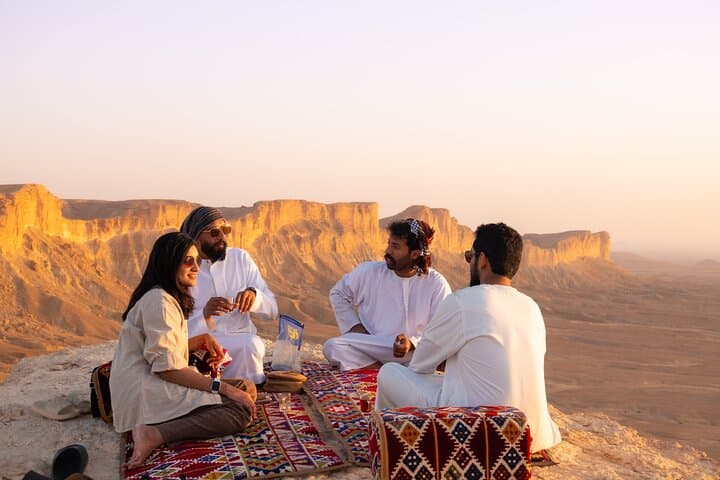
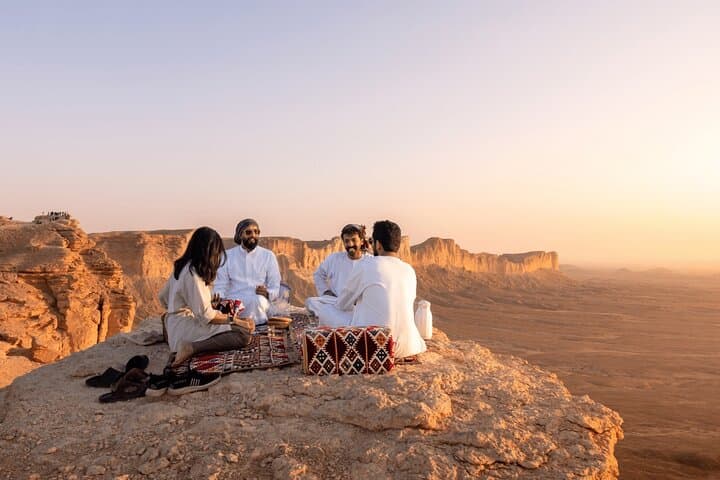
Hike the Tuwaiq escarpment to the Edge of the World, then unwind at a traditional Keshta in Wadi Huraymila. Expect a 300m cliff ascent, desert geology, and a warm evening of Arabic karak under open skies.
Hike the Tuwaiq escarpment to the Edge of the World, then unwind at a traditional Keshta in Wadi Huraymila. Expect a 300m cliff ascent, desert geology, and a warm evening of Arabic karak under open skies.
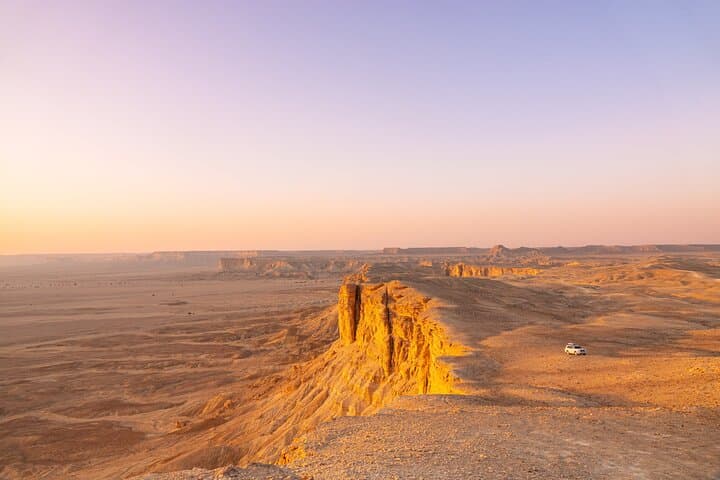
The wind on the plateau cuts clean and dry as you crest the Tuwaiq escarpment; the world drops away in a ragged line of cliffs and fossil-studded rock.
Verified experiences and guided adventures in the surrounding area.
Operated by 365 Adventures · Riyadh, Riyadh Province
The wind on the plateau cuts clean and dry as you crest the Tuwaiq escarpment; the world drops away in a ragged line of cliffs and fossil-studded rock.
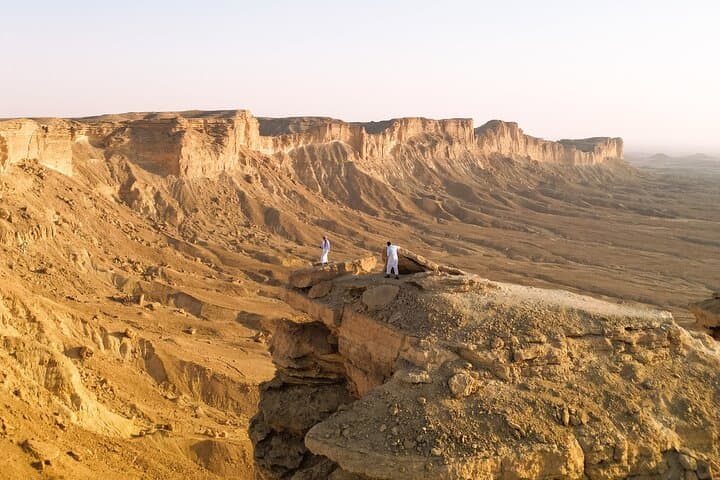
Begin on a dusty 4x4 approach through Manjour’s rolling desert, then set off on a roughly 300‑meter ascent to the famous Edge of the World. The trail alternates between compact sand, loose scree and flat limestone ledges; bat caves punctuate the route and the Tuwaiq range stretches like a geological spine along the horizon. As the sun slides toward the west, the cliffs glow ochre and shadow, and the wind seems determined to push you back — a good reminder of the desert’s presence.
This landscape is part of the larger Tuwaiq formation, an uplifted escarpment carved over millions of years and dotted with fossiliferous strata. Human history here is sparse but layered: traditional Bedouin routes cross these plateaus, and gatherings in wadi Keshta continue a long local custom of hospitality and evening tea.
Practical guidance: plan for about 6 hours total including transit, moderate hiking intensity, and desert temperatures that change rapidly after sunset. Bring at least 2 liters of water, sturdy treaded footwear, sun protection, and a warm layer for post‑sunset chill. Guided groups provide bottled water, an experienced driver and the Keshta setup — useful for first‑time visitors.
Timing tip: arrive for late afternoon to catch the sunset and to allow cooler hiking hours; respect fragile rock and local customs during the Keshta gathering.
moderate.
5–7 hours.
Suitable for people who can handle a steady climb of mixed terrain and some uneven footing; basic stamina and balance recommended.
The route is moderate: expect a steady climb with some loose rock and uneven footing; no technical climbing skills are required.
Yes — most tours include air‑conditioned 4x4 transport to the trailhead and back to Riyadh.
The experience is family‑friendly and suitable for a wide range of ages, though participants should be comfortable walking up to a few kilometers on uneven terrain.
Follow the guide’s cues: accept tea or coffee politely, avoid loud behavior, and ask before photographing people in traditional dress.
The Tuwaiq escarpment is an ancient geological uplift; Bedouin routes have crossed these plateaus for centuries and the Keshta is a continuation of regional desert hospitality.
Stay on established tracks, pack out all waste, and avoid collecting fossils or disturbing rock features — the plateau’s fragile surfaces recover slowly.
365 Adventures operates guided outdoor trips and adventures with an emphasis on safety, stewardship, and memorable experiences.
The wind on the plateau cuts clean and dry as you crest the Tuwaiq escarpment; the world drops away in a ragged line of cliffs and fossil-studded rock.
The wind on the plateau cuts clean and dry as you crest the Tuwaiq escarpment; the world drops away in a ragged line of cliffs and fossil-studded rock.
Begin on a dusty 4x4 approach through Manjour’s rolling desert, then set off on a roughly 300‑meter ascent to the famous Edge of the World. The trail alternates between compact sand, loose scree and flat limestone ledges; bat caves punctuate the route and the Tuwaiq range stretches like a geological spine along the horizon. As the sun slides toward the west, the cliffs glow ochre and shadow, and the wind seems determined to push you back — a good reminder of the desert’s presence.
This landscape is part of the larger Tuwaiq formation, an uplifted escarpment carved over millions of years and dotted with fossiliferous strata. Human history here is sparse but layered: traditional Bedouin routes cross these plateaus, and gatherings in wadi Keshta continue a long local custom of hospitality and evening tea.
Practical guidance: plan for about 6 hours total including transit, moderate hiking intensity, and desert temperatures that change rapidly after sunset. Bring at least 2 liters of water, sturdy treaded footwear, sun protection, and a warm layer for post‑sunset chill. Guided groups provide bottled water, an experienced driver and the Keshta setup — useful for first‑time visitors.
Timing tip: arrive for late afternoon to catch the sunset and to allow cooler hiking hours; respect fragile rock and local customs during the Keshta gathering.