THE ADVENTURE COLLECTIVE® · Independent discovery and booking for outdoor travel

Stand on the Tuwaiq escarpment where ancient caravan routes end in sheer cliff and wide desert. This three-hour Al-Manjoor Trail experience from Riyadh pairs a short ridge walk with sunset views, tea, and stargazing.
Stand on the Tuwaiq escarpment where ancient caravan routes end in sheer cliff and wide desert. This three-hour Al-Manjoor Trail experience from Riyadh pairs a short ridge walk with sunset views, tea, and stargazing.
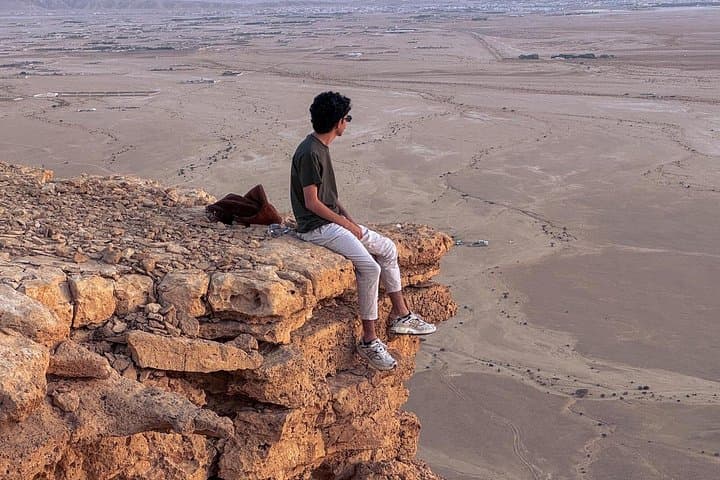
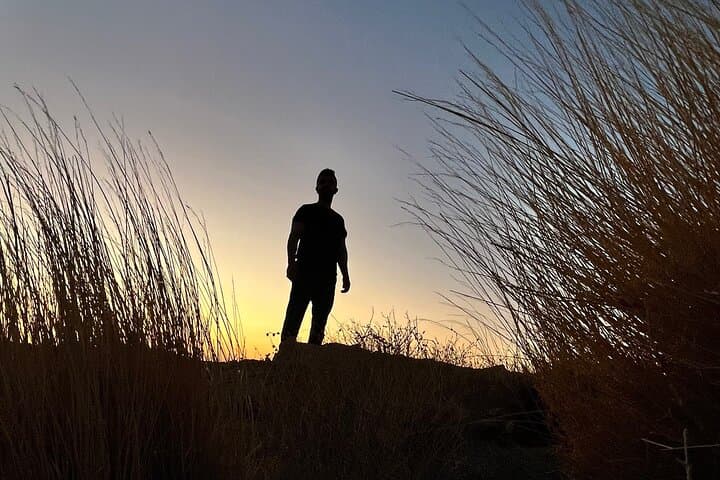
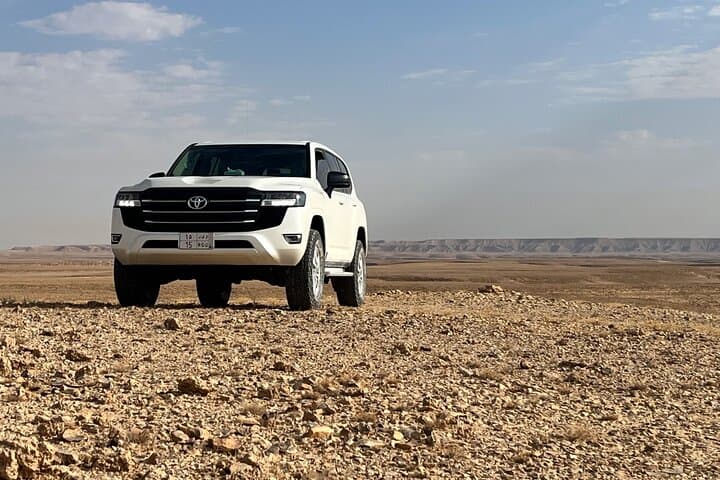
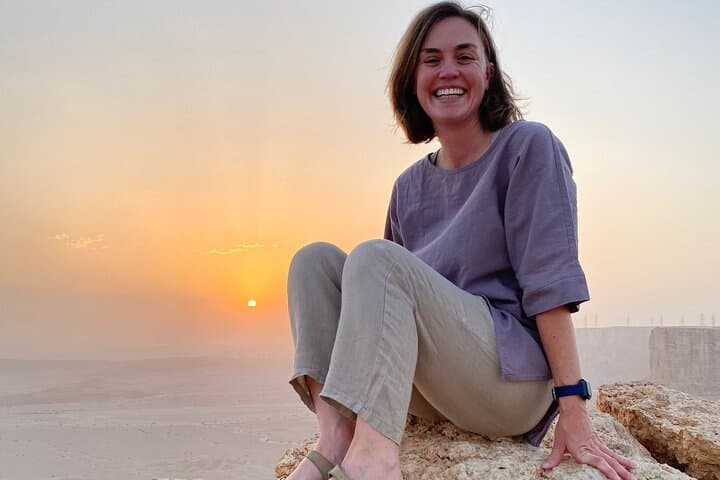
You arrive as the city thins behind you — a white Land Cruiser hums over gravel, and the Tuwaiq escarpment looms like a raw, cut horizon. The trail opens onto a cliff edge where wind pushes at your jacket and the plain unrolls for miles; here the sunset gouges color into the limestone and the world feels sudden and exposed.
Verified experiences and guided adventures in the surrounding area.
Operated by ABDULLAH · Riyadh, Riyadh Province
You arrive as the city thins behind you — a white Land Cruiser hums over gravel, and the Tuwaiq escarpment looms like a raw, cut horizon. The trail opens onto a cliff edge where wind pushes at your jacket and the plain unrolls for miles; here the sunset gouges color into the limestone and the world feels sudden and exposed.
The Al-Manjoor Trail follows an ancient caravan corridor carved into the Tuwaiq Mountains. For millennia people moved goods and stories along these ledges; scattered ruins and stone terraces are quiet markers of that passage. Geologically the escarpment is Jurassic limestone and sandstone, eroded into abrupt cliffs that drop several hundred meters to the desert floor. Local culture shows in tea prepared on-site and the practice of evening gatherings tied to Bedouin hospitality — simple rites that soften the ruggedness.
Practically, expect a compact outing: roughly a three-hour excursion with about an hour’s drive from Riyadh in a private LC300, time to hike short ridgelines, watch the sunset, and return. Trails are rocky and uneven; athletic shoes are required and a moderate fitness level helps. Bring layered clothing for the rapid temperature drop after sunset, sun protection for the afternoon, and at least 1–2 liters of water. Mobile signal can be patchy; plan logistics and meeting points in advance.
This is a short, high-reward landscape: dramatic cliffs, desert light, and the quiet of a route that once connected people across the peninsula. Time your visit for late afternoon to catch both daylight views and clear, star-filled skies after dusk.
moderate.
3 hours.
Suitable for travelers with moderate fitness — short hikes over uneven terrain and some steep sections.
The drive is about one hour each way depending on traffic and route; the total tour runs roughly three hours.
The operator notes the site is not suitable for young children due to exposed cliffs; supervise older children closely.
The tour typically includes bottled water and hot beverages like Saudi tea and coffee at the viewpoint.
Tours usually include transportation in a private Land Cruiser LC300 and a guide who handles navigation and local context.
The Tuwaiq escarpment marked a natural route for caravans connecting settlements; archaeological traces show long-term human movement across these cliffs.
Respect fragile desert soils and avoid collecting artifacts; stick to durable surfaces to minimize erosion and impact on archaeological features.
ABDULLAH operates guided outdoor trips and adventures with an emphasis on safety, stewardship, and memorable experiences.
You arrive as the city thins behind you — a white Land Cruiser hums over gravel, and the Tuwaiq escarpment looms like a raw, cut horizon. The trail opens onto a cliff edge where wind pushes at your jacket and the plain unrolls for miles; here the sunset gouges color into the limestone and the world feels sudden and exposed.
You arrive as the city thins behind you — a white Land Cruiser hums over gravel, and the Tuwaiq escarpment looms like a raw, cut horizon. The trail opens onto a cliff edge where wind pushes at your jacket and the plain unrolls for miles; here the sunset gouges color into the limestone and the world feels sudden and exposed.
The Al-Manjoor Trail follows an ancient caravan corridor carved into the Tuwaiq Mountains. For millennia people moved goods and stories along these ledges; scattered ruins and stone terraces are quiet markers of that passage. Geologically the escarpment is Jurassic limestone and sandstone, eroded into abrupt cliffs that drop several hundred meters to the desert floor. Local culture shows in tea prepared on-site and the practice of evening gatherings tied to Bedouin hospitality — simple rites that soften the ruggedness.
Practically, expect a compact outing: roughly a three-hour excursion with about an hour’s drive from Riyadh in a private LC300, time to hike short ridgelines, watch the sunset, and return. Trails are rocky and uneven; athletic shoes are required and a moderate fitness level helps. Bring layered clothing for the rapid temperature drop after sunset, sun protection for the afternoon, and at least 1–2 liters of water. Mobile signal can be patchy; plan logistics and meeting points in advance.
This is a short, high-reward landscape: dramatic cliffs, desert light, and the quiet of a route that once connected people across the peninsula. Time your visit for late afternoon to catch both daylight views and clear, star-filled skies after dusk.