THE ADVENTURE COLLECTIVE® · Independent discovery and booking for outdoor travel

A demanding, dramatic half-day hike along Jiankou’s unrestored ridgelines with an English-speaking private guide. Expect steep scrambling, sweeping cliff-top views, and a local farmhouse dinner.
A demanding, dramatic half-day hike along Jiankou’s unrestored ridgelines with an English-speaking private guide. Expect steep scrambling, sweeping cliff-top views, and a local farmhouse dinner.
You step onto a ridge where the wall leans and crumbles like an old wound — jagged bricks, collapsed towers, and a wind that pushes at you as if testing your balance. The Jiankou section rewards each breath with sudden panoramas: serrated ridgelines plunging into forested valleys, exposed towers clinging to cliff edges, and carved stone steps that demand careful footing.
Verified experiences and guided adventures in the surrounding area.
Operated by Cynthia Hu · Beijing, Beijing
You step onto a ridge where the wall leans and crumbles like an old wound — jagged bricks, collapsed towers, and a wind that pushes at you as if testing your balance. The Jiankou section rewards each breath with sudden panoramas: serrated ridgelines plunging into forested valleys, exposed towers clinging to cliff edges, and carved stone steps that demand careful footing.
Jiankou (箭扣) is one of the wildest, least-restored parts of the Ming-era Great Wall, built along steep limestone and sandstone ridges to control passes north of Beijing. The route is as much geological story as human history: faulted beds and weathered cliffs shaped the wall’s zigzag line and the precarious watchtowers that punctuate it. Local villages nearby still farm the slopes and host diners who serve hearty, regional meals — the tour includes dinner in a farmer’s house, a direct link to the area's rural culture.
Practically, expect 5–6 hours of hiking on rough, often exposed terrain within a 10-hour day that includes transport. A licensed English-speaking guide will choose a route tailored to ability and keep you off trickier scrambles, but you should be comfortable on steep, uneven ground and basic scrambling. Bring 2–3 liters of water, sturdy hiking shoes with good traction, sun protection, and layers for shifting winds. Start and end near the designated subway exit (Exit C) for easy pickup.
This hike is immersive and demanding: dramatic reward for those prepared to respect the wall’s fragility and the mountain’s exposure.
challenging.
5–6 hours hiking (10 hours total including transport).
High cardiovascular fitness and strong lower-body endurance; comfortable with sustained uphill, downhill and short scrambles.
The route is challenging with steep, uneven terrain and short scrambling sections; it’s suitable for experienced hikers in good physical condition.
Yes — the tour provides an English-speaking private guide who plans the route and handles logistics.
The tour supplies snacks and dinner at a local farmhouse but you must carry 2–3 liters of water and any personal snacks for the hiking portion.
Meeting and return point is at Exit C of the designated subway station; private transport between your hotel, the trailhead, and back is included.
Jiankou is an unrestored section of the Ming-era Great Wall, constructed along natural ridgelines to control mountain passes; its name refers to the arrow-shaped notch of the ridge.
Erosion and foot traffic accelerate decay of the fragile masonry; follow your guide, avoid climbing on unstable sections, and pack out all waste to protect the site.
Cynthia Hu operates guided outdoor trips and adventures with an emphasis on safety, stewardship, and memorable experiences.
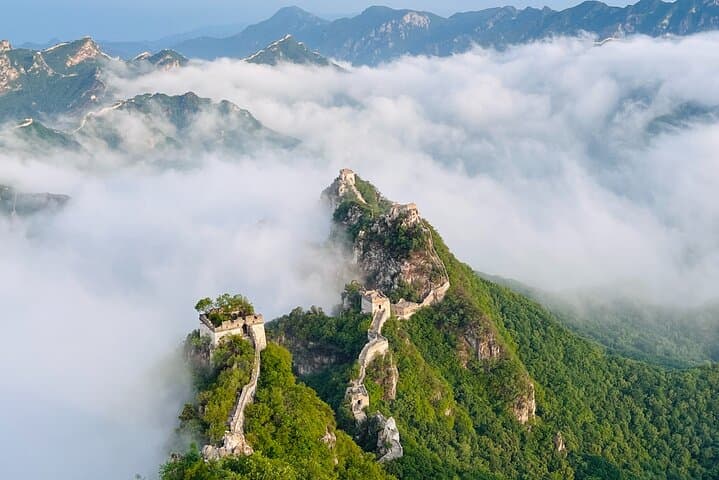
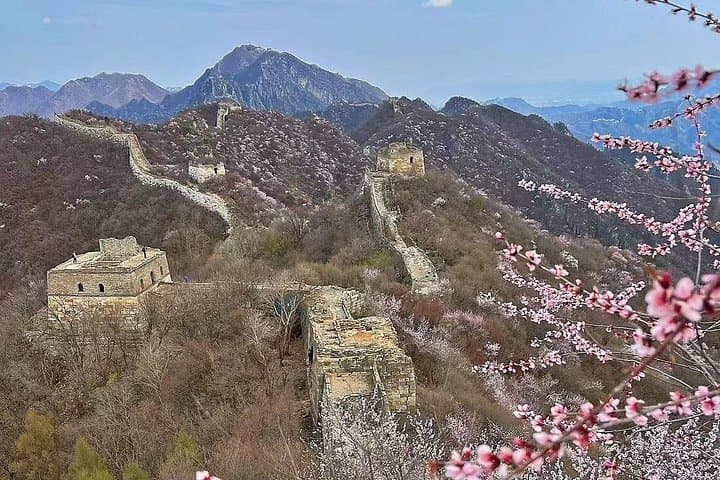
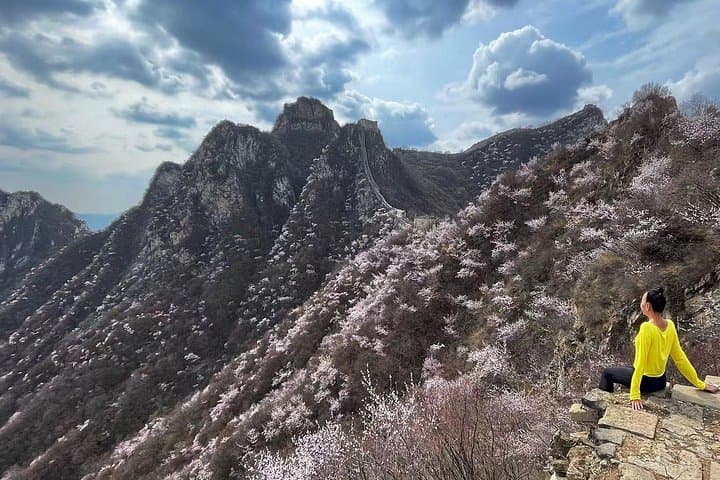
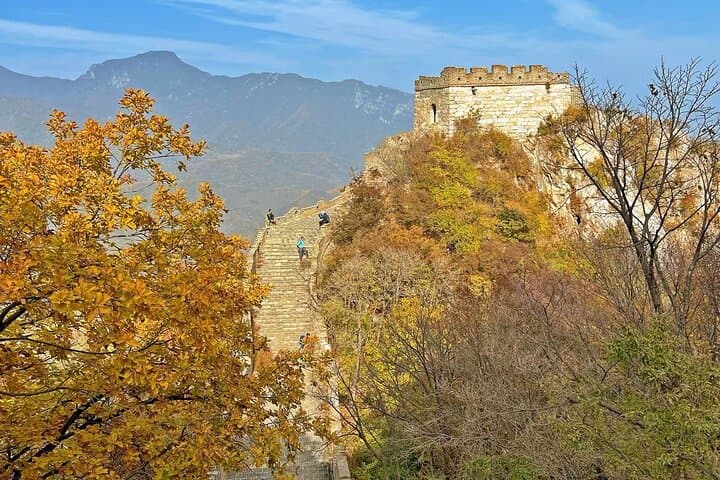
You step onto a ridge where the wall leans and crumbles like an old wound — jagged bricks, collapsed towers, and a wind that pushes at you as if testing your balance. The Jiankou section rewards each breath with sudden panoramas: serrated ridgelines plunging into forested valleys, exposed towers clinging to cliff edges, and carved stone steps that demand careful footing.
You step onto a ridge where the wall leans and crumbles like an old wound — jagged bricks, collapsed towers, and a wind that pushes at you as if testing your balance. The Jiankou section rewards each breath with sudden panoramas: serrated ridgelines plunging into forested valleys, exposed towers clinging to cliff edges, and carved stone steps that demand careful footing.
Jiankou (箭扣) is one of the wildest, least-restored parts of the Ming-era Great Wall, built along steep limestone and sandstone ridges to control passes north of Beijing. The route is as much geological story as human history: faulted beds and weathered cliffs shaped the wall’s zigzag line and the precarious watchtowers that punctuate it. Local villages nearby still farm the slopes and host diners who serve hearty, regional meals — the tour includes dinner in a farmer’s house, a direct link to the area's rural culture.
Practically, expect 5–6 hours of hiking on rough, often exposed terrain within a 10-hour day that includes transport. A licensed English-speaking guide will choose a route tailored to ability and keep you off trickier scrambles, but you should be comfortable on steep, uneven ground and basic scrambling. Bring 2–3 liters of water, sturdy hiking shoes with good traction, sun protection, and layers for shifting winds. Start and end near the designated subway exit (Exit C) for easy pickup.
This hike is immersive and demanding: dramatic reward for those prepared to respect the wall’s fragility and the mountain’s exposure.