THE ADVENTURE COLLECTIVE® · Independent discovery and booking for outdoor travel

Spend a day from Luxor visiting two of Upper Egypt’s best-preserved Ptolemaic temples. This guided tour pairs Edfu’s monumental Horus sanctuary with Kom Ombo’s intriguing double temple layout, offering deep cultural and archaeological insights.
Spend a day from Luxor visiting two of Upper Egypt’s best-preserved Ptolemaic temples. This guided tour pairs Edfu’s monumental Horus sanctuary with Kom Ombo’s intriguing double temple layout, offering deep cultural and archaeological insights.
You step off an air-conditioned van onto baked Nile-side dust, and the river breathes heat into the stones. The approach to Edfu’s imposing pylons tightens the sense of scale: columns and reliefs rise like carved memory, and the wind through the Nile palms seems to whisper names of Horus and Sobek.
Verified experiences and guided adventures in the surrounding area.
Operated by Egipto Excursiones · Edfu, Aswan Governorate
You step off an air-conditioned van onto baked Nile-side dust, and the river breathes heat into the stones. The approach to Edfu’s imposing pylons tightens the sense of scale: columns and reliefs rise like carved memory, and the wind through the Nile palms seems to whisper names of Horus and Sobek.
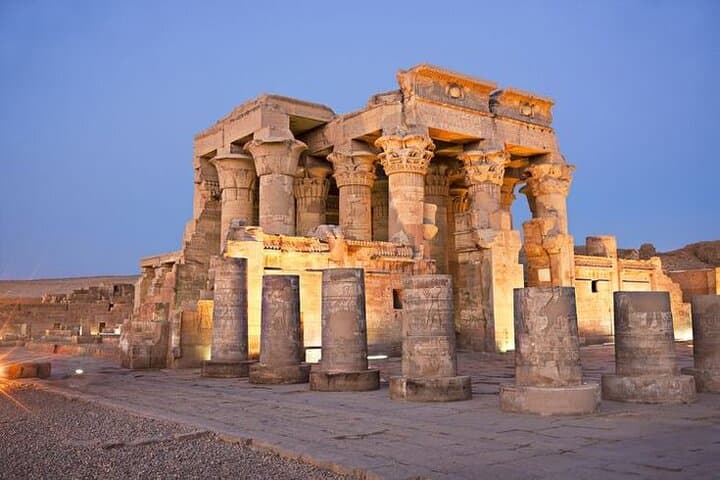
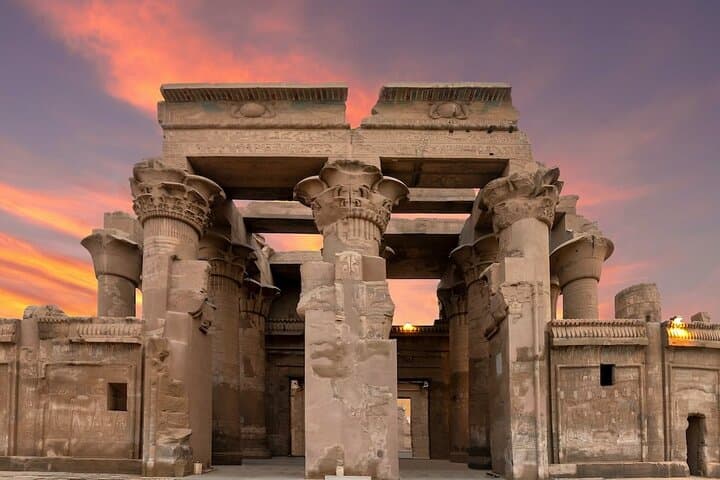
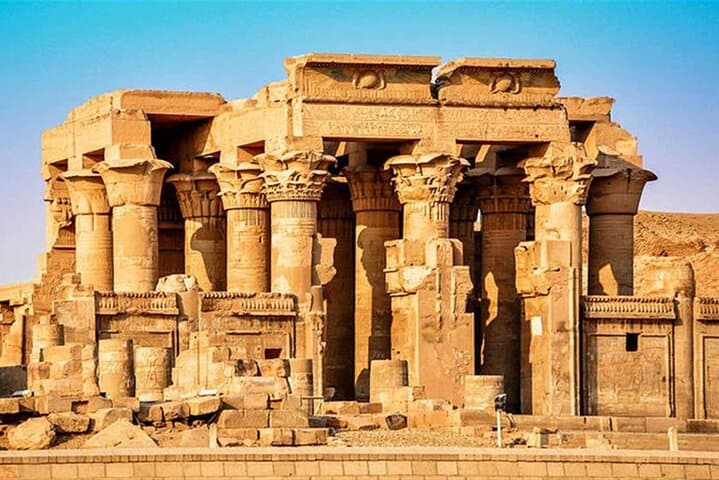
Edfu Temple, built during the Ptolemaic period (237–57 BC), is one of Egypt’s most intact classical sanctuaries; its inscriptions are a primary source for rituals and temple construction. Further downstream, Kom Ombo’s unusual double layout (180–47 BC) splits devotion between the crocodile god Sobek and Horus — the symmetry itself tells a story about local cults and Roman-era additions. Geologically these sites sit on the Nile’s alluvial plain, where mud-brick towns edge the river and seasonal floods once shaped settlement.
Local culture is visible in small markets by the quay, in feluccas drifting like slow boats of wood, and in the Kom Ombo Crocodile Museum where mummified crocs recall ancient reverence.
Practical guidance: tours typically run about 8 hours from Luxor with private, air-conditioned transport and a guide; expect several hours of walking on flat, paved but uneven temple floors and shaded courtyards. Bring sun protection, a refillable water bottle, and a light scarf to cover shoulders in temple areas. Plan morning or late-afternoon visits for cooler light and fewer crowds; wear supportive shoes for stone steps and ramps. Respect site rules: avoid touching reliefs, follow your guide’s path, and carry small local currency for restroom or market purchases.
easy.
8 hours.
Suitable for travelers in average physical shape who can walk and stand for several hours; not strenuous but includes uneven stone surfaces.
The tour is approximately 8 hours and typically includes private air-conditioned transport, an English-speaking guide, and entrance fees to Edfu and Kom Ombo.
Bring a form of ID; many operators request passport details at booking and to verify identity for ticketing — carry a photocopy while traveling.
Access is limited: temple grounds have uneven stone surfaces and steps; some areas can be viewed from lower levels but full access may not be possible for wheelchairs.
Photography is generally allowed in open areas, but follow signage and guide instructions; avoid using flash on fragile reliefs and do not climb on monuments for photos.
Both temples were largely constructed in the Ptolemaic period and preserved due to relative isolation on the Nile’s west bank; their inscriptions are key sources for Ptolemaic ritual and administration.
Sites face erosion from tourism and Nile-side development — stick to paths, avoid touching carvings, and support local guides to contribute to sustainable tourism.
Egipto Excursiones operates guided outdoor trips and adventures with an emphasis on safety, stewardship, and memorable experiences.
You step off an air-conditioned van onto baked Nile-side dust, and the river breathes heat into the stones. The approach to Edfu’s imposing pylons tightens the sense of scale: columns and reliefs rise like carved memory, and the wind through the Nile palms seems to whisper names of Horus and Sobek.
You step off an air-conditioned van onto baked Nile-side dust, and the river breathes heat into the stones. The approach to Edfu’s imposing pylons tightens the sense of scale: columns and reliefs rise like carved memory, and the wind through the Nile palms seems to whisper names of Horus and Sobek.
Edfu Temple, built during the Ptolemaic period (237–57 BC), is one of Egypt’s most intact classical sanctuaries; its inscriptions are a primary source for rituals and temple construction. Further downstream, Kom Ombo’s unusual double layout (180–47 BC) splits devotion between the crocodile god Sobek and Horus — the symmetry itself tells a story about local cults and Roman-era additions. Geologically these sites sit on the Nile’s alluvial plain, where mud-brick towns edge the river and seasonal floods once shaped settlement.
Local culture is visible in small markets by the quay, in feluccas drifting like slow boats of wood, and in the Kom Ombo Crocodile Museum where mummified crocs recall ancient reverence.
Practical guidance: tours typically run about 8 hours from Luxor with private, air-conditioned transport and a guide; expect several hours of walking on flat, paved but uneven temple floors and shaded courtyards. Bring sun protection, a refillable water bottle, and a light scarf to cover shoulders in temple areas. Plan morning or late-afternoon visits for cooler light and fewer crowds; wear supportive shoes for stone steps and ramps. Respect site rules: avoid touching reliefs, follow your guide’s path, and carry small local currency for restroom or market purchases.