THE ADVENTURE COLLECTIVE® · Independent discovery and booking for outdoor travel

A full-day land trip from Luxor that pairs Edfu’s best-preserved Temple of Horus with Kom Ombo’s rare double temple. Expect a 6–7 hour guided excursion with scenic Nile driving, temple tours, and practical stops.
A full-day land trip from Luxor that pairs Edfu’s best-preserved Temple of Horus with Kom Ombo’s rare double temple. Expect a 6–7 hour guided excursion with scenic Nile driving, temple tours, and practical stops.
Dawn spills copper light across the Nile as your vehicle slips away from Luxor, the river daring you northward along a ribbon of palm-lined floodplain. By mid-morning the pylons of Edfu rise into view—flat, monumental faces carved with scenes that still speak in the blunt language of power and ritual.
Verified experiences and guided adventures in the surrounding area.
Operated by Book Egypt Trips · Edfu, Aswan Governorate
Dawn spills copper light across the Nile as your vehicle slips away from Luxor, the river daring you northward along a ribbon of palm-lined floodplain. By mid-morning the pylons of Edfu rise into view—flat, monumental faces carved with scenes that still speak in the blunt language of power and ritual.
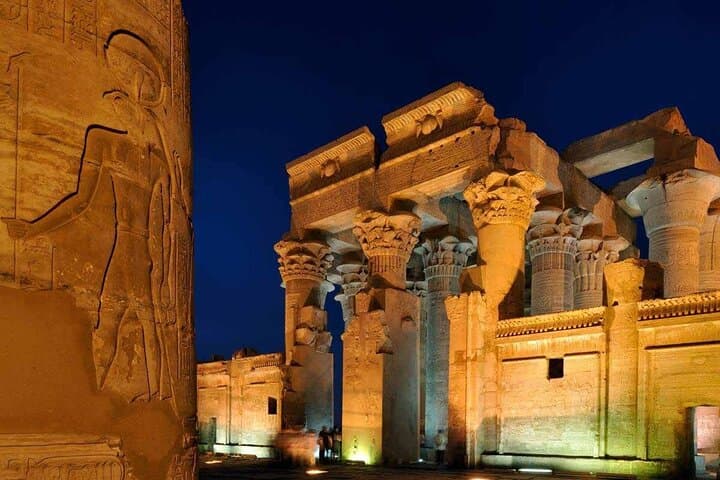
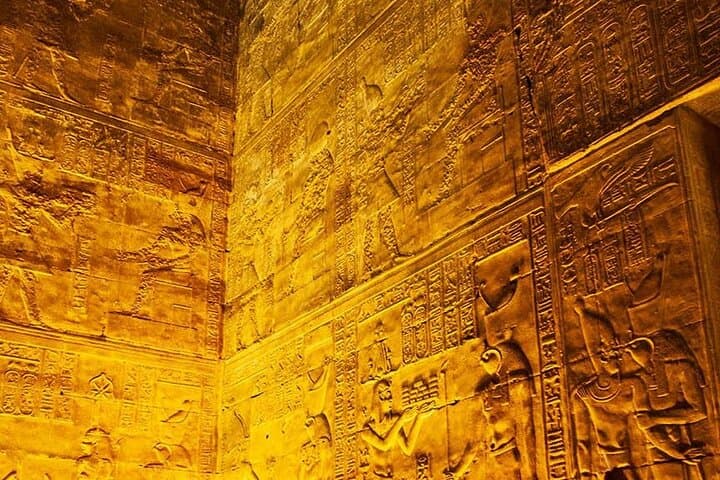
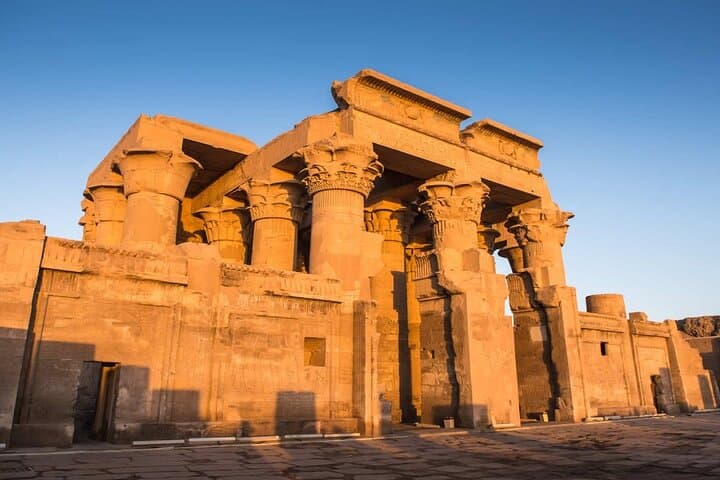
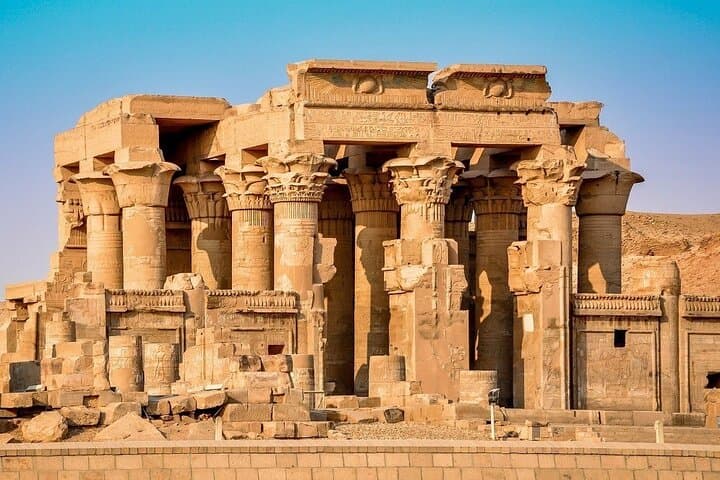
Edfu’s Temple of Horus is a Ptolemaic stronghold of stone: long processional ways, hypostyle halls and sanctuaries that preserve inscriptions and ritual reliefs with exceptional clarity. The geology here is simple—limestone and sandstone cut and dressed into platforms that have survived millennia of sun and sand. Later you reach Kom Ombo, a rarer composition: a dual temple split down the middle for Sobek and Haroeris, its mirrored layout reflecting the town’s ancient compromise between crocodile cults and falcon worship. Nearby the small Crocodile Museum contains mummified crocodiles once honored at the river’s edge.
This land trip is a practical day in the field: expect a roughly 6–7 hour round trip from Luxor with guided stops—about 90 minutes at Edfu and an hour at Kom Ombo on most itineraries—and scenic driving along the Nile.
Plan for heat, sun and uneven stone underfoot. Bring water, a hat, comfortable walking shoes and modest clothing that covers shoulders and knees at sacred sites. Carry small bills for tips and vendor purchases; confirm whether entrance fees are included with your operator. With a clear schedule and a licensed guide, the day balances palpable history with the calm of the river—an efficient, sensory route through Egypt’s Ptolemaic past.
easy.
6–7 hours.
Suitable for most travelers who can walk short stretches on uneven ground and tolerate a half-day of travel by vehicle.
Most tours run about 6–7 hours round trip, with roughly 90 minutes at Edfu and 60 minutes at Kom Ombo, plus driving time along the Nile.
Inclusion of admission varies by operator—confirm at booking; if not included, be prepared to pay site fees in Egyptian pounds.
Yes—the Crocodile Museum is adjacent to the Kom Ombo temple site and is often visited during the stop; it exhibits mummified crocodiles and related artifacts.
Temples contain uneven steps and thresholds; visitors with limited mobility may find access challenging—ask your operator about drop-off points and assistance options.
Edfu and Kom Ombo were largely constructed during the Ptolemaic period (3rd–1st centuries BCE); Kom Ombo’s unique symmetrical plan reflects dual worship of Sobek and Haroeris.
Sites are actively managed by Egyptian antiquities authorities—avoid touching reliefs, stay on designated paths and use licensed guides to minimize impact.
Book Egypt Trips operates guided outdoor trips and adventures with an emphasis on safety, stewardship, and memorable experiences.
Dawn spills copper light across the Nile as your vehicle slips away from Luxor, the river daring you northward along a ribbon of palm-lined floodplain. By mid-morning the pylons of Edfu rise into view—flat, monumental faces carved with scenes that still speak in the blunt language of power and ritual.
Dawn spills copper light across the Nile as your vehicle slips away from Luxor, the river daring you northward along a ribbon of palm-lined floodplain. By mid-morning the pylons of Edfu rise into view—flat, monumental faces carved with scenes that still speak in the blunt language of power and ritual.
Edfu’s Temple of Horus is a Ptolemaic stronghold of stone: long processional ways, hypostyle halls and sanctuaries that preserve inscriptions and ritual reliefs with exceptional clarity. The geology here is simple—limestone and sandstone cut and dressed into platforms that have survived millennia of sun and sand. Later you reach Kom Ombo, a rarer composition: a dual temple split down the middle for Sobek and Haroeris, its mirrored layout reflecting the town’s ancient compromise between crocodile cults and falcon worship. Nearby the small Crocodile Museum contains mummified crocodiles once honored at the river’s edge.
This land trip is a practical day in the field: expect a roughly 6–7 hour round trip from Luxor with guided stops—about 90 minutes at Edfu and an hour at Kom Ombo on most itineraries—and scenic driving along the Nile.
Plan for heat, sun and uneven stone underfoot. Bring water, a hat, comfortable walking shoes and modest clothing that covers shoulders and knees at sacred sites. Carry small bills for tips and vendor purchases; confirm whether entrance fees are included with your operator. With a clear schedule and a licensed guide, the day balances palpable history with the calm of the river—an efficient, sensory route through Egypt’s Ptolemaic past.