THE ADVENTURE COLLECTIVE® · Independent discovery and booking for outdoor travel

See two of Upper Egypt’s most complete Ptolemaic temples on a single day from Luxor. This guided excursion combines riverside scenery with carved myth and manageable walking—ideal for first-time visitors who want context along with sightseeing.
See two of Upper Egypt’s most complete Ptolemaic temples on a single day from Luxor. This guided excursion combines riverside scenery with carved myth and manageable walking—ideal for first-time visitors who want context along with sightseeing.
You step from an air-conditioned minivan onto a stretch of sun-softened sandstone, the Nile threading a slow silver line through palm groves. The first silhouette against the sky is Edfu’s massive pylon, its carved reliefs catching the light; later the twin façades of Kom Ombo will frame the river and a different set of gods. This is a day measured in stone, river, and the steady explanations of an Egyptologist who brings myths into human scale.
Verified experiences and guided adventures in the surrounding area.
Operated by LuxorPrivateTour · Edfu, Aswan Governorate
You step from an air-conditioned minivan onto a stretch of sun-softened sandstone, the Nile threading a slow silver line through palm groves. The first silhouette against the sky is Edfu’s massive pylon, its carved reliefs catching the light; later the twin façades of Kom Ombo will frame the river and a different set of gods. This is a day measured in stone, river, and the steady explanations of an Egyptologist who brings myths into human scale.
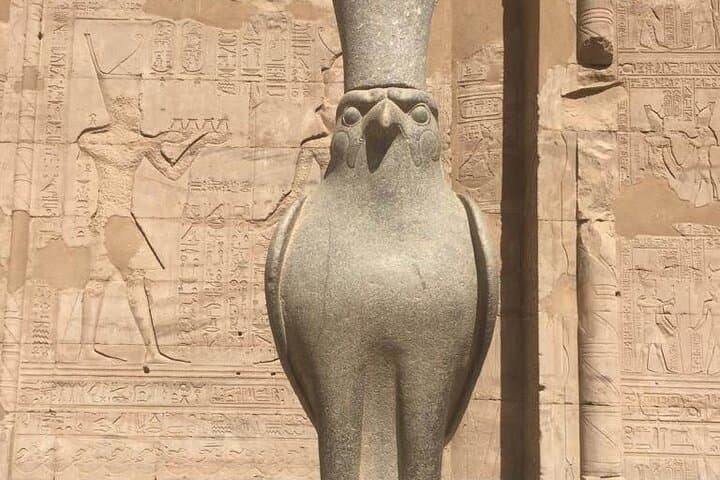
Both temples date mainly to the Ptolemaic era, built atop older sacred sites; Edfu—one of Egypt’s best-preserved cult temples—honors Horus, the falcon god, while Kom Ombo is unique for its mirrored plan dedicated to Sobek and Haroeris. Geologically, the temples sit on alluvial terraces: hard sandstone and mudbrick foundations laid where the Nile’s annual flood once left fertile silt. Locally, these sites have long been hubs for ritual, fishing, and sugar-cane agriculture that still shapes the riverside economy.
Practical guidance: tours typically run about eight hours with hotel pickup in Luxor, a combination of seated transfer and moderate on-site walking, including steps and uneven stone. Bring sunscreen and a brimmed hat; mornings are cooler and afternoons hot. Wear supportive shoes for temple stairways and courtyards, and carry water — vendors are available near entrances but bring a refillable bottle to limit plastic. Respect photography rules in inner sanctuaries and follow your guide’s route to minimize wear on fragile carvings. Time your visit early in the day to avoid the harshest sun and the largest coach groups — the quieter hours let the reliefs and stone work speak for themselves.
easy.
8 hours.
Light to moderate: minimal sustained exertion but expect walking on uneven surfaces and steps; suitable for most travelers.
The tour is about 8 hours with hotel pickup from Luxor (usually around 07:00), time at Edfu and Kom Ombo for roughly two hours each, plus driving and stops in between.
According to the booking details, entrance fees for both temples are included in the tour price.
The operator lists wheelchair-accessible transport and some accessible surfaces, but temple interiors have steps and uneven surfaces—check specifics and request assistance in advance.
Outdoor photography is generally allowed; inner sanctuaries sometimes restrict photography—your Egyptologist will advise on site-specific rules.
Both temples were rebuilt or expanded during the Ptolemaic dynasty atop older sacred precincts; Kom Ombo’s double design reflects worship of two distinct deities under a single complex.
Tourism contributes to local economies but also stresses fragile stonework and archaeological contexts—follow paths, avoid touching carvings, and use local guides to support responsible visitation.
LuxorPrivateTour operates guided outdoor trips and adventures with an emphasis on safety, stewardship, and memorable experiences.
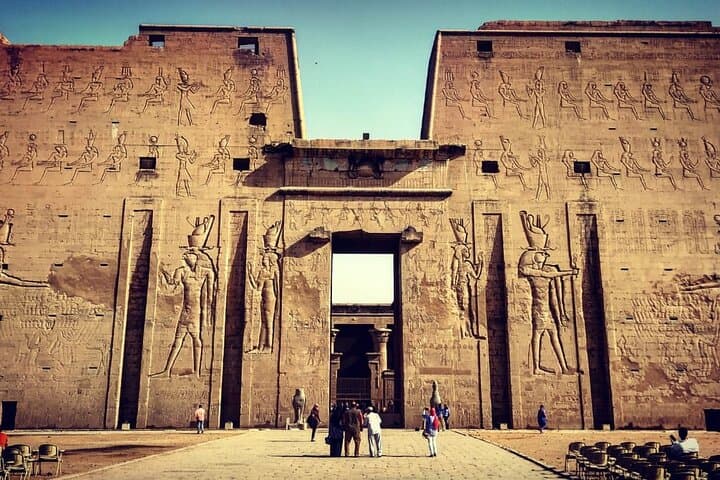
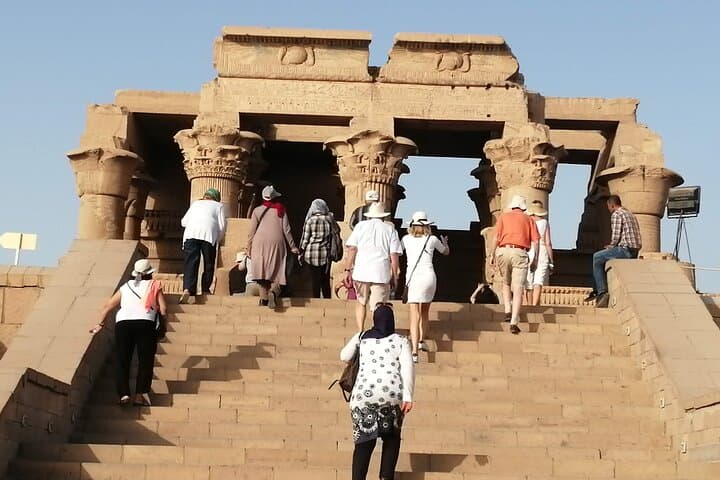
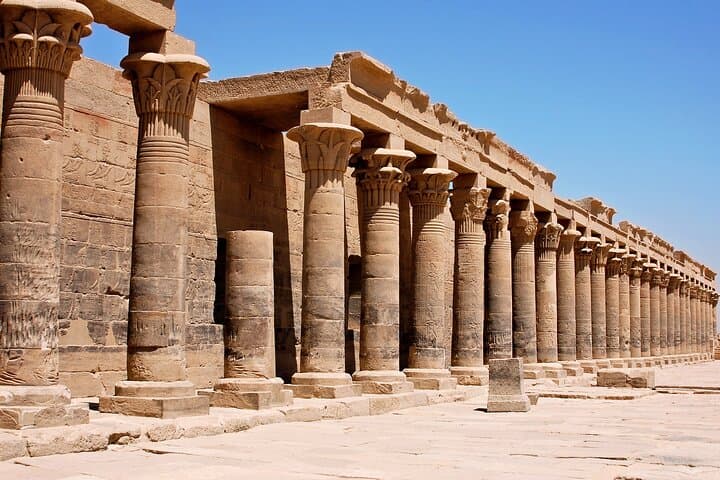
You step from an air-conditioned minivan onto a stretch of sun-softened sandstone, the Nile threading a slow silver line through palm groves. The first silhouette against the sky is Edfu’s massive pylon, its carved reliefs catching the light; later the twin façades of Kom Ombo will frame the river and a different set of gods. This is a day measured in stone, river, and the steady explanations of an Egyptologist who brings myths into human scale.
You step from an air-conditioned minivan onto a stretch of sun-softened sandstone, the Nile threading a slow silver line through palm groves. The first silhouette against the sky is Edfu’s massive pylon, its carved reliefs catching the light; later the twin façades of Kom Ombo will frame the river and a different set of gods. This is a day measured in stone, river, and the steady explanations of an Egyptologist who brings myths into human scale.
Both temples date mainly to the Ptolemaic era, built atop older sacred sites; Edfu—one of Egypt’s best-preserved cult temples—honors Horus, the falcon god, while Kom Ombo is unique for its mirrored plan dedicated to Sobek and Haroeris. Geologically, the temples sit on alluvial terraces: hard sandstone and mudbrick foundations laid where the Nile’s annual flood once left fertile silt. Locally, these sites have long been hubs for ritual, fishing, and sugar-cane agriculture that still shapes the riverside economy.
Practical guidance: tours typically run about eight hours with hotel pickup in Luxor, a combination of seated transfer and moderate on-site walking, including steps and uneven stone. Bring sunscreen and a brimmed hat; mornings are cooler and afternoons hot. Wear supportive shoes for temple stairways and courtyards, and carry water — vendors are available near entrances but bring a refillable bottle to limit plastic. Respect photography rules in inner sanctuaries and follow your guide’s route to minimize wear on fragile carvings. Time your visit early in the day to avoid the harshest sun and the largest coach groups — the quieter hours let the reliefs and stone work speak for themselves.