THE ADVENTURE COLLECTIVE® · Independent discovery and booking for outdoor travel

Ride a narrow-gauge mini-train through Jeju’s volcanic forest at Ecoland, with framed views of Hallasan and easy walking trails. Fast-moving carriages and seasonal schedules make planning essential — arrive early for quieter runs.
Ride a narrow-gauge mini-train through Jeju’s volcanic forest at Ecoland, with framed views of Hallasan and easy walking trails. Fast-moving carriages and seasonal schedules make planning essential — arrive early for quieter runs.
A low-roar from the mini-train threads through pine and evergreen broadleaf as the carriage glides along tracks braided through an old volcanic plain. Riders catch quick windows of Hallasan’s slopes where lava-scarred ridgelines and laurel forest trade places in the view, and the forest seems to set its own slow tempo.
Verified experiences and guided adventures in the surrounding area.
Operated by QHTravel · Jeju City, Jeju Province
A low-roar from the mini-train threads through pine and evergreen broadleaf as the carriage glides along tracks braided through an old volcanic plain. Riders catch quick windows of Hallasan’s slopes where lava-scarred ridgelines and laurel forest trade places in the view, and the forest seems to set its own slow tempo.
Ecoland sits on Jeju’s volcanic highlands carved by the same eruptions that built Hallasan, a shield volcano that dominates the island’s center. The park’s peat-rich soils and humid microclimates support evergreen broadleaf and indigenous azaleas; local families built the park to showcase natural forest tracts with minimal footprint, using a narrow-gauge mini-train to reduce road traffic and preserve trails.
Culturally, Jeju’s island life is oriented to seasons — spring blossom festivals, summer seaside markets, autumn harvests and winter quiet — and a visit to Ecoland mixes that living culture with easy access to nature for all ages.
Practically, trains run roughly every 7–12 minutes; seasonal hours shift (longer in summer, shorter in winter). Passengers must board at departure stations at least one hour before the last train departs (two hours for the long route). Tickets accept mobile or paper; the experience is physically easy but requires patience for queues during peak times.
Plan comfortable shoes, a refillable water bottle, and layered clothing for sudden shade-to-sun shifts. Arrive early to ride quieter carriages, and leave time to walk short interpretive trails — the mini-train gives a framed, accessible way to read Jeju’s volcanic forests without a long hike.
easy.
8 hours.
Suitable for all fitness levels; mainly seated train rides with short, flat walking trails
Trains run approximately every 7–12 minutes; exact frequency varies with season and park demand.
Tickets are for entry and train use, but arriving early is recommended—boarding rules require arriving before the last train departure window.
Yes; the train and park are designed for all ages with easy boarding and flat walking paths at stations.
Yes, mobile or paper tickets are accepted; keep confirmation accessible for quick scanning.
The park was developed to showcase Jeju’s unique forest ecosystems while minimizing road construction; it uses a narrow-gauge train to reduce traffic through sensitive areas.
Ecoland emphasizes low-impact access—stay on marked paths, avoid picking flora, and dispose of waste in designated bins to protect the fragile volcanic-soil ecosystems.
QHTravel operates guided outdoor trips and adventures with an emphasis on safety, stewardship, and memorable experiences.

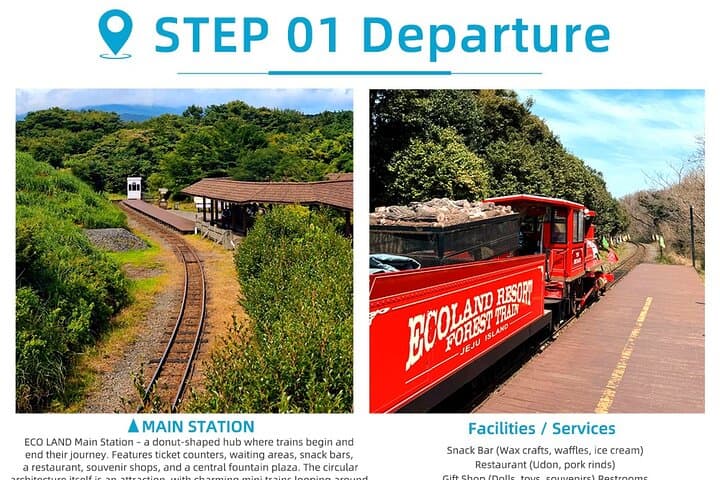
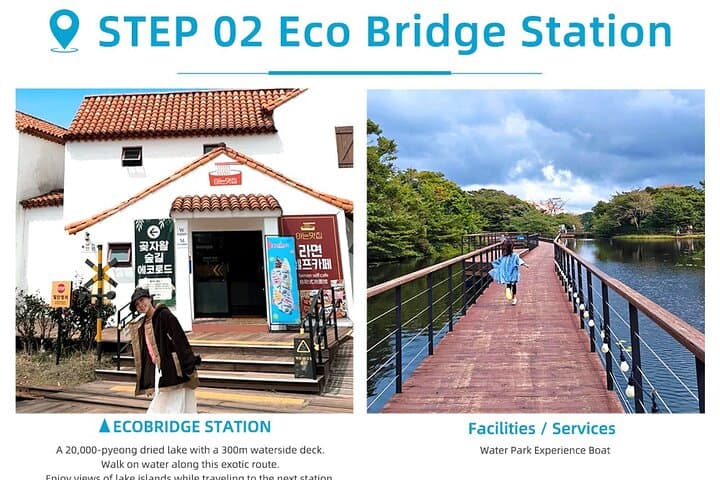
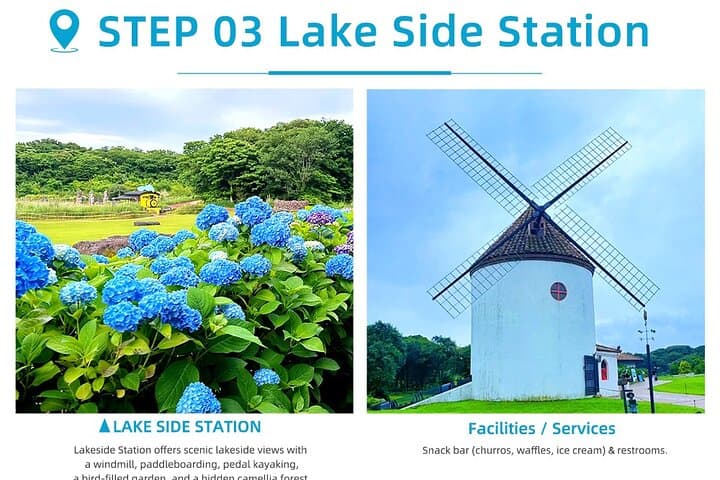
A low-roar from the mini-train threads through pine and evergreen broadleaf as the carriage glides along tracks braided through an old volcanic plain. Riders catch quick windows of Hallasan’s slopes where lava-scarred ridgelines and laurel forest trade places in the view, and the forest seems to set its own slow tempo.
A low-roar from the mini-train threads through pine and evergreen broadleaf as the carriage glides along tracks braided through an old volcanic plain. Riders catch quick windows of Hallasan’s slopes where lava-scarred ridgelines and laurel forest trade places in the view, and the forest seems to set its own slow tempo.
Ecoland sits on Jeju’s volcanic highlands carved by the same eruptions that built Hallasan, a shield volcano that dominates the island’s center. The park’s peat-rich soils and humid microclimates support evergreen broadleaf and indigenous azaleas; local families built the park to showcase natural forest tracts with minimal footprint, using a narrow-gauge mini-train to reduce road traffic and preserve trails.
Culturally, Jeju’s island life is oriented to seasons — spring blossom festivals, summer seaside markets, autumn harvests and winter quiet — and a visit to Ecoland mixes that living culture with easy access to nature for all ages.
Practically, trains run roughly every 7–12 minutes; seasonal hours shift (longer in summer, shorter in winter). Passengers must board at departure stations at least one hour before the last train departs (two hours for the long route). Tickets accept mobile or paper; the experience is physically easy but requires patience for queues during peak times.
Plan comfortable shoes, a refillable water bottle, and layered clothing for sudden shade-to-sun shifts. Arrive early to ride quieter carriages, and leave time to walk short interpretive trails — the mini-train gives a framed, accessible way to read Jeju’s volcanic forests without a long hike.