THE ADVENTURE COLLECTIVE® · Independent discovery and booking for outdoor travel

Spend three hours with a local guide exploring the Ebro Delta’s lagoons and hides. See flamingos, waders, and migrating waterfowl up close at Riet Vell and viewpoints around Tancada and Encanyissada.
Spend three hours with a local guide exploring the Ebro Delta’s lagoons and hides. See flamingos, waders, and migrating waterfowl up close at Riet Vell and viewpoints around Tancada and Encanyissada.
A pale ribbon of water cuts through reedbeds as you approach the hides at Riet Vell—the tidal lagoon seems to watch you back, birds flicking like punctuation along the shoreline. On this three-hour guided outing from Casa de Fusta, the Delta’s wetlands step into focus: flamingos pacing shallow salt pans, terns skimming the air, and herons standing patient as sentries.
Verified experiences and guided adventures in the surrounding area.
Operated by Viatges Némon · Deltebre, Catalonia
A pale ribbon of water cuts through reedbeds as you approach the hides at Riet Vell—the tidal lagoon seems to watch you back, birds flicking like punctuation along the shoreline. On this three-hour guided outing from Casa de Fusta, the Delta’s wetlands step into focus: flamingos pacing shallow salt pans, terns skimming the air, and herons standing patient as sentries.
The Ebro Delta is Spain’s youngest broad plain, built by millennia of sediment from the Ebro River. Human hands have shaped it too—rice paddies and small fishing villages have coexisted with migratory birds for generations, and the area is recognized for its international conservation value. Geology here is soft and shifting; tides and wind redraw channels and mudflats, producing the lagoons of Tancada and Encanyissada and quieter pockets like Riet Vell.
Your guide will rotate viewpoints, explain local bird behavior, and show how irrigation and rice cultivation create feeding grounds for waders and waterfowl. Expect close views from hides and short drives between points, with a small-group format that favors quiet observation.
Practical notes: mornings and late afternoons are best for light and bird activity; dress in muted colors and use a covered hide to reduce disturbance. Binoculars are usually provided, but a personal pair helps with identification. Bring water, sun protection, and closed-toe shoes for uneven paths. Respect posted limits at hides—this is a fragile, low-lying landscape where mindful behavior supports both the birds and the people who depend on the Delta.
easy.
3–3.5 hours.
Suitable for most fitness levels; involves short walks between hides and minimal elevation change.
The tour is about 3–3.5 hours with short walks between hides and viewpoints; it’s low-impact and suitable for most ages.
Binoculars are listed as included, but bringing your own can improve comfort and image quality.
The tour notes stroller accessibility; however, some hides have steps and uneven boardwalks—check with the operator for specifics.
Flamingos are visible year-round, but mornings and late afternoons during the migratory seasons (spring and autumn) produce higher overall bird activity.
The Delta formed from Ebro River sediment over millennia; local communities developed rice cultivation and fishing that shaped the wetlands’ mosaic of channels and ponds.
The Ebro Delta is protected for its international bird value but faces pressures from sea-level rise and intensive agriculture; stick to paths and follow guide instructions to minimize impact.
Viatges Némon operates guided outdoor trips and adventures with an emphasis on safety, stewardship, and memorable experiences.
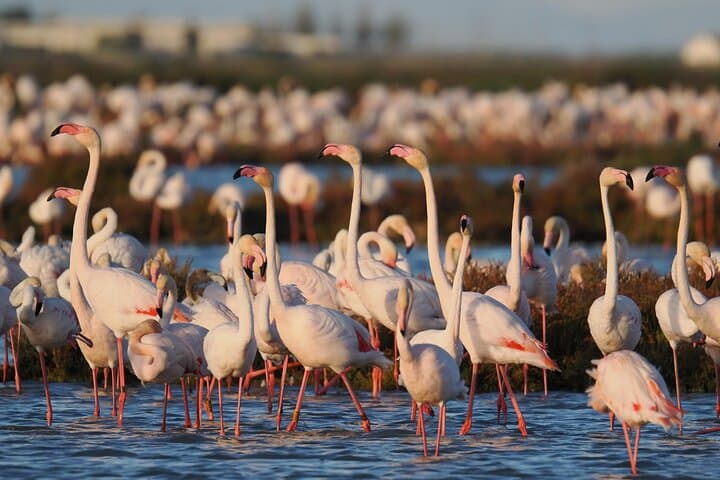


A pale ribbon of water cuts through reedbeds as you approach the hides at Riet Vell—the tidal lagoon seems to watch you back, birds flicking like punctuation along the shoreline. On this three-hour guided outing from Casa de Fusta, the Delta’s wetlands step into focus: flamingos pacing shallow salt pans, terns skimming the air, and herons standing patient as sentries.
A pale ribbon of water cuts through reedbeds as you approach the hides at Riet Vell—the tidal lagoon seems to watch you back, birds flicking like punctuation along the shoreline. On this three-hour guided outing from Casa de Fusta, the Delta’s wetlands step into focus: flamingos pacing shallow salt pans, terns skimming the air, and herons standing patient as sentries.
The Ebro Delta is Spain’s youngest broad plain, built by millennia of sediment from the Ebro River. Human hands have shaped it too—rice paddies and small fishing villages have coexisted with migratory birds for generations, and the area is recognized for its international conservation value. Geology here is soft and shifting; tides and wind redraw channels and mudflats, producing the lagoons of Tancada and Encanyissada and quieter pockets like Riet Vell.
Your guide will rotate viewpoints, explain local bird behavior, and show how irrigation and rice cultivation create feeding grounds for waders and waterfowl. Expect close views from hides and short drives between points, with a small-group format that favors quiet observation.
Practical notes: mornings and late afternoons are best for light and bird activity; dress in muted colors and use a covered hide to reduce disturbance. Binoculars are usually provided, but a personal pair helps with identification. Bring water, sun protection, and closed-toe shoes for uneven paths. Respect posted limits at hides—this is a fragile, low-lying landscape where mindful behavior supports both the birds and the people who depend on the Delta.