THE ADVENTURE COLLECTIVE® · Independent discovery and booking for outdoor travel

Ride from Marrakech into the High Atlas on a five-day supported cycling route that mixes steady climbs, high passes and village guest houses. Expect 18–30 km daily, 400–660 m of elevation change, and authentic Berber hospitality.
Ride from Marrakech into the High Atlas on a five-day supported cycling route that mixes steady climbs, high passes and village guest houses. Expect 18–30 km daily, 400–660 m of elevation change, and authentic Berber hospitality.
The sun lifts over Marrakech and the tarmac hums beneath your wheels as the minibus deposits the group at Imlil, 1,700 m, where the first pedals meet the High Atlas.
Verified experiences and guided adventures in the surrounding area.
Operated by Adrar Aventure SARL · Imlil, Marrakech-Safi
The sun lifts over Marrakech and the tarmac hums beneath your wheels as the minibus deposits the group at Imlil, 1,700 m, where the first pedals meet the High Atlas.
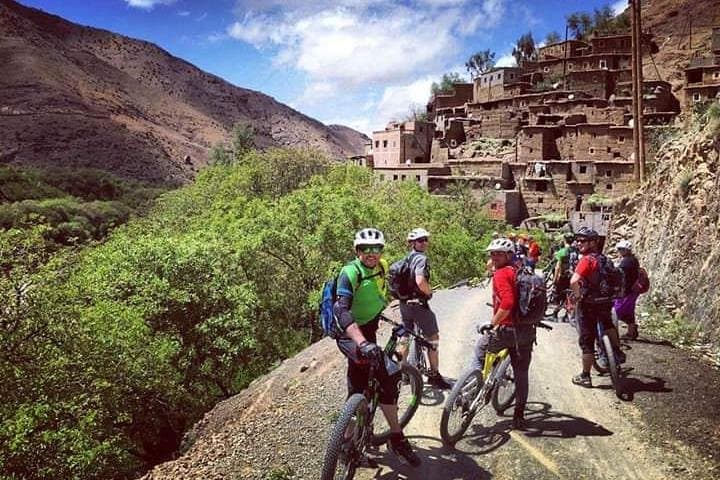
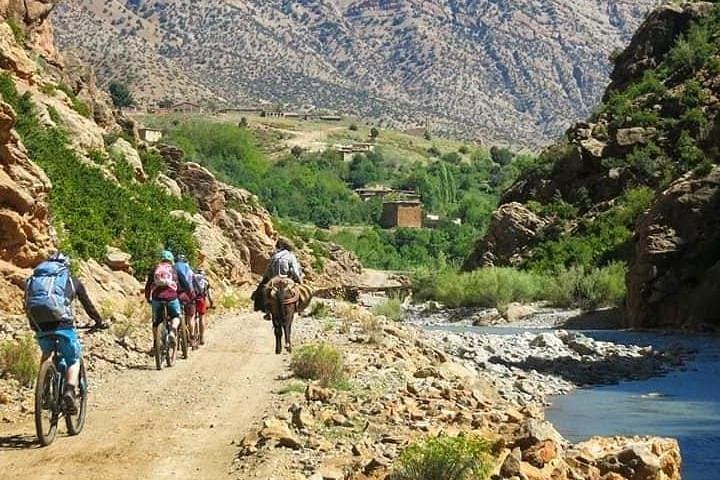
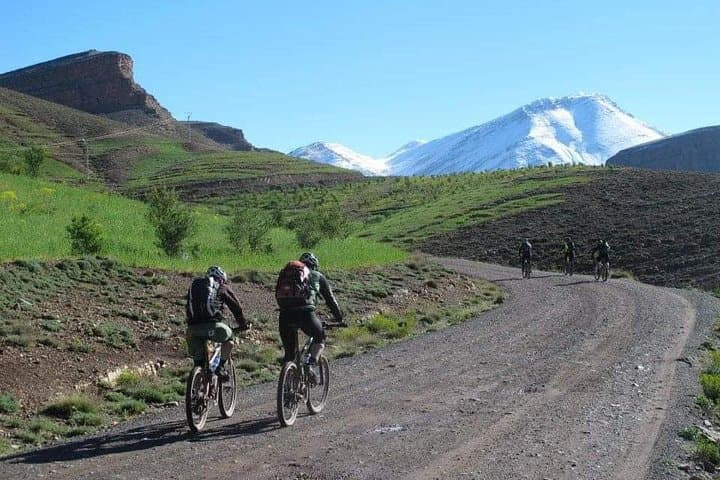
Over five days you ride quiet country roads and high passes—Tizi Ntamatrat (2,250 m), Tizi n’Tacht (≈2,300 m) and other cols—through scrub, orchards and villages built of red stone. The route alternates steady climbs (daily +400–+660 m) with long descents; typical daily distances range from 18 to 30 km on mostly paved, sometimes chip-sealed mountain roads.
These valleys have been shepherded by Berber communities for centuries; terraces and irrigation channels speak to a practical agricultural history shaped by the Atlas’s folded geology—metamorphic cores uplifted and carved by seasonal torrents.
Cultural highlights are unpretentious: guest houses in Tachdirt and Tizi Oussem, simple home-cooked tagines and morning mint tea. Language is a mix of Tashelhit, Arabic and French; hospitality is straightforward and workmanlike.
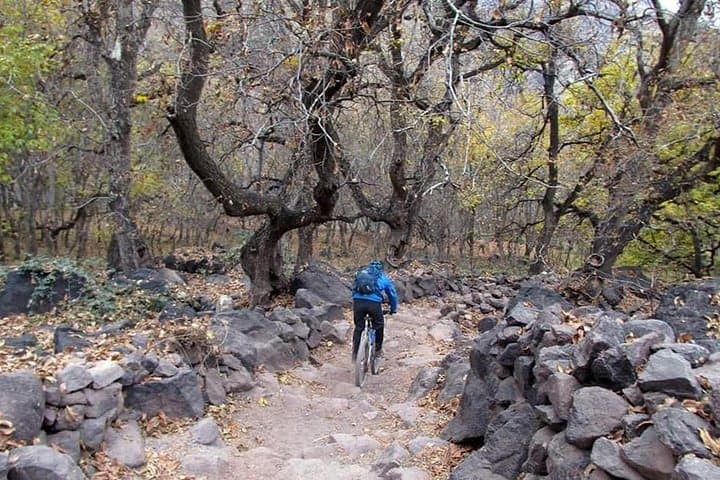
Practical guidance: arrive with a road-ready bike or accept operator’s support; expect 4–6 hours of cycling on full ride days with short climbs under heavy sun. Hydrate early, carry sun protection and a light wind layer for higher passes where temperatures drop quickly. Good brakes and tires are essential—the descents can be steep and gravelly near villages.
This tour is best in spring or fall for cool climbing and clear views. With daily support, it’s accessible to riders who can sustain moderate climbs and want an immersed, low-traffic Atlas experience.
moderate.
5 days (daily rides 3–6 hours).
Good aerobic fitness; able to sustain 2–3 hour climbs and recover overnight in simple accommodations
The tour is fully supported with technical assistance; confirm with the operator if a road bike is provided or if you should bring your own for fit and preference.
Daily rides are 18–30 km with elevation gains of roughly +400 to +660 m on climbing days—sustained but manageable for riders with regular training.
Nights are in simple guest houses and riads or basic mountain lodgings; rooms are modest and meals focus on local dishes like tagine and bread.
Spring and fall offer cooler climbs and clearer skies; summer can be hot at lower elevations and winter may bring cold nights and occasional snow at higher passes.
Berber villages in the High Atlas have long been agrarian, using terraced farming and seasonal transhumance; roads now link these valleys but traditional practices persist.
Stay on paved roads and marked paths, avoid littering, and support local guest houses to direct tourism income to communities; water is scarce—use it sparingly.
Adrar Aventure SARL operates guided outdoor trips and adventures with an emphasis on safety, stewardship, and memorable experiences.
The sun lifts over Marrakech and the tarmac hums beneath your wheels as the minibus deposits the group at Imlil, 1,700 m, where the first pedals meet the High Atlas.
The sun lifts over Marrakech and the tarmac hums beneath your wheels as the minibus deposits the group at Imlil, 1,700 m, where the first pedals meet the High Atlas.
Over five days you ride quiet country roads and high passes—Tizi Ntamatrat (2,250 m), Tizi n’Tacht (≈2,300 m) and other cols—through scrub, orchards and villages built of red stone. The route alternates steady climbs (daily +400–+660 m) with long descents; typical daily distances range from 18 to 30 km on mostly paved, sometimes chip-sealed mountain roads.
These valleys have been shepherded by Berber communities for centuries; terraces and irrigation channels speak to a practical agricultural history shaped by the Atlas’s folded geology—metamorphic cores uplifted and carved by seasonal torrents.
Cultural highlights are unpretentious: guest houses in Tachdirt and Tizi Oussem, simple home-cooked tagines and morning mint tea. Language is a mix of Tashelhit, Arabic and French; hospitality is straightforward and workmanlike.
Practical guidance: arrive with a road-ready bike or accept operator’s support; expect 4–6 hours of cycling on full ride days with short climbs under heavy sun. Hydrate early, carry sun protection and a light wind layer for higher passes where temperatures drop quickly. Good brakes and tires are essential—the descents can be steep and gravelly near villages.
This tour is best in spring or fall for cool climbing and clear views. With daily support, it’s accessible to riders who can sustain moderate climbs and want an immersed, low-traffic Atlas experience.