THE ADVENTURE COLLECTIVE® · Independent discovery and booking for outdoor travel

A 12-day circuit through eastern Anatolia that stitches together cliffside monasteries, Urartian fortresses, the volcanic rims of Nemrut and the archaeological revelation of Göbekli Tepe. Expect long drives, short hikes and an intense immersion in history and landscape.
A 12-day circuit through eastern Anatolia that stitches together cliffside monasteries, Urartian fortresses, the volcanic rims of Nemrut and the archaeological revelation of Göbekli Tepe. Expect long drives, short hikes and an intense immersion in history and landscape.
Morning light on the Black Sea throws Trabzon's weathered stone facades into sharp relief as the tour minibus eases away from the airport and into the high country. You feel, almost immediately, a rhythm of motion: coastal switchbacks, river valleys that push to the horizon, and a succession of ruined walls and domes that mark the slow, relentless work of civilizations. Over 12 days this loop across eastern Anatolia moves through Byzantine monasteries clinging to cliffs, Urartian fortresses, volcanic calderas and the earliest known monumental ritual site on Earth — Göbekli Tepe.
Verified experiences and guided adventures in the surrounding area.
Operated by ALKANS TOUR · Trabzon, Trabzon Province
Morning light on the Black Sea throws Trabzon's weathered stone facades into sharp relief as the tour minibus eases away from the airport and into the high country. You feel, almost immediately, a rhythm of motion: coastal switchbacks, river valleys that push to the horizon, and a succession of ruined walls and domes that mark the slow, relentless work of civilizations. Over 12 days this loop across eastern Anatolia moves through Byzantine monasteries clinging to cliffs, Urartian fortresses, volcanic calderas and the earliest known monumental ritual site on Earth — Göbekli Tepe.
The route reads like a condensed atlas of Anatolian history. In Trabzon, the 14th-century Hagia Sophia conserves faded frescoes and a view that remembers medieval trade with the Black Sea. Up the Zigana Valley the Sumela Monastery perches on a 1,200-foot cliff above a carved gorge; its stone stairs and narrow galleries reward steady breath and firm footing. Across the Coruh and Tortum river valleys you gain and lose elevation — expect daily drives of 2–5 hours punctuated by walks of 0.5–3 kilometers across uneven terrain.
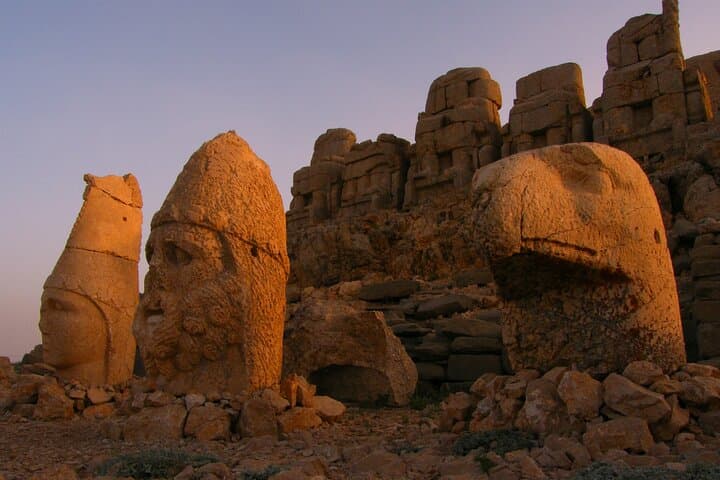
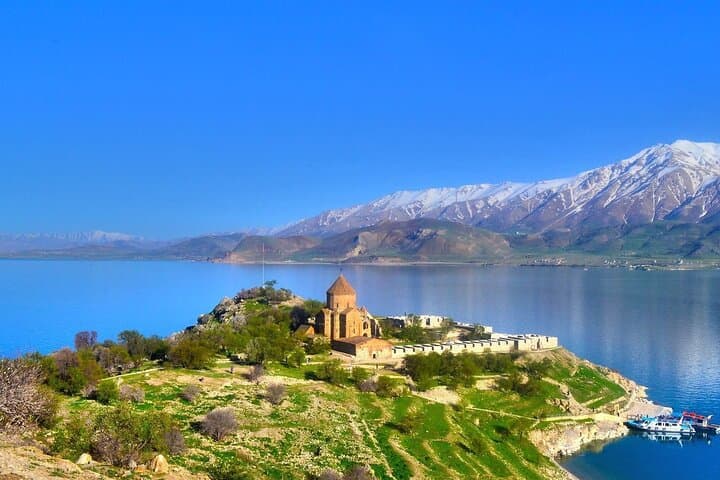
Kars and Ani open a medieval chapter where masonry and fresco fragments speak of a vanished Armenian capital; near there Mount Ararat towers at 5,137 m, a glaciated cone that dominates eastern vistas and the local imagination. Lake Van's alkaline shore hosts Akdamar Island and its 10th-century Church of the Holy Cross. Higher still, Nemrut's tumulus peaks at 2,150 m for a sunset among colossal stone heads that seem to keep watch over the plain below. Finally, Göbekli Tepe near Şanlıurfa reframes prehistory — circular limestone pillars carved 11,000 years ago suggest organized ritual life before pottery, writing or settled urbanism.
Practicalities are straightforward but earnest: plan for long drives and early starts, wear good ankle-support boots for uneven archaeological paths, and bring a daypack with water and windproof layers. Elevation varies widely — expect cool nights even in summer, and brief hikes that include rocky steps or loose scree. Local guides handle museum entries and domestic flights that are included, but carry small change for market purchases and tips.
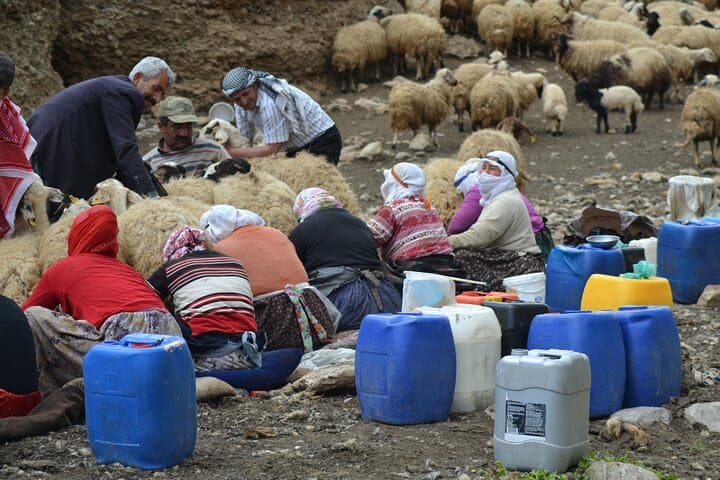
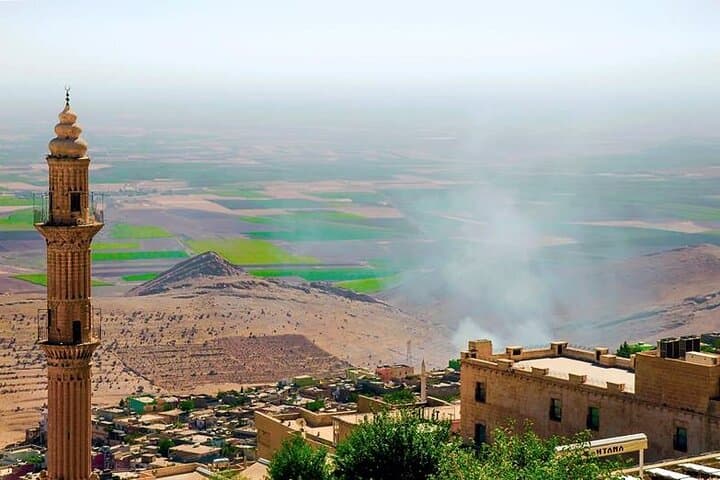
Culturally the region is layered — Kurdish, Armenian, Georgian, Ottoman and Turkish influences mark languages, food and architecture. Food is a highlight: Gaziantep's mosaics are matched by intense, spice-forward cuisine and street-level hospitality.
This tour suits travelers who want a dense historical sweep delivered with steady logistics: expect moderate physical demands and immersive cultural context. Time your trip in late spring or early fall for the best balance of weather and accessibility; winters bring snow at higher passes and summer brings strong sun on exposed ruins. Come ready to walk, to listen and to let the landscape keep moving you forward.
moderate.
12 days.
Suitable for travelers with moderate fitness who can manage multiple short hikes (0.5–3 km) and prolonged periods in a vehicle.
Expect 2–5 hour drives between major stops; some days include multiple shorter transfers and matter-of-fact walking breaks.
Yes — two domestic flights are included as noted in the itinerary to move between far-apart regions efficiently.
Mostly short walks up to 3 km over uneven terrain, stairs at places like Sumela, and moderate short hikes at Nemrut and crater lakes.
Infants can travel but may need to sit on laps; the tour requires mobility on uneven ground so it is not ideal for travelers with significant mobility limitations.
Most breakfasts and many dinners are included; lunches are provided intermittently—expect opportunities to sample local restaurants during free time.
Site entries mentioned in the itinerary are included; bring ID and keep small cash for any unanticipated local fees or donations.
The itinerary spans 12,000 years of Anatolian history — from Urartian fortresses (9th–7th c. BC) to medieval Armenian and Ottoman monuments and the Neolithic Göbekli Tepe (c. 10,000 BC).
Many sites face erosion and visitor pressure; stick to marked paths, avoid touching fragile reliefs and support local guides who work with conservation authorities.
ALKANS TOUR operates guided outdoor trips and adventures with an emphasis on safety, stewardship, and memorable experiences.
Morning light on the Black Sea throws Trabzon's weathered stone facades into sharp relief as the tour minibus eases away from the airport and into the high country. You feel, almost immediately, a rhythm of motion: coastal switchbacks, river valleys that push to the horizon, and a succession of ruined walls and domes that mark the slow, relentless work of civilizations. Over 12 days this loop across eastern Anatolia moves through Byzantine monasteries clinging to cliffs, Urartian fortresses, volcanic calderas and the earliest known monumental ritual site on Earth — Göbekli Tepe.
Morning light on the Black Sea throws Trabzon's weathered stone facades into sharp relief as the tour minibus eases away from the airport and into the high country. You feel, almost immediately, a rhythm of motion: coastal switchbacks, river valleys that push to the horizon, and a succession of ruined walls and domes that mark the slow, relentless work of civilizations. Over 12 days this loop across eastern Anatolia moves through Byzantine monasteries clinging to cliffs, Urartian fortresses, volcanic calderas and the earliest known monumental ritual site on Earth — Göbekli Tepe.
The route reads like a condensed atlas of Anatolian history. In Trabzon, the 14th-century Hagia Sophia conserves faded frescoes and a view that remembers medieval trade with the Black Sea. Up the Zigana Valley the Sumela Monastery perches on a 1,200-foot cliff above a carved gorge; its stone stairs and narrow galleries reward steady breath and firm footing. Across the Coruh and Tortum river valleys you gain and lose elevation — expect daily drives of 2–5 hours punctuated by walks of 0.5–3 kilometers across uneven terrain.
Kars and Ani open a medieval chapter where masonry and fresco fragments speak of a vanished Armenian capital; near there Mount Ararat towers at 5,137 m, a glaciated cone that dominates eastern vistas and the local imagination. Lake Van's alkaline shore hosts Akdamar Island and its 10th-century Church of the Holy Cross. Higher still, Nemrut's tumulus peaks at 2,150 m for a sunset among colossal stone heads that seem to keep watch over the plain below. Finally, Göbekli Tepe near Şanlıurfa reframes prehistory — circular limestone pillars carved 11,000 years ago suggest organized ritual life before pottery, writing or settled urbanism.
Practicalities are straightforward but earnest: plan for long drives and early starts, wear good ankle-support boots for uneven archaeological paths, and bring a daypack with water and windproof layers. Elevation varies widely — expect cool nights even in summer, and brief hikes that include rocky steps or loose scree. Local guides handle museum entries and domestic flights that are included, but carry small change for market purchases and tips.
Culturally the region is layered — Kurdish, Armenian, Georgian, Ottoman and Turkish influences mark languages, food and architecture. Food is a highlight: Gaziantep's mosaics are matched by intense, spice-forward cuisine and street-level hospitality.
This tour suits travelers who want a dense historical sweep delivered with steady logistics: expect moderate physical demands and immersive cultural context. Time your trip in late spring or early fall for the best balance of weather and accessibility; winters bring snow at higher passes and summer brings strong sun on exposed ruins. Come ready to walk, to listen and to let the landscape keep moving you forward.