THE ADVENTURE COLLECTIVE® · Independent discovery and booking for outdoor travel

Explore Rano Raraku’s volcanic quarry, stand before the fifteen moai at Ahu Tongariki, lounge on Anakena’s coral sand and visit Orongo’s Birdman village — all in a small-group shore excursion designed for cruise passengers.
Explore Rano Raraku’s volcanic quarry, stand before the fifteen moai at Ahu Tongariki, lounge on Anakena’s coral sand and visit Orongo’s Birdman village — all in a small-group shore excursion designed for cruise passengers.
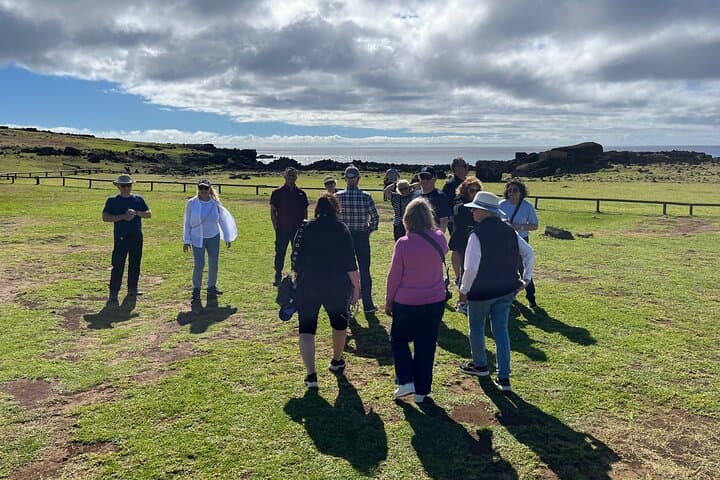
You meet your guide at the pier before the first tender arrives, tropical wind from the South Pacific pushing salt and a low hum of history across the harbor. In a small group of eight you move quickly from shipboard routine into the island’s landscape: volcanic ridgelines, coral-sand beaches, and rows of carved heads that still seem to watch the ocean.
Verified experiences and guided adventures in the surrounding area.
Operated by Anclatourchile · Hanga Roa, Valparaíso Region
You meet your guide at the pier before the first tender arrives, tropical wind from the South Pacific pushing salt and a low hum of history across the harbor. In a small group of eight you move quickly from shipboard routine into the island’s landscape: volcanic ridgelines, coral-sand beaches, and rows of carved heads that still seem to watch the ocean.
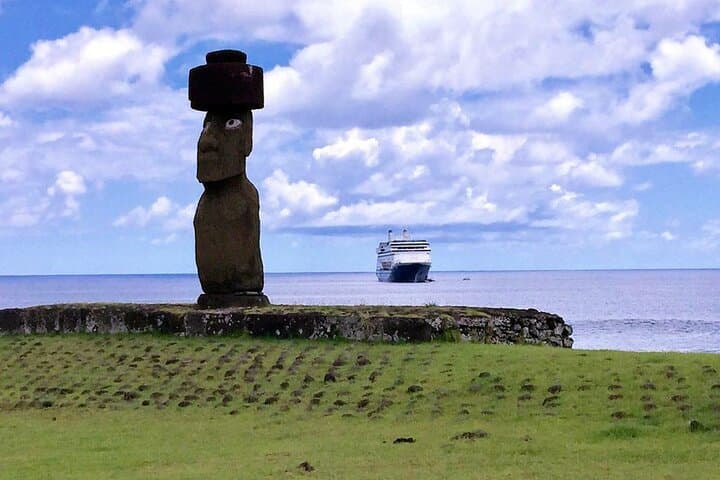
The tour threads Rano Raraku, the volcanic tuff quarry where hundreds of moai were shaped and sometimes abandoned mid-carve; Ahu Tongariki, the long platform of fifteen restored moai turned inland toward the island; Anakena beach and Ahu Nau Nau with its warm turquoise water and coral sand; and the ceremonial village of Orongo on the rim of Rano Kau, site of the historic Birdman contests. Geologically the island is a crown of extinct volcanoes — Rano Raraku and Rano Kau are both crater-cones that supplied the tuff and basalt for sculptures and stonework.
Culturally the landscape is compact with meaning: statues oriented for lineage and astronomy, village platforms that mark clan territories, and oral traditions kept alive by local guides. Expect a mix of short walks and viewpoints rather than strenuous hiking; the guide manages logistics and context so you can focus on photos and questions.
Practical notes: carry sun protection, 1–2 liters of water, sturdy shoes for uneven terrain, and local currency for the national park fee if not included. Timing is strict — the group returns to the pier in time for your tender — so leave extra time aboard and bring your passport for port checks.
easy.
6–7 hours.
Suitable for travelers in light to moderate condition who can manage short walks of up to 1 km on uneven ground.
Not always; many shore excursions do not include the Rapa Nui National Park fee, so confirm with the operator and bring payment if needed.
Walking is light—mainly short, uneven paths between viewpoints and ahu; no long hikes are required but expect some stairs and loose rock.
Guides are typically bilingual in Spanish and English, and local guides may share Rapa Nui perspectives when available.
Yes—stops at Anakena and main viewpoints include time for photos, but keep to the schedule so you return to the pier for your tender.
Rapa Nui’s monumental moai were carved between roughly 1250–1500 CE from volcanic tuff; platforms (ahu) and village sites later played central roles in clan and ritual life, including the Birdman competition at Orongo.
Rapa Nui National Park manages archaeological sites to protect fragile stonework and endemic flora; visitors are asked to stay on paths, avoid climbing moai, and respect local guides and communities.
Anclatourchile operates guided outdoor trips and adventures with an emphasis on safety, stewardship, and memorable experiences.
You meet your guide at the pier before the first tender arrives, tropical wind from the South Pacific pushing salt and a low hum of history across the harbor. In a small group of eight you move quickly from shipboard routine into the island’s landscape: volcanic ridgelines, coral-sand beaches, and rows of carved heads that still seem to watch the ocean.
You meet your guide at the pier before the first tender arrives, tropical wind from the South Pacific pushing salt and a low hum of history across the harbor. In a small group of eight you move quickly from shipboard routine into the island’s landscape: volcanic ridgelines, coral-sand beaches, and rows of carved heads that still seem to watch the ocean.
The tour threads Rano Raraku, the volcanic tuff quarry where hundreds of moai were shaped and sometimes abandoned mid-carve; Ahu Tongariki, the long platform of fifteen restored moai turned inland toward the island; Anakena beach and Ahu Nau Nau with its warm turquoise water and coral sand; and the ceremonial village of Orongo on the rim of Rano Kau, site of the historic Birdman contests. Geologically the island is a crown of extinct volcanoes — Rano Raraku and Rano Kau are both crater-cones that supplied the tuff and basalt for sculptures and stonework.
Culturally the landscape is compact with meaning: statues oriented for lineage and astronomy, village platforms that mark clan territories, and oral traditions kept alive by local guides. Expect a mix of short walks and viewpoints rather than strenuous hiking; the guide manages logistics and context so you can focus on photos and questions.
Practical notes: carry sun protection, 1–2 liters of water, sturdy shoes for uneven terrain, and local currency for the national park fee if not included. Timing is strict — the group returns to the pier in time for your tender — so leave extra time aboard and bring your passport for port checks.