THE ADVENTURE COLLECTIVE® · Independent discovery and booking for outdoor travel

This private six-day Rapa Nui trip pairs archaeology with rugged hiking: sunrises at Ahu Tongariki, the moai quarry at Rano Raraku and remote coastal caves. Expect varied terrain, volcanic views and guided interpretation of the island’s moai and ceremonial sites.
This private six-day Rapa Nui trip pairs archaeology with rugged hiking: sunrises at Ahu Tongariki, the moai quarry at Rano Raraku and remote coastal caves. Expect varied terrain, volcanic views and guided interpretation of the island’s moai and ceremonial sites.
A raw Pacific wind opens the day as you stand on the black volcanic rim above a crater lake, the sea a distant silver band. Over six days this private Rapa Nui itinerary alternates guided archaeological walks with longer hikes across lava fields and coastal cliffs — mornings at Ahu Tongariki and evenings watching the sun lift behind the island’s giants.
Verified experiences and guided adventures in the surrounding area.
Operated by Easter Island Travel · Hanga Roa, Valparaíso Region
A raw Pacific wind opens the day as you stand on the black volcanic rim above a crater lake, the sea a distant silver band. Over six days this private Rapa Nui itinerary alternates guided archaeological walks with longer hikes across lava fields and coastal cliffs — mornings at Ahu Tongariki and evenings watching the sun lift behind the island’s giants.
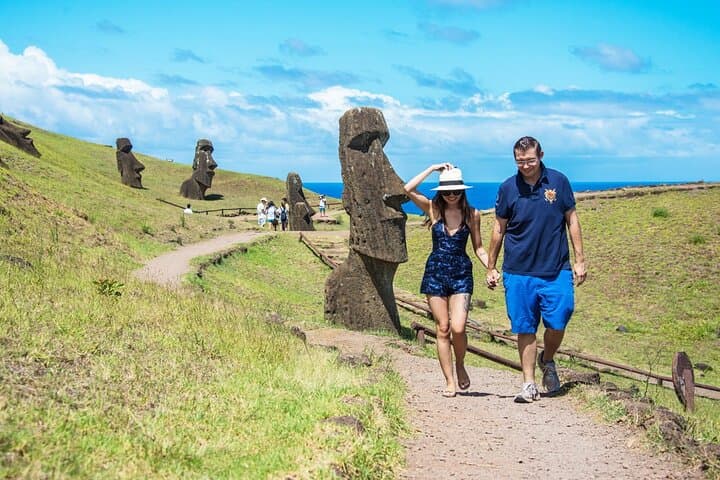
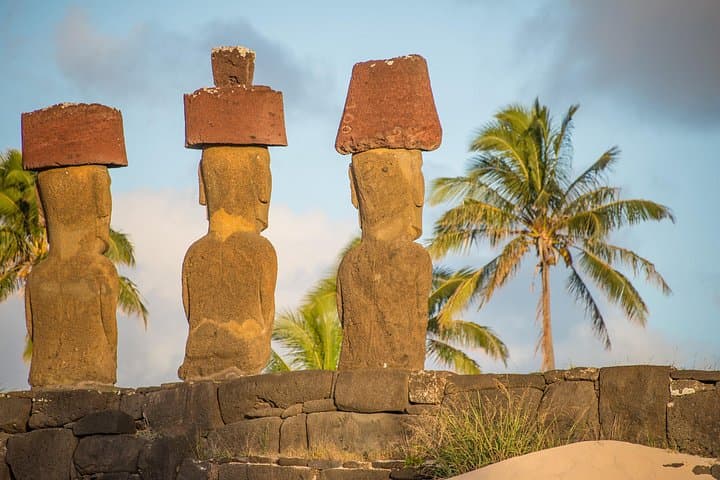
Easter Island was settled by Polynesian navigators around the 12th–13th centuries. The island’s moai, quarried from the tuff of Rano Raraku and finished with red pukao from Puna Pau, are both engineered artifacts and cultural records of a complex society that later developed the Birdman cult at Orongo. Geologically, the island is three extinct volcanoes — Terevaka (511 m), Rano Kau and Poike — carved by basalt flows, tuff benches and coastal erosion that now expose blowholes and sea caves.
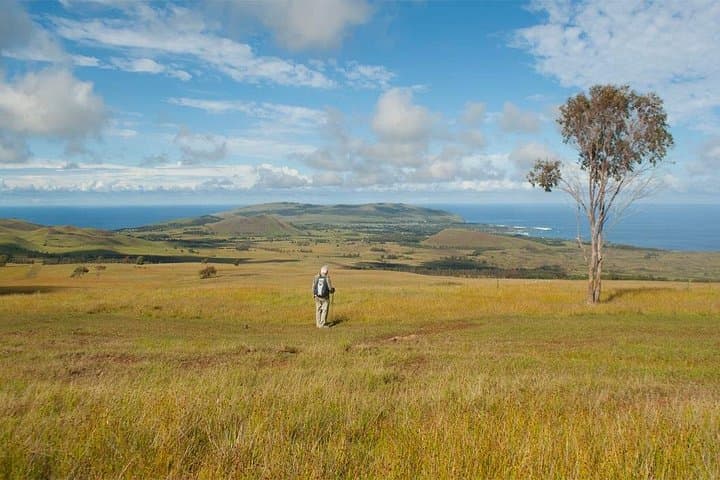
Expect uneven terrain: lava rock, tuff slopes and coastal scrub. Key highlights include a sunrise at Ahu Tongariki, a full-day hike along the moai transportation road, and the quarry plateau where unfinished statues still lie prone. Guides balance archaeology with navigation; many of the most rewarding viewpoints require 2–7 hours of steady walking (the longest hike listed is 21 km / ~7 hours).
Practical guidance: fly into Mataveri (IPC) and base yourself in Hanga Roa. Carry sun protection, a 2–3L hydration plan, sturdy trail shoes and a light rain layer. Respect Rapa Nui National Park rules and stay on marked routes — erosion and fragility of moa'i platforms mean low-impact travel isn’t optional, it’s essential.
moderate.
6 days.
Moderate fitness — able to hike 4–7 hours on uneven ground and handle multiple days of walking with elevation changes
You should have moderate fitness: several walks are 2–7 hours over uneven ground, with the longest day around 21 km; guides moderate pace but stamina for full days is required.
Many sites are inside Rapa Nui National Park, which requires an entrance ticket; your operator or local authorities will advise how to secure it before visits.
Most international flights go through Santiago (SCL) to Mataveri International Airport (IPC); check schedules and allow buffer time for domestic connections.
Uneven lava and stepped ahu platforms make some sites unsuitable for limited mobility; families with young children should use carriers for rough sections and consult the operator in advance.
Polynesian settlers arrived around the 12th–13th centuries; moai were carved and moved across the island as ancestral monuments, and later the Birdman cult centered at Orongo reflected shifting social systems.
Rapa Nui’s archaeology and fragile soils are vulnerable to trampling and erosion; follow park routes, avoid touching moai and support local conservation fees and guides.
Easter Island Travel operates guided outdoor trips and adventures with an emphasis on safety, stewardship, and memorable experiences.
A raw Pacific wind opens the day as you stand on the black volcanic rim above a crater lake, the sea a distant silver band. Over six days this private Rapa Nui itinerary alternates guided archaeological walks with longer hikes across lava fields and coastal cliffs — mornings at Ahu Tongariki and evenings watching the sun lift behind the island’s giants.
A raw Pacific wind opens the day as you stand on the black volcanic rim above a crater lake, the sea a distant silver band. Over six days this private Rapa Nui itinerary alternates guided archaeological walks with longer hikes across lava fields and coastal cliffs — mornings at Ahu Tongariki and evenings watching the sun lift behind the island’s giants.
Easter Island was settled by Polynesian navigators around the 12th–13th centuries. The island’s moai, quarried from the tuff of Rano Raraku and finished with red pukao from Puna Pau, are both engineered artifacts and cultural records of a complex society that later developed the Birdman cult at Orongo. Geologically, the island is three extinct volcanoes — Terevaka (511 m), Rano Kau and Poike — carved by basalt flows, tuff benches and coastal erosion that now expose blowholes and sea caves.
Expect uneven terrain: lava rock, tuff slopes and coastal scrub. Key highlights include a sunrise at Ahu Tongariki, a full-day hike along the moai transportation road, and the quarry plateau where unfinished statues still lie prone. Guides balance archaeology with navigation; many of the most rewarding viewpoints require 2–7 hours of steady walking (the longest hike listed is 21 km / ~7 hours).
Practical guidance: fly into Mataveri (IPC) and base yourself in Hanga Roa. Carry sun protection, a 2–3L hydration plan, sturdy trail shoes and a light rain layer. Respect Rapa Nui National Park rules and stay on marked routes — erosion and fragility of moa'i platforms mean low-impact travel isn’t optional, it’s essential.