THE ADVENTURE COLLECTIVE® · Independent discovery and booking for outdoor travel

A fast-moving, fully guided loop from Seoul that pairs mountain air, coastal cable cars and centuries-old cultural sites. Ideal for travelers who want a compact, well-serviced introduction to eastern South Korea.
A fast-moving, fully guided loop from Seoul that pairs mountain air, coastal cable cars and centuries-old cultural sites. Ideal for travelers who want a compact, well-serviced introduction to eastern South Korea.
You step onto the coach in Seoul before dawn, the city shrinking behind you as highway lights smear into the black. Within an hour the air feels different—cooler, pine-scented—Daegwallyeong’s highlands arriving with open pastures where sheep browse at Yangtte Ranch and mountain ridgelines cut into the sky.
Verified experiences and guided adventures in the surrounding area.
Operated by BSJGOGOS · Seoul, Seoul
You step onto the coach in Seoul before dawn, the city shrinking behind you as highway lights smear into the black. Within an hour the air feels different—cooler, pine-scented—Daegwallyeong’s highlands arriving with open pastures where sheep browse at Yangtte Ranch and mountain ridgelines cut into the sky.
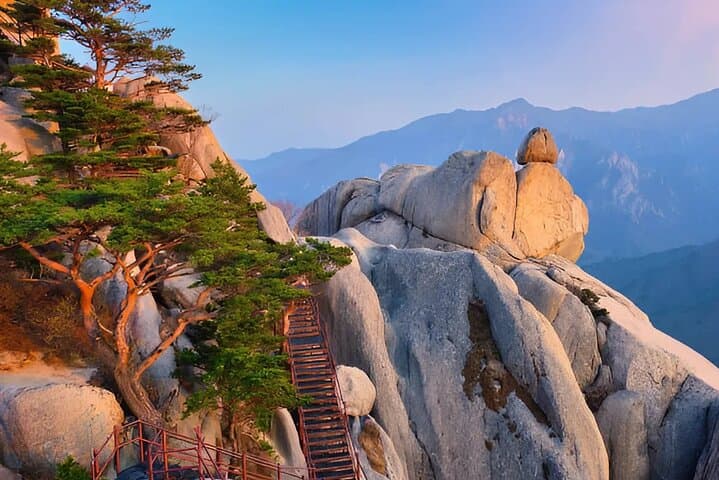
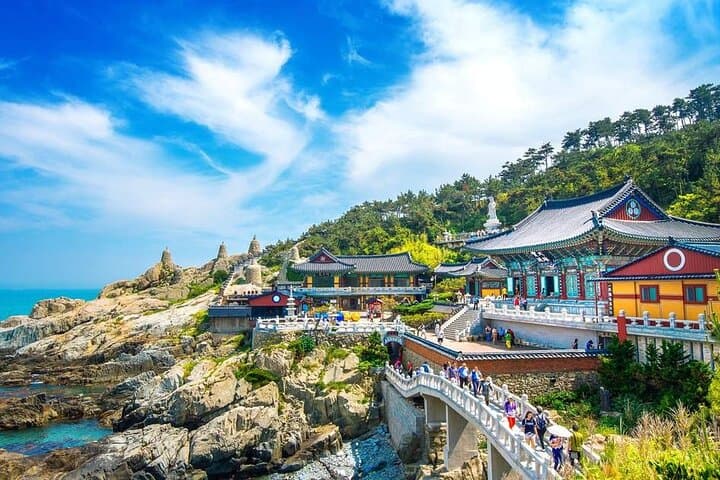
This compact 3-night, 4-day loop threads modern Seoul with the ancient and coastal: Seorak’s cable car (seasonal), Pyeongchang’s winter sledding, Samcheok’s marine cable car, Andong’s preserved Hahoe mask village, and Gyeongju’s Buddhist masterpieces—Bulguksa and Seokguram—before the gritty harbor life of Busan at Gamcheon and Jagalchi market. Geology is obvious: granite peaks around Seorak, marine terraces on the east coast, and Gyeongju’s burial mounds sitting on older bedrock left from millennia of sea-level shifts.
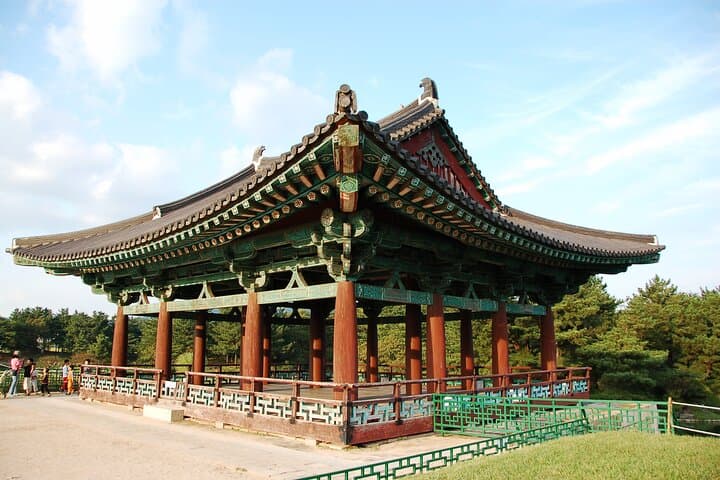
Culturally, this route pairs Joseon-era village customs in Andong with Silla-period relics in Gyeongju and contemporary coastal markets in Busan; English-speaking drivers ease logistics while local guides at temples interpret rituals and history.
Practical guidance: expect multiple short walks, temple steps, and market crowds—good walking shoes, a lightweight daypack, and a power bank are essential. Winter travelers should verify cable-car and sled availability; summers bring humid heat and sudden showers. Respect temple etiquette (shoulders and knees covered, low voices) and carry small bills for market purchases. Hydrate, use layered clothing, and keep your passport handy for bookings and admissions.
This itinerary delivers a fast-moving, well-serviced introduction to eastern Korea—rich in coastal wind, mountain air, and cultural depth.
easy.
3–4 days.
Suitable for travelers in average fitness who can handle several short walks, stairs, and standing at markets; not strenuous.
Pick-up and drop-off are arranged from Seoul hotels; the tour departs early on day one and returns to Seoul on day four in the evening.
The itinerary states that admission fees listed are included; seasonal attractions like cable cars may be conditional—confirm at booking.
Yes—infant seats are available and the tour is described as suitable for all fitness levels, but activities like stairs and crowded markets may require extra care.
Some sites, like temples and historic villages, have steps and uneven terrain; travelers with significant mobility limitations should check specifics before booking.
Gyeongju was the Silla Kingdom capital; Bulguksa and Seokguram are UNESCO-recognized sites showing Korea’s Buddhist art. Andong’s Hahoe preserves folk architecture and mask-dance traditions from the Joseon era.
High visitor numbers stress fragile temple sites and coastal ecosystems—stick to marked paths, minimize single-use plastics, and follow local waste rules.
BSJGOGOS operates guided outdoor trips and adventures with an emphasis on safety, stewardship, and memorable experiences.
You step onto the coach in Seoul before dawn, the city shrinking behind you as highway lights smear into the black. Within an hour the air feels different—cooler, pine-scented—Daegwallyeong’s highlands arriving with open pastures where sheep browse at Yangtte Ranch and mountain ridgelines cut into the sky.
You step onto the coach in Seoul before dawn, the city shrinking behind you as highway lights smear into the black. Within an hour the air feels different—cooler, pine-scented—Daegwallyeong’s highlands arriving with open pastures where sheep browse at Yangtte Ranch and mountain ridgelines cut into the sky.
This compact 3-night, 4-day loop threads modern Seoul with the ancient and coastal: Seorak’s cable car (seasonal), Pyeongchang’s winter sledding, Samcheok’s marine cable car, Andong’s preserved Hahoe mask village, and Gyeongju’s Buddhist masterpieces—Bulguksa and Seokguram—before the gritty harbor life of Busan at Gamcheon and Jagalchi market. Geology is obvious: granite peaks around Seorak, marine terraces on the east coast, and Gyeongju’s burial mounds sitting on older bedrock left from millennia of sea-level shifts.
Culturally, this route pairs Joseon-era village customs in Andong with Silla-period relics in Gyeongju and contemporary coastal markets in Busan; English-speaking drivers ease logistics while local guides at temples interpret rituals and history.
Practical guidance: expect multiple short walks, temple steps, and market crowds—good walking shoes, a lightweight daypack, and a power bank are essential. Winter travelers should verify cable-car and sled availability; summers bring humid heat and sudden showers. Respect temple etiquette (shoulders and knees covered, low voices) and carry small bills for market purchases. Hydrate, use layered clothing, and keep your passport handy for bookings and admissions.
This itinerary delivers a fast-moving, well-serviced introduction to eastern Korea—rich in coastal wind, mountain air, and cultural depth.