THE ADVENTURE COLLECTIVE® · Independent discovery and booking for outdoor travel

A full‑day private tour from Salalah that stitches coastal history, ruins of the incense route and dramatic wadi scenery into a single seven‑hour loop. Visit Taqah, Sumhurum (Khor Rori), Wadi Darbat, Tawi Atayr sinkhole and a Jabal Samhan viewpoint.
A full‑day private tour from Salalah that stitches coastal history, ruins of the incense route and dramatic wadi scenery into a single seven‑hour loop. Visit Taqah, Sumhurum (Khor Rori), Wadi Darbat, Tawi Atayr sinkhole and a Jabal Samhan viewpoint.
You pull away from Salalah’s low-slung hotels and the city dissolves into a coastline that smells of salty fish and frankincense smoke. The driver threads the coastal road east; Taqah’s whitewashed houses and carved doors appear like pages from a regional chronicle, then the road bends inland toward wadis and cliffs where the land suddenly remembers rain.
Verified experiences and guided adventures in the surrounding area.
Operated by Oman Day Tours · Salalah, Dhofar Governorate
You pull away from Salalah’s low-slung hotels and the city dissolves into a coastline that smells of salty fish and frankincense smoke. The driver threads the coastal road east; Taqah’s whitewashed houses and carved doors appear like pages from a regional chronicle, then the road bends inland toward wadis and cliffs where the land suddenly remembers rain.
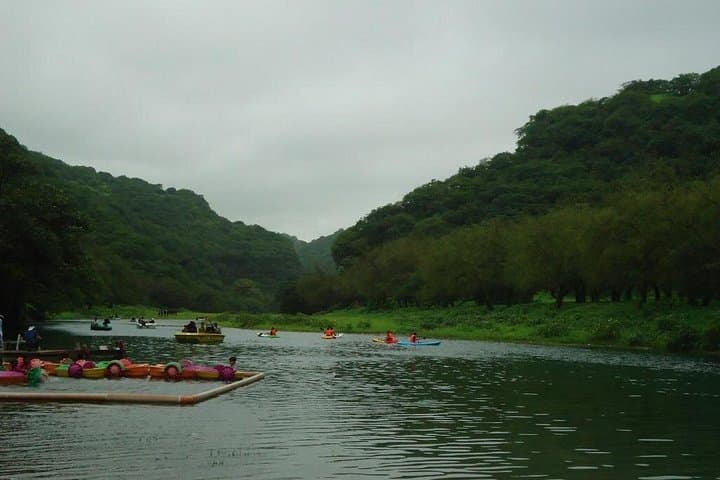
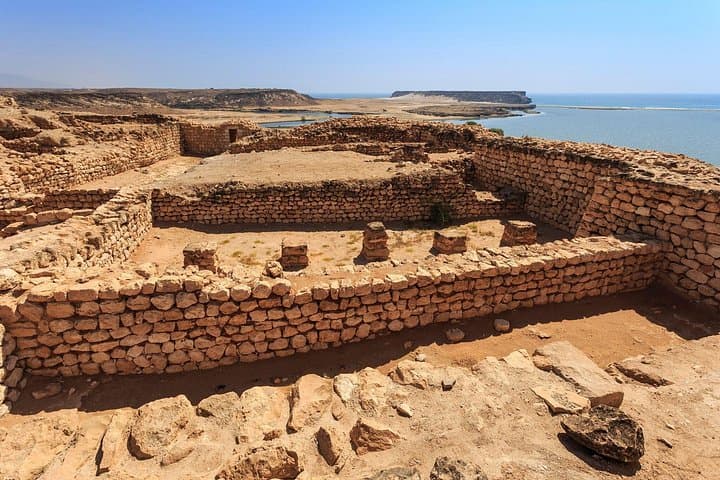
This seven‑hour loop stitches together Dhofar’s human and geological past: Taqah Castle and old Dhofari doors reflect centuries of Omani coastal governance and trade, while Sumhurum (Khor Rori) speaks to the incense route that once linked Hadramawt to the Indian Ocean. Wadi Darbat’s lake and seasonal waterfalls carve limestone benches and sink into verdant pockets, and Tawi Atayr—“Well of Birds”—is a dramatic 211‑m sinkhole that calls migratory flocks to its lip.
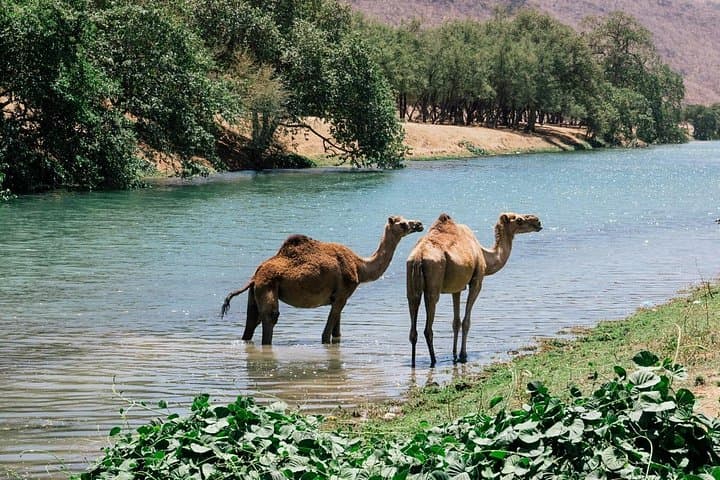
Expect short, mostly flat walks, photo stops at Mirbat and the Bin Ali tomb, and a mountain vantage on Jabal Samhan where camels and hardy goats graze the ridgeline. The terrain alternates between coastal road, paved village lanes, gravel pullouts, and brief uneven trails into viewpoints.
Practical notes: start early to avoid midday heat, carry at least 2 liters of water, and wear sun protection and sturdy shoes for uneven surfaces. Khareef (monsoon) season—June to September—turns the wadis green and cool but can limit coastal visibility; the rest of the year is dryer and clearer. Guides usually include bottled water, entry fees and hotel pickup; confirm passport and pickup details when you book. The tour is an accessible way to see Dhofar’s natural drama and archaeological echoes without long treks.
moderate.
7–8 hours.
Suitable for travelers in average fitness—able to board vehicles, complete short walks and negotiate steps or uneven ground.
The tour runs about 7–8 hours and typically includes private A/C transport, an English‑speaking driver/guide, bottled water, national park fees and hotel pickup/drop‑off.
Yes—this tour is described as suitable for all fitness levels with mostly short walks and vehicle transfers; children must be accompanied by an adult.
Khareef (June–September) brings verdant landscapes and cooler temperatures, while the rest of the year is drier with clearer coastal views—choose based on whether you want green wadis or sunnier conditions.
Yes—a current valid passport is required on the day of travel, and cruise passengers should provide ship/arrival details at booking.
Sumhurum (Khor Rori) was an eastern outpost on the ancient incense route connecting Hadramawt to the Indian Ocean trade network.
Wadi ecosystems are sensitive—avoid litter, stay on trails, and respect local grazing and water sources to limit human impact.
Oman Day Tours operates guided outdoor trips and adventures with an emphasis on safety, stewardship, and memorable experiences.
You pull away from Salalah’s low-slung hotels and the city dissolves into a coastline that smells of salty fish and frankincense smoke. The driver threads the coastal road east; Taqah’s whitewashed houses and carved doors appear like pages from a regional chronicle, then the road bends inland toward wadis and cliffs where the land suddenly remembers rain.
You pull away from Salalah’s low-slung hotels and the city dissolves into a coastline that smells of salty fish and frankincense smoke. The driver threads the coastal road east; Taqah’s whitewashed houses and carved doors appear like pages from a regional chronicle, then the road bends inland toward wadis and cliffs where the land suddenly remembers rain.
This seven‑hour loop stitches together Dhofar’s human and geological past: Taqah Castle and old Dhofari doors reflect centuries of Omani coastal governance and trade, while Sumhurum (Khor Rori) speaks to the incense route that once linked Hadramawt to the Indian Ocean. Wadi Darbat’s lake and seasonal waterfalls carve limestone benches and sink into verdant pockets, and Tawi Atayr—“Well of Birds”—is a dramatic 211‑m sinkhole that calls migratory flocks to its lip.
Expect short, mostly flat walks, photo stops at Mirbat and the Bin Ali tomb, and a mountain vantage on Jabal Samhan where camels and hardy goats graze the ridgeline. The terrain alternates between coastal road, paved village lanes, gravel pullouts, and brief uneven trails into viewpoints.
Practical notes: start early to avoid midday heat, carry at least 2 liters of water, and wear sun protection and sturdy shoes for uneven surfaces. Khareef (monsoon) season—June to September—turns the wadis green and cool but can limit coastal visibility; the rest of the year is dryer and clearer. Guides usually include bottled water, entry fees and hotel pickup; confirm passport and pickup details when you book. The tour is an accessible way to see Dhofar’s natural drama and archaeological echoes without long treks.